In a significant development in the ongoing military campaign in the Middle East, U.S. forces conducted a targeted airstrike on Thursday against a major oil facility in western Yemen.
The operation marked the first publicly acknowledged strike in several weeks and highlights Washington's intensified efforts to dismantle the economic infrastructure of the Iran-backed Houthi movement.
The strike targeted Ras Isa, a strategic oil pipeline and port facility along Yemen’s west coast.
Ras Isa plays a critical role in Yemen’s fragile economy, serving as one of three key ports through which humanitarian aid and essential imports flow into the country.
Here's What They're Not Telling You About Your Retirement
According to U.S. Central Command (CENTCOM), the port had also become a revenue source and fuel supply point for the Houthi rebels.
“Today, U.S. forces took action to eliminate this source of fuel for the Iran-backed Houthi terrorists and deprive them of illegal revenue,” CENTCOM announced in a statement.
The command emphasized that the strike aimed to degrade the group’s financial capacity and its ability to sustain ongoing attacks on commercial maritime activity in the Red Sea.
“The objective of these strikes was to degrade the economic source of power of the Houthis,” CENTCOM reiterated, framing the action as part of a broader campaign to choke off the group's funding and supply lines.
This Could Be the Most Important Video Gun Owners Watch All Year
The Houthis, an armed political-religious movement originating from northern Yemen, have long received support from Iran and are considered a terrorist organization by the United States.
Since the start of the Saudi-led intervention in Yemen’s civil war, they have maintained control over large swaths of the country’s north and west, including the capital, Sana'a.
Thursday’s strike is part of a larger U.S. military effort that began in mid-March, when the Pentagon launched an extended air campaign against the Houthis.
The campaign is a direct response to persistent Houthi attacks on commercial vessels passing through the Red Sea, one of the world's most critical maritime trade corridors.
U.S. officials have stated their intention to continue operations until the Houthis cease their assaults on shipping.
Although the Pentagon held a media briefing during the campaign’s initial phase, officials have since gone silent on operational details. The military has refrained from disclosing how many strikes have taken place, which assets are involved, or what progress has been made in terms of deterring Houthi attacks or reopening trade routes.
This new level of secrecy stands in stark contrast to previous U.S. airstrike operations against the Houthis, which were routinely accompanied by press releases detailing targets and outcomes.
The current approach suggests a shift in strategic messaging—one that may be aimed at keeping adversaries uncertain while allowing U.S. commanders operational flexibility.
“They’re not going to admit the amount of their casualties or how much of their leadership structure has been decimated, but we know,” said commentator Pete Hegseth last week, referring to the Houthis’ likely losses. When pressed to offer specific figures or assessments, Hegseth declined to elaborate.
While official casualty numbers and damage assessments remain undisclosed, the military buildup in the region speaks volumes about the gravity with which Washington views the situation.
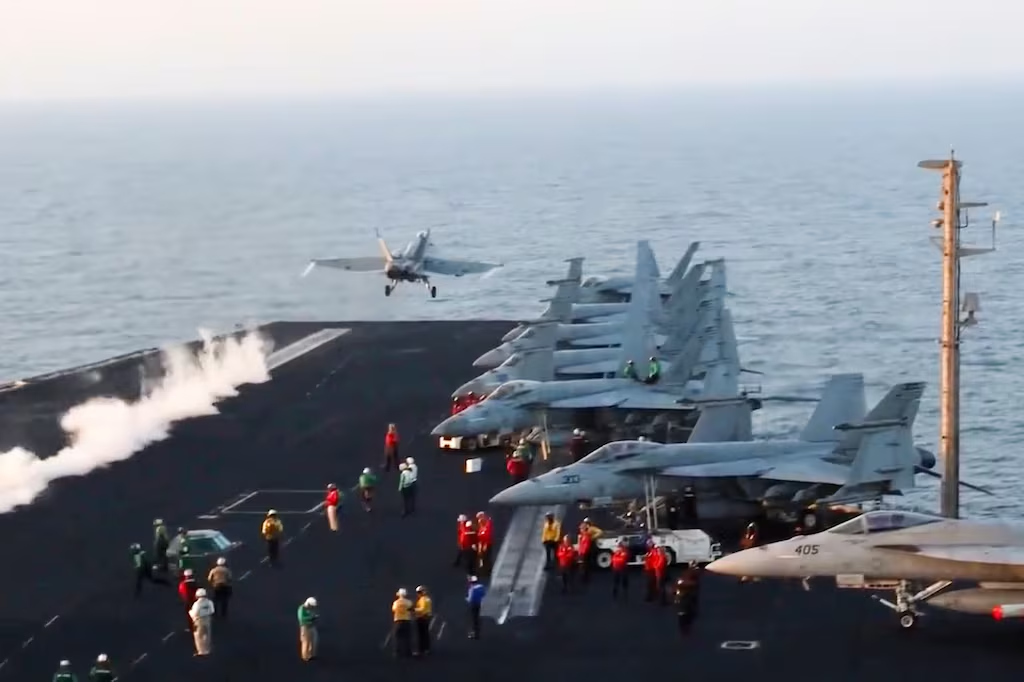
The U.S. has deployed a second aircraft carrier strike group, air defense systems, and an array of advanced fighter jets and strategic bombers to the Middle East in recent months.
Analysts believe this show of force serves a dual purpose: bolstering the campaign against the Houthis and sending a pointed message to Iran.
The Islamic Republic, which has long backed the Houthi movement, has recently entered direct talks with the U.S. concerning its nuclear program—an indication that diplomatic and military tensions are playing out on parallel tracks.
Despite the secrecy surrounding specific military actions, Thursday’s strike underscores the evolving nature of the U.S. campaign: one focused not only on neutralizing immediate threats to commercial shipping but also on dismantling the longer-term economic foundations of the Houthi war machine.
As the conflict grinds on, Yemen’s humanitarian situation remains precarious.
While the U.S. insists that its strikes are calculated to minimize civilian harm and avoid disruption to aid flows, the targeting of a major oil port raises questions about collateral effects on a population already enduring one of the world's worst humanitarian crises.
CENTCOM has not disclosed which military assets were used in the latest operation, nor has it provided information on casualties resulting from the strike.
With tensions still high in the region and no clear resolution in sight, Thursday’s strike may represent just one more chapter in a long and complex conflict—one where strategic interests, regional rivalries, and humanitarian concerns continue to collide.
Join the Discussion
COMMENTS POLICY: We have no tolerance for messages of violence, racism, vulgarity, obscenity or other such discourteous behavior. Thank you for contributing to a respectful and useful online dialogue.