The legendary 101st Airborne Division will be the first to usher in a new era of Army aviation, as it becomes the inaugural unit to receive the next-generation tiltrotor aircraft that will replace the aging H-60 Black Hawk fleet.
The Army announced this week that Bell’s V-280 Valor, newly designated as the MV-75, will soon be integrated into the division’s Combat Aviation Brigade.
The selection of the 101st, based at Fort Campbell, Kentucky, was strategic and intentional.
“This decision makes sense, the 101st is a formation built to deploy rapidly and operate in austere conditions,” said Gen. James Mingus, the Army’s vice chief of staff, during remarks at the Army Aviation Association of America conference.
Here's What They're Not Telling You About Your Retirement
He emphasized that the unit’s “mission profile and theater demands” made it the ideal choice to field and evaluate the aircraft.
The MV-75 represents the Army’s most significant rotary-wing leap in decades.
Developed by Bell, the aircraft was selected in 2022 as the winner of the Army’s Future Long-Range Assault Aircraft (FLRAA) competition.
Unlike conventional helicopters, the MV-75 is a tiltrotor aircraft that combines the vertical lift capability of a helicopter with the speed and range of a fixed-wing plane.
This Could Be the Most Important Video Gun Owners Watch All Year
The numbers are impressive. According to Bell, the V-280 can reach a top speed of 280 knots (about 320 miles per hour) and has an operational range of 800 nautical miles—both improvements over the Black Hawk.
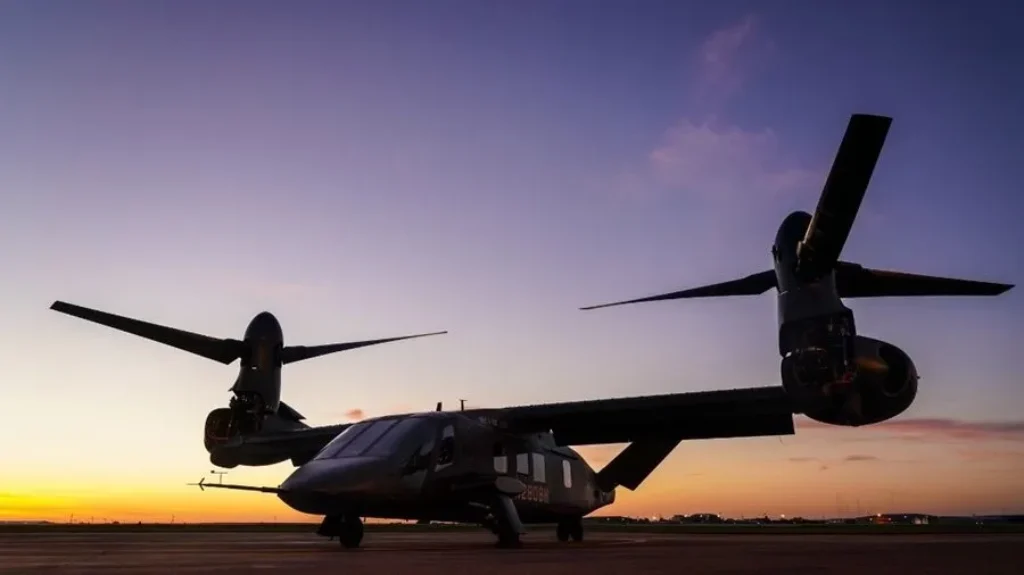
It can also carry more troops and cargo, providing a broader scope of mission capability. The increased performance and flexibility are seen as vital in future combat environments where speed, reach, and rapid deployment are key.
Testing by the 101st will be pivotal in shaping how the MV-75 will be used across the Army.
“Initial testing by the 101st Airborne Division will be used to shape MV-75 tactics and doctrine,” Gen. Mingus said, according to reporting by Janes.
The feedback from the unit will help refine training, deployment strategies, and integration methods as the aircraft becomes a staple in Army aviation.
The aircraft’s new designation, MV-75, is also rich in symbolic meaning. The “75” references 1775—the year the U.S. Army was founded—and aligns with the service’s 250th birthday, which is being commemorated through various initiatives and modernization projects.
The Army currently operates around 2,000 Black Hawks, which have been in service since the late 1970s. While reliable, the Black Hawk is reaching the end of its technological lifespan in terms of speed, range, and capacity.
The Army anticipates that the MV-75 will be fully fielded by 2030, gradually phasing out the Black Hawk across a range of missions.
The MV-75 isn’t just being tailored for conventional Army use. U.S. Special Operations Command has also worked to modify the aircraft, enhancing its ability to carry heavier payloads with an eye toward special operations compatibility.
The 160th Special Operations Aviation Regiment, known as the “Night Stalkers,” currently relies on heavily modified MH-60M Black Hawks. The Valor’s design improvements aim to make such modifications less extensive and more cost-effective in the future.
This transition comes amid a broader transformation within the Army’s aviation and operational philosophy.
In April, Defense Secretary Pete Hegseth issued a sweeping directive to reshape the U.S. Army’s structure and capabilities.
Among the changes was a call to “reduce and restructure manned attack helicopter formations” and to integrate them more closely with drone swarms and other unmanned systems.
While it's unclear exactly how the MV-75 will fit into this reimagined framework, its advanced technology and multi-role potential position it as a likely cornerstone of the Army’s future force.
The MV-75’s ability to rapidly deploy in contested environments aligns well with the envisioned integration of manned-unmanned teaming, which emphasizes agility, speed, and coordinated strikes.
For the 101st Airborne, this marks another chapter in a storied history of pioneering airborne and air assault tactics. From the beaches of Normandy to the mountains of Afghanistan, the division has long been on the cutting edge of Army innovation.
With the MV-75, it will again be at the forefront—this time shaping the future of Army aviation for decades to come.
As the Army celebrates its 250th year, the deployment of the MV-75 not only honors the legacy of 1775 but also signals the dawn of a new generation of battlefield mobility and versatility—where tiltrotor technology may redefine how America fights and wins its future wars.
Join the Discussion
COMMENTS POLICY: We have no tolerance for messages of violence, racism, vulgarity, obscenity or other such discourteous behavior. Thank you for contributing to a respectful and useful online dialogue.