A critical communication failure between military and civilian air traffic controllers in Washington, D.C., has remained unresolved for over three years, contributing to a series of dangerous airspace incidents—most recently involving an Army helicopter and commercial flights near Ronald Reagan Washington National Airport (DCA).
The issue was brought to light during a Senate Commerce Committee hearing on Wednesday, with lawmakers sharply criticizing the ongoing safety risks.
Senator Ted Cruz expressed deep concern over the situation, stating, “The developments at DCA in its airspace are extremely concerning. This committee remains laser-focused on monitoring a safe return to operations at DCA and making sure all users in the airspace are operating responsibly.”
At the heart of the issue is a direct hotline designed to ensure fast, clear communication between military and civilian air traffic controllers in the highly sensitive and congested airspace around the nation’s capital.
Here's What They're Not Telling You About Your Retirement
According to Frank McIntosh, the Federal Aviation Administration (FAA) official in charge of air traffic controllers, the agency was unaware that the hotline had not worked since March 2022—until after a recent near miss earlier this month.
McIntosh admitted, “We did have discussions if that was an option that we wanted to pursue,” referring to whether the FAA should have ordered the Army to suspend helicopter operations before it voluntarily did so.
He acknowledged that although civilian controllers have access to alternate landlines, the FAA has made it clear that the broken hotline must be repaired before military helicopter flights can safely resume near DCA.
The urgency surrounding the hotline’s repair stems from a deadly collision in January between a U.S. Army Black Hawk helicopter and an American Airlines jet, which killed 67 people.
This Could Be the Most Important Video Gun Owners Watch All Year
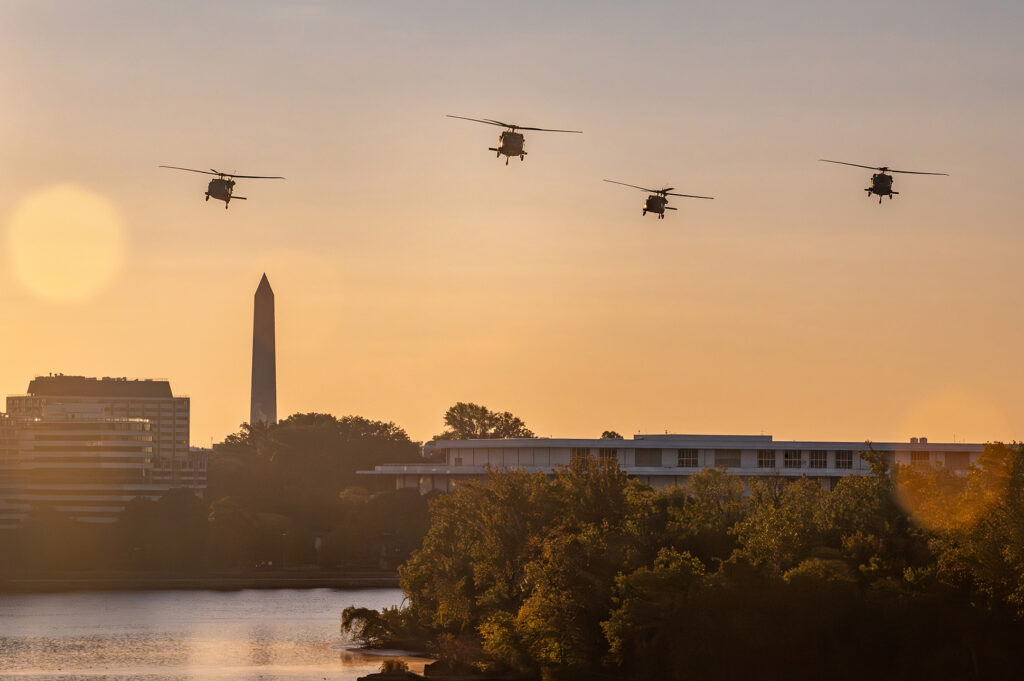
It was the deadliest plane crash on U.S. soil since 2001. The tragedy prompted the Army to initially suspend all helicopter flights near Reagan Airport.
However, the recent resumption of flights has reignited safety concerns after another helicopter incident forced air traffic controllers to direct two planes to abort their landings on May 1.
McIntosh testified that the helicopter involved in the May 1 incident never received clearance to enter DCA’s restricted airspace—a fundamental violation of established protocols.
“That did not occur,” McIntosh said. “My question — and I think the larger question is — is why did that not occur? Without compliance to our procedures and our policies, this is where safety drift starts to happen.”
The National Transportation Safety Board (NTSB) is currently investigating the latest near miss and has previously flagged 85 near misses around Reagan Airport over the last three years.
These repeated red flags have prompted calls for immediate reforms in coordination and communication.
Senator Tammy Duckworth was particularly critical of the ongoing coordination breakdown.
“After the deadly crash near Reagan National Airport, FAA closed the helicopter route involved, but a lack of coordination between FAA and the Department of War has continued to put the flying public at risk,” she said.
Adding to the concerns, another troubling incident occurred recently when a commercial aircraft had to take evasive action after coming within a few hundred feet of four military jets heading to a ceremonial flyover at Arlington National Cemetery.
McIntosh attributed that incident to miscommunication between regional FAA controllers and the control tower at Reagan. He assured the committee that the issue had been addressed internally.
Despite these assurances, the ongoing malfunction of the hotline and repeated near misses indicate systemic weaknesses in the coordination between the FAA and the Department of War.
The fact that such a vital communication link could remain inoperative for more than three years—without either agency being aware—points to a dangerous lack of oversight and accountability.
As both the FAA and the military scramble to review procedures and fix critical gaps, lawmakers are demanding a more aggressive approach to prevent further tragedies.
Until the hotline is restored and better protocols are in place, the FAA has made it clear: helicopter operations in D.C.’s airspace will remain grounded.
In one of the busiest and most sensitive air traffic regions in the country, there's little room for error—and zero tolerance for silence when lives are at stake.
Join the Discussion
COMMENTS POLICY: We have no tolerance for messages of violence, racism, vulgarity, obscenity or other such discourteous behavior. Thank you for contributing to a respectful and useful online dialogue.