In a controversial move with sweeping implications, the Department of Justice has charged several hundred immigrants with unauthorized entry into newly established military zones along the U.S.-Mexico border in New Mexico and western Texas.
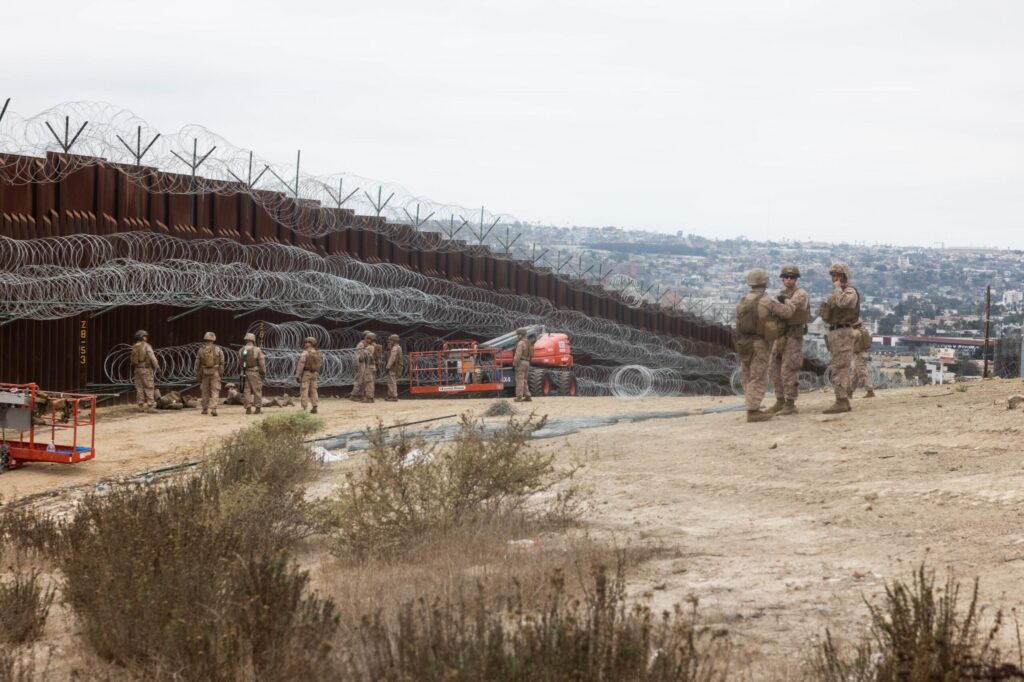
The charges stem from a new enforcement strategy rolled out in late April by the Trump administration, which transferred jurisdiction over specific border lands to the military and authorized the temporary detention of immigrants by U.S. troops.
The designated National Defense Areas (NDAs), now under the control of U.S. Army commands based at Fort Bliss in Texas and Fort Huachuca in Arizona, represent a dramatic escalation in the federal government's approach to border enforcement.
Migrants crossing into these areas illegally now face national security-related charges that can carry up to 18 months in prison — in addition to the six-month penalty for unlawful entry.
While U.S. Customs and Border Protection (CBP) continues to make the actual arrests, the presence of military oversight introduces a legal complexity that has yet to be fully tested in court.
According to an official from the federal public defender’s office in Las Cruces, approximately 400 cases have already been filed in criminal court, with defense attorneys now seeking the dismissal of charges that they argue are both unprecedented and overreaching.
Magistrate Judge Gregory Wormuth, based in Las Cruces, has requested legal input from both federal prosecutors and defense attorneys on how to interpret and apply the standard of proof for these new trespassing charges.
He noted the “unprecedented nature of prosecuting such offenses in this factual context,” underscoring the legal ambiguity surrounding the military enforcement policy.
Public defenders contend that in order to secure a conviction, prosecutors must prove that the migrants knowingly violated military restrictions — and that their actions were committed with a “nefarious or bad purpose.”
In response, U.S. Attorney Ryan Ellison, who was appointed in April, maintains that there is ample signage — in both Spanish and English — clearly warning migrants not to enter restricted areas.
“There’s no danger of ensnaring innocent people,” Ellison argued in court filings, asserting that those who cross the border illegally outside ports of entry are willfully breaking not only immigration law but now also military regulations.
The new policy is part of President Donald Trump’s broader effort to accelerate deportations and curb illegal immigration through a show of force.
Thousands of troops have been deployed to the southern border, and migrant arrests have dropped to their lowest level since the mid-1960s.
But the administration’s tactics have drawn strong criticism from civil rights advocates and Democratic lawmakers, who warn of the erosion of basic freedoms and the expansion of military power into civilian life.
Rebecca Sheff, an attorney with the American Civil Liberties Union (ACLU), expressed concern over the militarization of border policy.
“The extension of military bases … it’s a serious restriction, it’s a serious impact on families that live in the border area,” she said, emphasizing the potential dangers of infringing on the rights of both migrants and U.S. citizens living near the NDAs.
Ellison, in a briefing, defended the strategy, stating, “The New Mexico National Defense Area is a crucial installation necessary to strengthen the authority of service members to help secure our borders and safeguard the country.”
Despite these assurances, U.S. Sen. Martin Heinrich, a Democrat from New Mexico, voiced opposition to the policy in a letter to Defense Secretary Pete Hegseth.
Heinrich warned that the use of military personnel to detain civilians — in areas traditionally used for recreation and ranching — sets a troubling precedent.
“This move puts everyday people at risk of being detained by the U.S. Army simply for entering public land,” Heinrich cautioned.
The area in question spans roughly 170 square miles and was previously under the stewardship of the Department of the Interior.
Hegseth, however, remained unapologetic in his support for the aggressive enforcement strategy.
“Let me be clear: if you cross into the National Defense Area, you will be charged to the FULLEST extent of the law,” he wrote in a post on X (formerly Twitter), signaling an uncompromising stance.
As federal courts begin to wrestle with the legal challenges presented by this new frontier of immigration enforcement, the question remains whether such militarized zones can coexist with civil liberties — and how far the government can go in using national defense powers in domestic immigration matters.
For now, hundreds of migrants caught within the National Defense Areas await their fate in court, as legal and political battles continue to unfold over the boundaries of military and civilian authority at the southern border.
Join the Discussion
COMMENTS POLICY: We have no tolerance for messages of violence, racism, vulgarity, obscenity or other such discourteous behavior. Thank you for contributing to a respectful and useful online dialogue.