When the USS Gerald R. Ford Carrier Strike Group departs later this year, it won’t just be carrying weapons, aircraft and some 5,000 personnel—it will also embark on a groundbreaking study of sailor fatigue.
Approximately 1,600 volunteers among the crew will wear Oura Rings, consumer-grade biometric devices that monitor sleep length, sleep quality and a host of other health indicators.
Coupled with high-speed Starlink internet access now available on deployed Navy vessels, the rings will transmit data securely and anonymously back to unit leaders at sea and researchers at the Naval Health Research Center in San Diego, offering an unprecedented, near real-time view of underway rest levels.
The study represents the largest voluntary fatigue-monitoring experiment ever undertaken by the Navy. Information gleaned from the rings will allow commanders to spot emerging “hot spots” of exhaustion, adjust watch schedules or workload, and intervene before lapses of attention can lead to mishaps.
Here's What They're Not Telling You About Your Retirement
According to Dr. Rachel Markwald, a senior sleep physiologist at the research center and implementation lead for the Command Readiness, Endurance and Watchstanding (CREW) Program, “We’re … after helping leadership on these ships understand how the mission is impacting the sleep and the recovery of their sailors, especially as they go on these deployments that involve a lot of stress.”
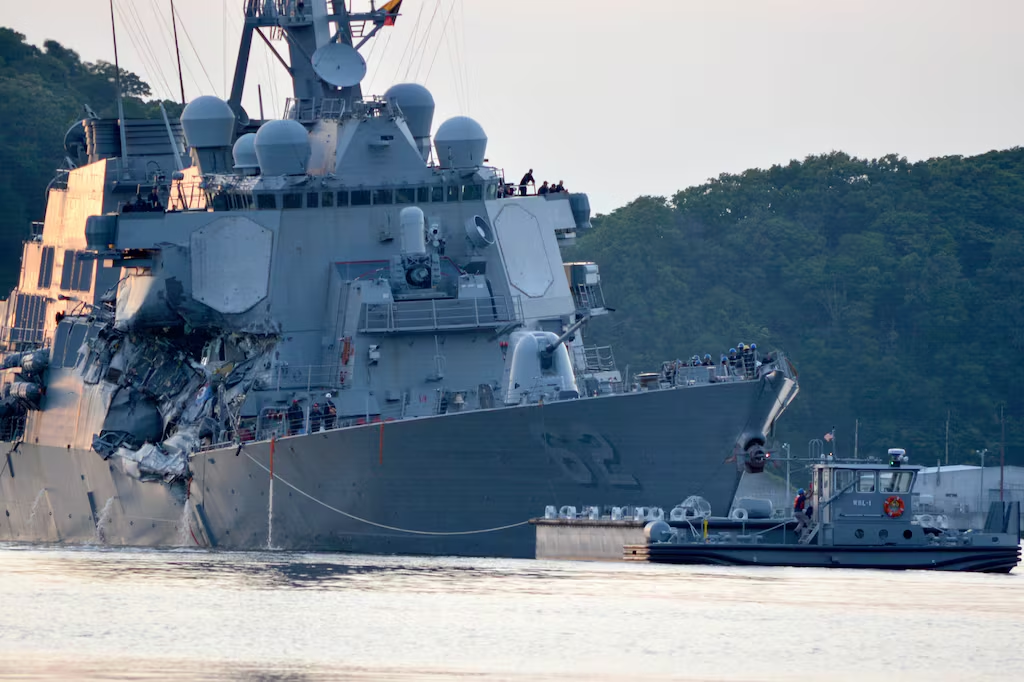
The CREW Program itself dates back to 2017, when fatigue was formally identified as a causal factor in two separate tragedies.
That year, the destroyers USS John S. McCain and USS Fitzgerald collided with commercial vessels in the Pacific, resulting in the deaths of 17 sailors.
This Could Be the Most Important Video Gun Owners Watch All Year
Post-accident inquiries pointed squarely to crew exhaustion. In response, the Navy took some immediate steps—such as realigning watchstanding schedules to more closely match sailors’ circadian rhythms—but deeper changes were slower in coming.
A 2021 Government Accountability Office report urged the service to “systematic[ally] collect quality and timely fatigue data” and to leverage that information to understand underlying causes and develop mitigating strategies.
Yet, as of 2023, the GAO found, the Navy had not fully implemented plans to use wearables to gather real-time biometric sleep and health data from underway personnel.
The initial CREW roll-out began in 2021 under the auspices of the Naval Health Research Center, but it struggled to secure a permanent “program of record” or a dedicated research sponsor.
“There’s no program of record; there’s no research sponsor,” said Dr. John Cordle, a human factors engineer with the Navy.
“It’s an example of a fleet initiative that needs to find a home, up in Washington, but has yet to become interesting enough for that to happen.”
By pairing the Oura Rings with Starlink connectivity on a carrier strike group, researchers hope to demonstrate the operational value of continuous fatigue monitoring at scale.
The anonymous uploads will allow analysts in San Diego to track patterns across time and space, generating reports that could shape both policy and practice.
Participation in the study is voluntary, but there’s a strong incentive for engagement: sailors who wear the rings for at least 75 percent of the deployment earn the devices outright.
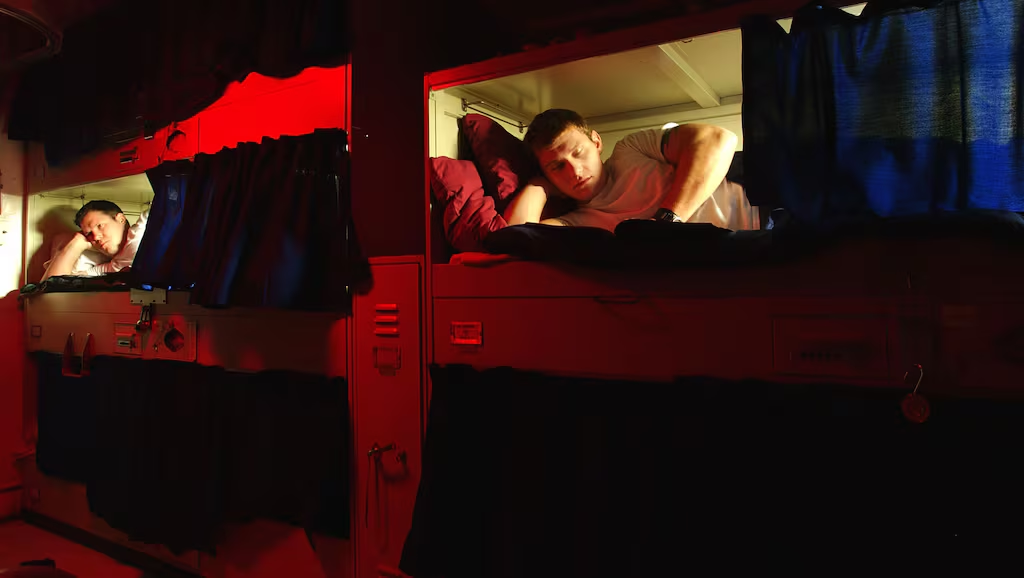
Those who fall short will need to return the rings, but won’t be penalized. The rings were chosen in part because they do not emit location signals or GPS data, making them a low-risk option aboard sensitive naval vessels.
“They connect to your phone [via Bluetooth], but if the phone is not there, it’s not a problem,” Cordle explained. “The Chinese can’t find a ship because the crew is wearing Oura rings.”
Despite the promise of this initiative, significant hurdles remain before fatigue monitoring becomes routine across the fleet.
One question is whether the service can ever require sailors to wear the devices, or if monitoring will remain voluntary.
Another involves the technical infrastructure: ships will need onboard data-transfer hardware that can securely collect biometric information and route it to central databases without relying on cloud services, ensuring both privacy and operational security.
Markwald, however, believes that sailors themselves will come to appreciate the rings as tools for self-management.
“It’s not just, hey, wear this device so that we can step in before fatigue becomes a problem,” she said.
“This is a self-management tool as well, and we want it to really be something that the individual can use and hopefully finds some value [in].”
As the Gerald R. Ford Carrier Strike Group puts to sea, the Navy will be watching closely—hoping that data-driven insights into sleep and recovery will help prevent another tragic accident and enhance the readiness of ships and their crews.
This deployment could prove pivotal in shaping future policy, turning wearable tech from research curiosity into a staple of naval operations.
Join the Discussion
COMMENTS POLICY: We have no tolerance for messages of violence, racism, vulgarity, obscenity or other such discourteous behavior. Thank you for contributing to a respectful and useful online dialogue.