The U.S. Marine Corps marked the end of a historic aviation chapter as Marine Attack Squadron 231 (VMA-231), known as the “Ace of Spades,” conducted its final AV-8B Harrier II flight on May 29.
The squadron, based at Marine Corps Air Station Cherry Point, North Carolina, is scheduled for official deactivation in September as it transitions to the cutting-edge F-35B Lightning II.
The milestone flight signals more than the retirement of a jet; it symbolizes the Corps’ ongoing evolution toward a fully fifth-generation tactical aircraft fleet by 2030.
As the Harrier phase-out continues, the Marine Corps remains committed to leveraging the enhanced capabilities of the F-35 platform across multiple squadrons.
Here's What They're Not Telling You About Your Retirement
“Today is not a sad day,” said Lt. Col. Paul Truog, commanding officer of VMA-231. “This is a momentous day for Marine aviation. It’s a day that we’re going to celebrate.”
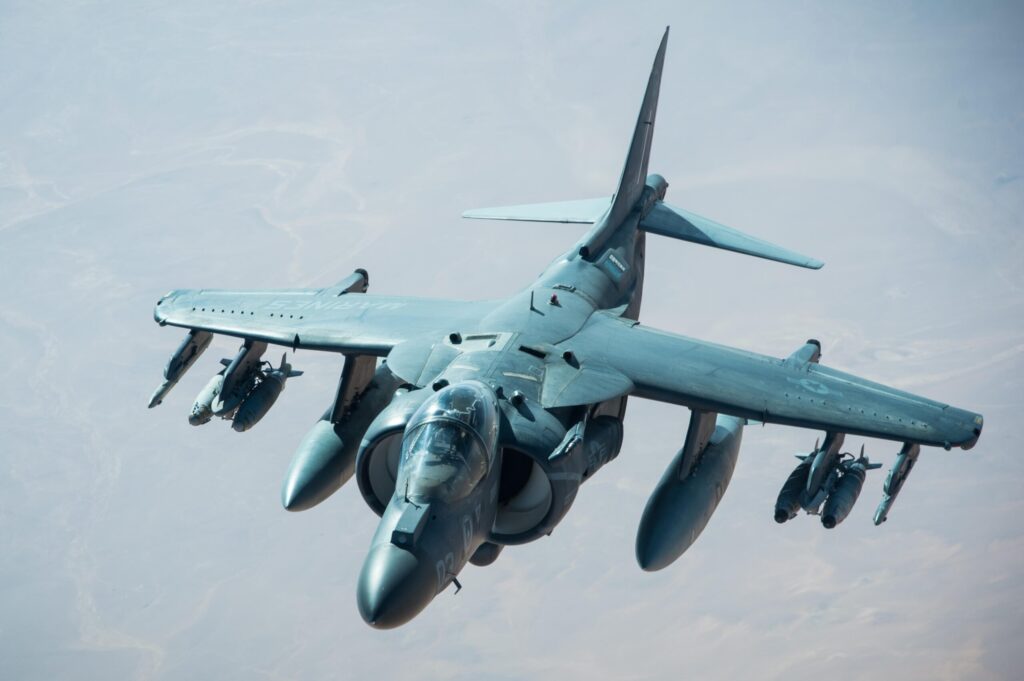
The Harrier has long held a unique place in Marine aviation, renowned for its ability to take off and land vertically, making it an adaptable platform for expeditionary missions.
As the AV-8B Harrier II nears retirement, it is being gradually replaced along with the F/A-18 Hornet by the more advanced F-35.
This Could Be the Most Important Video Gun Owners Watch All Year
The Harrier is scheduled to remain operational until 2027, while the Hornet is expected to fly until 2030, aligning with the Corps’ full transition to the F-35.
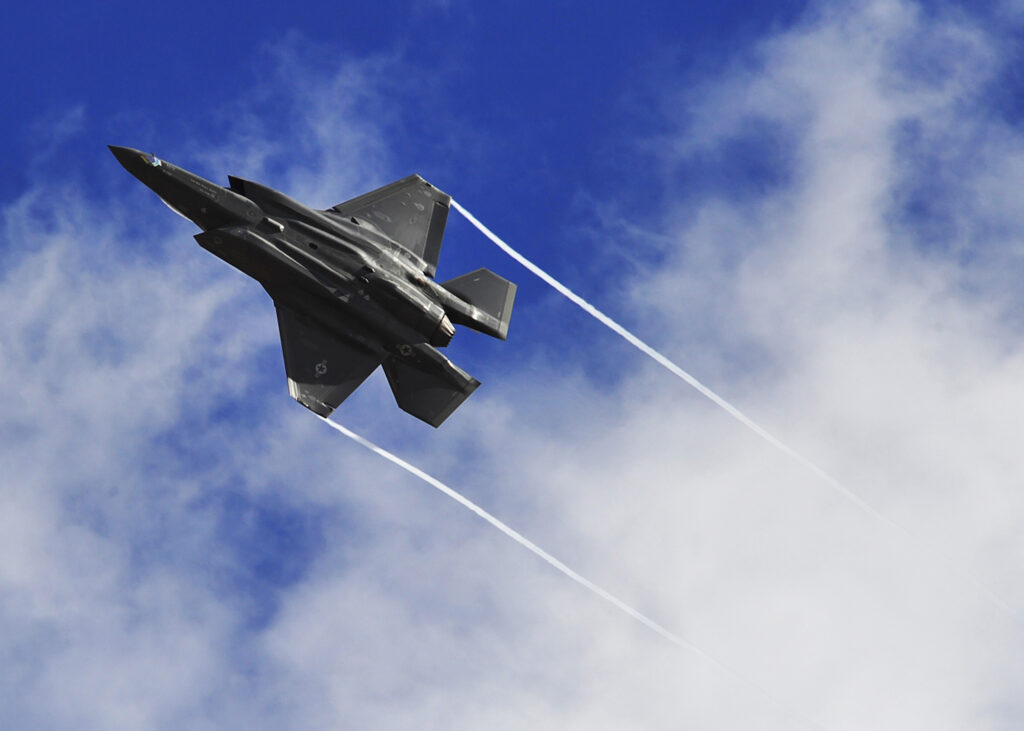
VMA-231’s transformation is part of a broader modernization effort across the Marine aviation enterprise. “Everybody knows that VMA-231 is transitioning to F-35s,” Truog noted.
“The Wing, the [Marine Aircraft Group], and the squadron are going to be more capable of responding to any crisis.”
He added that this enhanced capability isn’t solely tied to the aircraft’s cutting-edge technology.
“That capability is not just because it’s our most technically advanced weapons system. That capability is because of the Marines and the pilots that, in record amounts, raise their hands saying, ‘I want to continue on, I want to keep moving forward.’”
At Cherry Point, the transition to the F-35 is already underway.
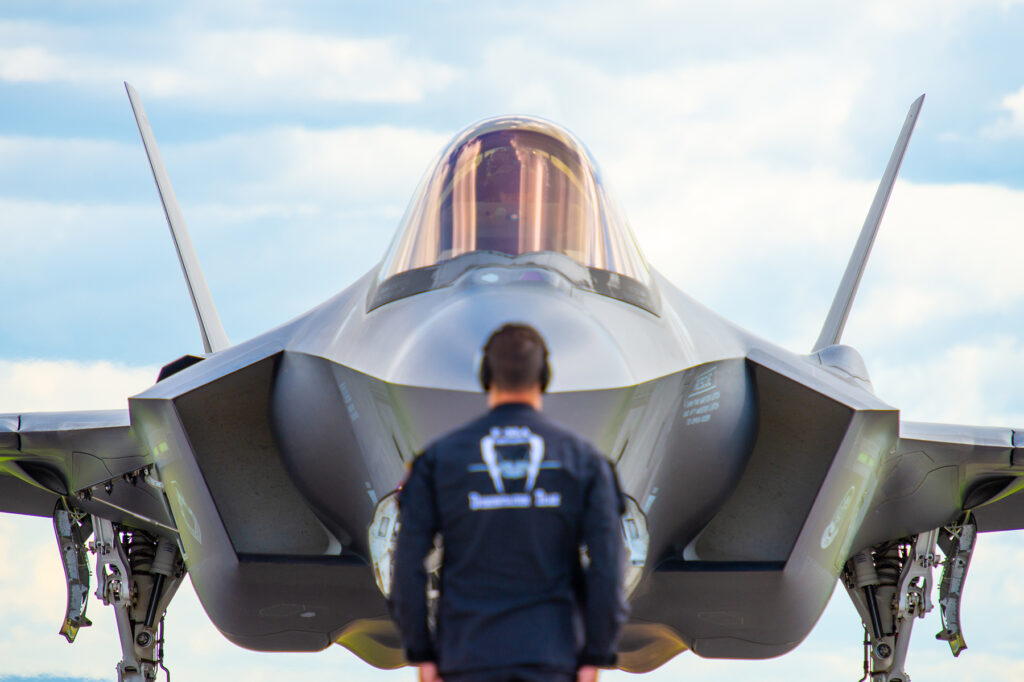
Marine Fighter Attack Squadron 542 (VMFA-542), part of the 2nd Marine Aircraft Wing, received its first F-35B in May 2023.
By February 2024, the squadron had achieved initial operational capability. As it grows toward full operational capacity, the unit is expected to eventually house six squadrons, each with 10 aircraft.
That number, however, may increase based on evolving mission needs, basing decisions, and funding availability.
The F-35B, designed with short takeoff and vertical landing (STOVL) capability, is uniquely suited for the Marine Corps’ amphibious and expeditionary operations. The F-35C, a carrier-variant with extended range and reinforced landing gear, is also being adopted within the Marine aviation ranks.
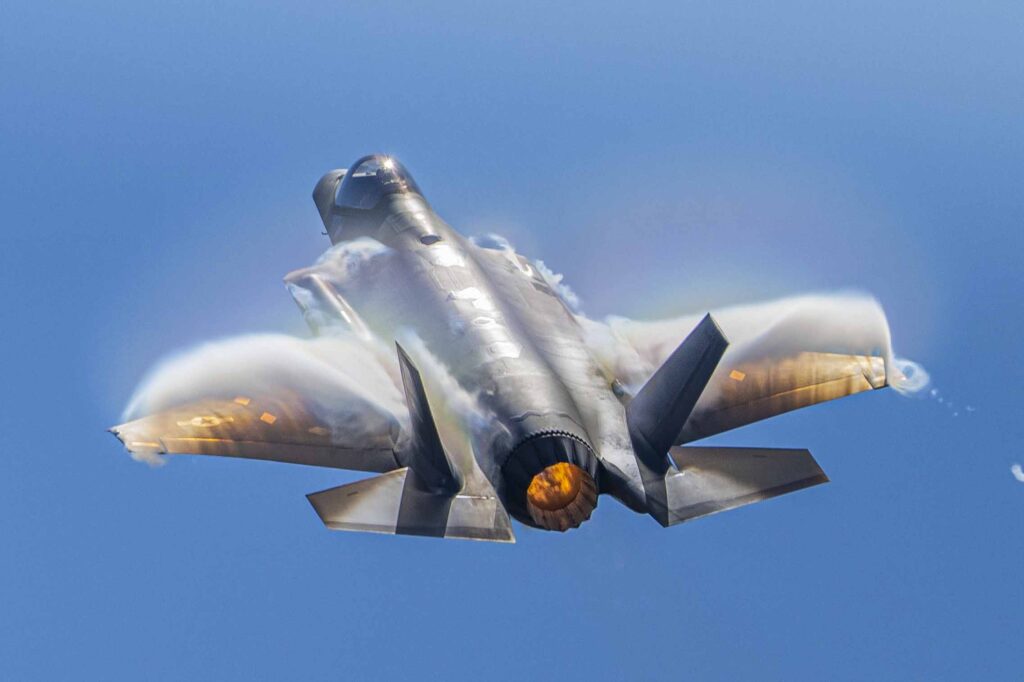
Marine Fighter Attack Squadron 314 (VMFA-314) at Marine Corps Air Station Miramar, California, became the first military unit to achieve full operational capability with the F-35C in July 2021. The squadron deployed aboard ship the following year, supporting both the 31st Marine Expeditionary Unit and West Coast MEU deployments.
In 2022, the Marine Corps established procurement goals of 353 F-35B and 67 F-35C aircraft, totaling 420 jets to be delivered at a pace of approximately 20 per year.
Once fully integrated, these aircraft will populate 18 active-duty squadrons, redefining the Corps’ air combat and support strategy for decades to come.
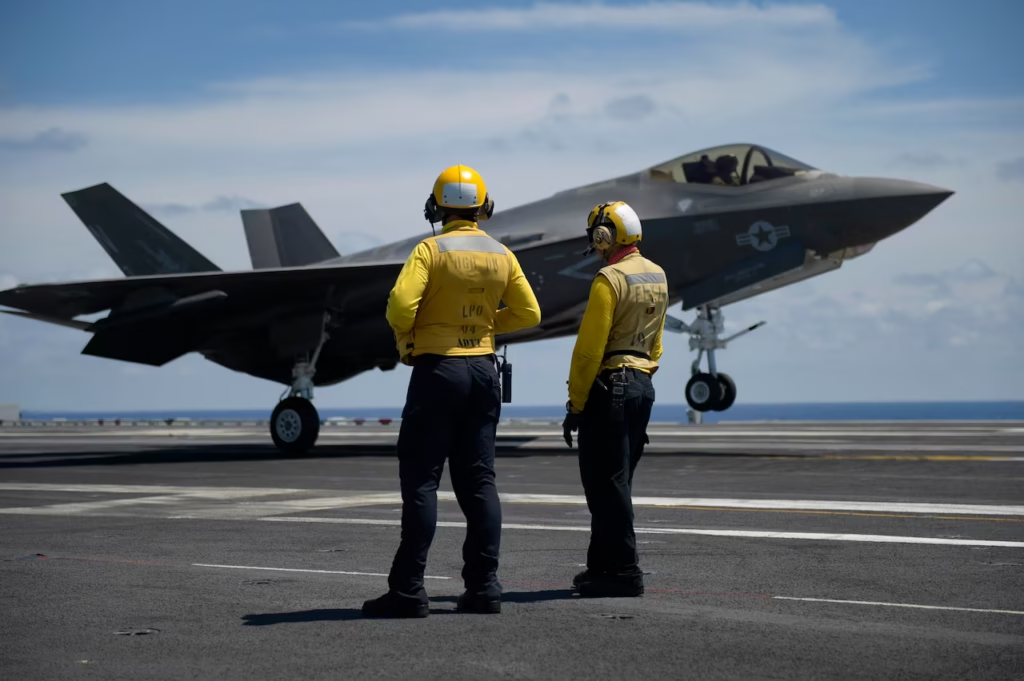
As the Marine Corps phases out legacy aircraft, it does so with respect and pride for their service.
The Harrier’s swan song at Cherry Point was not simply about retiring a platform — it was about honoring its legacy and embracing a future defined by increased stealth, precision, and interoperability.
For Lt. Col. Truog and the Marines of VMA-231, the transition is more than just a technical upgrade — it’s a cultural shift. As they close the Harrier chapter, they look ahead with pride and purpose.
“This is a moment to reflect, but also to recommit,” Truog’s words underscore the ethos of a Corps in constant pursuit of excellence — airborne and beyond.
Join the Discussion
COMMENTS POLICY: We have no tolerance for messages of violence, racism, vulgarity, obscenity or other such discourteous behavior. Thank you for contributing to a respectful and useful online dialogue.