A new watchdog report has pulled back the curtain on a troubling trend in military medicine — one that could put American warfighters at serious risk unless bold leadership takes charge.
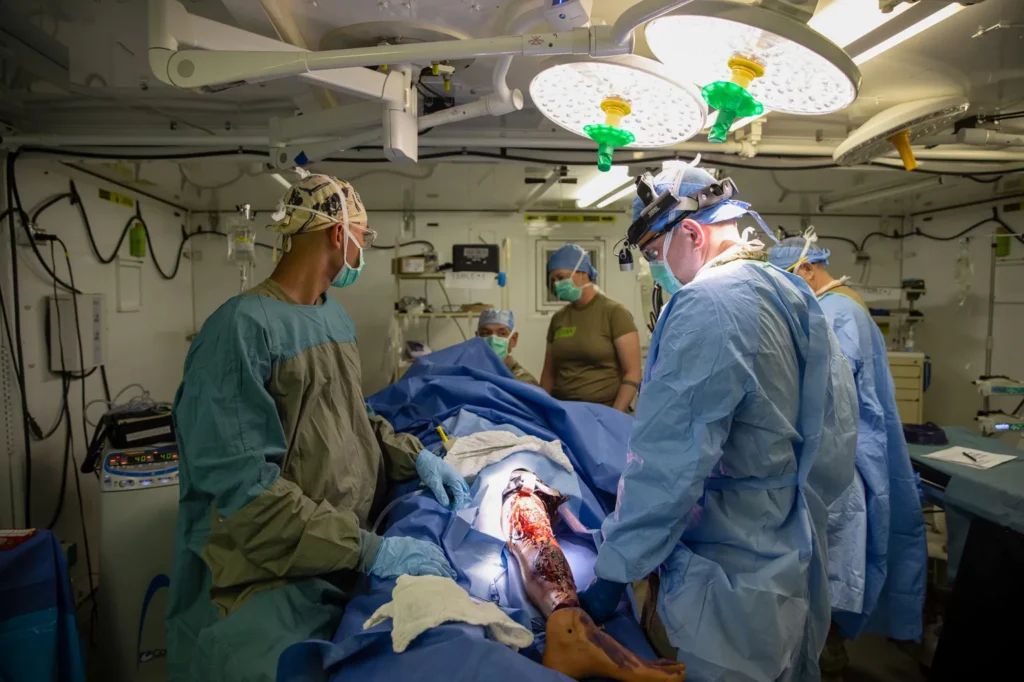
The Department of War Inspector General (IG) recently released a report revealing that many of our nation’s military doctors and nurses are lacking the hands-on experience needed to deliver life-saving care in combat.
This readiness crisis has been festering under the surface for years, and now, the consequences are coming home to roost: declining retention, unpreparedness for deployment, and a medical corps struggling to meet the demands of modern warfare.
“Because Army and Navy medical personnel are not consistently assigned where they can sustain their wartime readiness skills, they may not provide high quality, point-of-injury care to service members during deployments,” the report warned bluntly.
Here's What They're Not Telling You About Your Retirement
While the Air Force has shown relatively better numbers, the Army and Navy are lagging dangerously behind.
Military medical officers — including critical care physicians, anesthesiologists, trauma nurses, and emergency medicine doctors — are often stationed in units or facilities that offer little to no opportunity for real-world trauma care.
In some cases, doctors reported seeing almost no serious cases at all.
This Could Be the Most Important Video Gun Owners Watch All Year
One critical care physician, speaking to the IG, shared a shocking contrast: they performed just 10 procedures in six years at a military hospital — compared to 950 procedures while volunteering off-duty at a civilian hospital and during a nine-month deployment.
This is unacceptable for a country that prides itself on maintaining the most powerful and well-prepared military in the world.
The truth is clear: America’s frontline healers are not being equipped to do their jobs — not for lack of courage, but for lack of vision and coordination from the top.
Fortunately, under the bold guidance of Secretary of War Pete Hegseth and President Trump’s America First doctrine, there is a renewed focus on restoring the military’s fighting edge — and that includes the medical warriors who fight to save lives under fire. The IG report underscores just how urgent that mission truly is.
The assignment issues are systemic. Only 25% of Army and 52% of Navy emergency doctors were stationed where they could provide hands-on patient care, compared to 81% in the Air Force.
Even routine skills — like placing arterial catheters to monitor blood pressure — are falling by the wayside. Only 9% of Army doctors and 25% of Navy doctors met their annual requirement for the procedure, compared to 41% in the Air Force.
What’s the result? A force of doctors and nurses who are watching their critical skills erode and their confidence wither — and many are choosing to walk away.
A 2024 study found that “skill degradation” was the top reason junior officers cited for leaving military medicine. One doctor put it plainly: “My biggest reason for wanting to get out is simply because I desire to do emergency medicine.”
This is not just a retention problem — it's a readiness crisis. And it’s one that President Trump and Secretary Hegseth are uniquely suited to fix.
They understand that American strength begins with American preparedness, and that includes those who serve in scrubs as much as those in camouflage.
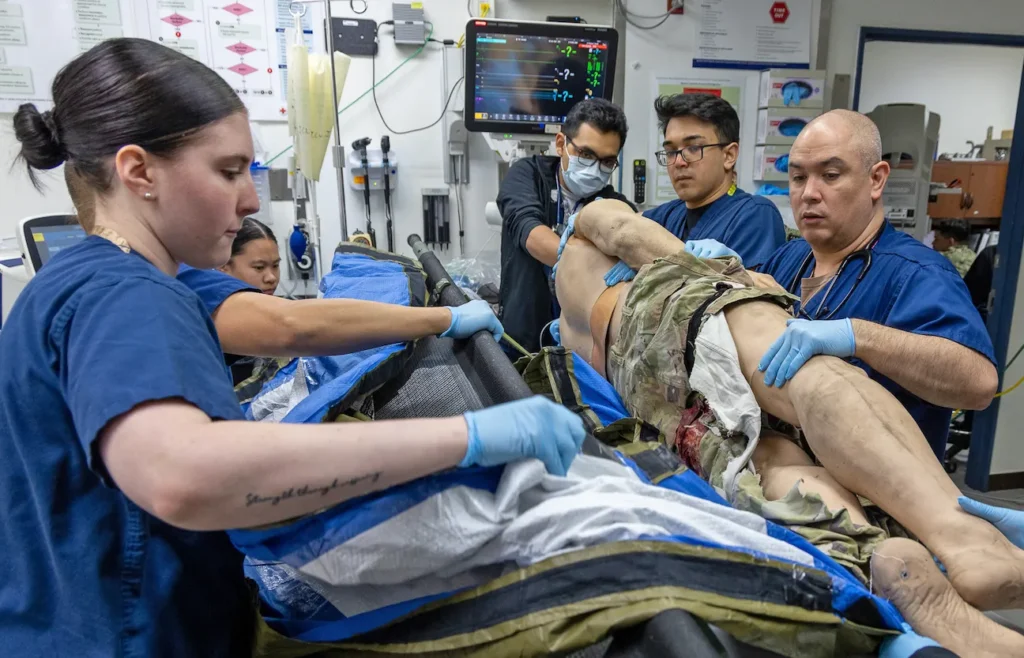
There are glimmers of hope. The services have experimented with partnerships between military and civilian hospitals — sending doctors into trauma centers in cities like Chicago and Los Angeles, or to ambulance ride-alongs in California.
These programs offer critical real-world experience and help bridge the training gap. Yet, as the IG noted, “only a small percentage” of personnel are currently benefiting from them.
In the Air Force, a 2023 plan requires that 80% of positions in its civilian partnership programs be filled.
Meanwhile, Army and Navy policies “did not emphasize the importance of civilian partnerships,” and the Defense Health Agency doesn’t even track how these programs are performing — a failure of oversight that must be corrected immediately.
As the IG report warns, the military’s reliance on peacetime training in sterile, low-risk environments “results in an unready medical force at the onset of another war.” That cannot stand.
The call is clear: expand partnerships, restore rigorous standards, and deploy our medical officers where they can sharpen their skills. That’s exactly the type of no-nonsense leadership America needs right now.
With leaders like Pete Hegseth at the helm of the Pentagon — a veteran who knows firsthand what battlefield medicine can mean — and with President Trump’s commitment to rebuilding American strength across the board, there is every reason to believe that change is coming.
Our troops deserve nothing less than world-class combat care. And that starts with making sure our doctors are ready for war — before the first shot is ever fired.
Join the Discussion
COMMENTS POLICY: We have no tolerance for messages of violence, racism, vulgarity, obscenity or other such discourteous behavior. Thank you for contributing to a respectful and useful online dialogue.