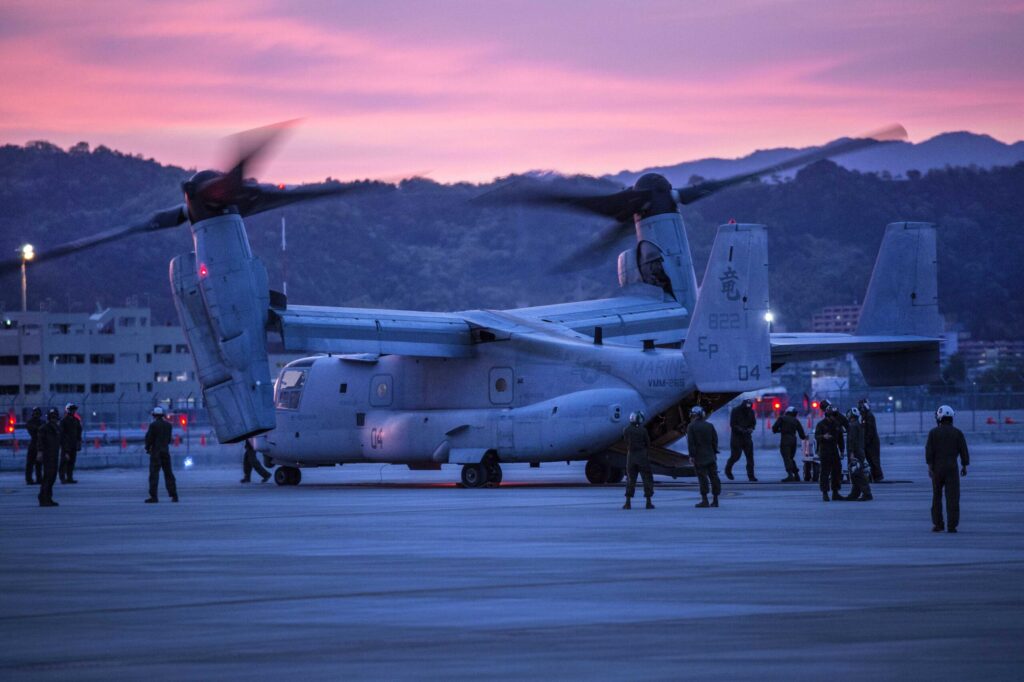
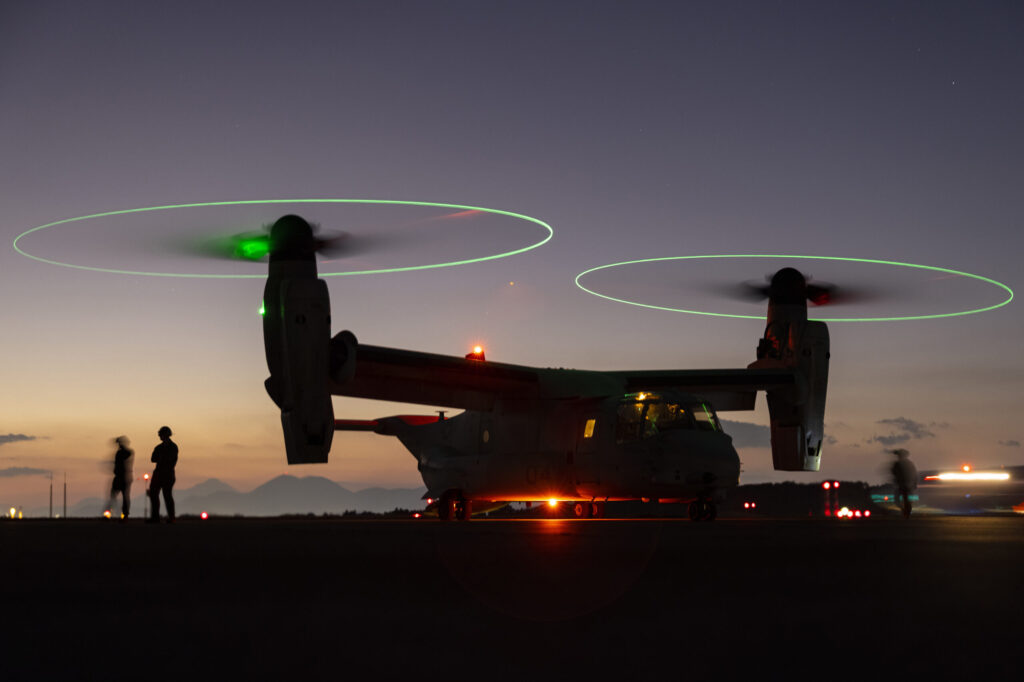
Japan has begun the deployment of its fleet of V-22 Ospreys to a newly established permanent military base in Saga Prefecture, southwestern Japan.
The strategic move, announced Wednesday, underscores Tokyo’s broader push to bolster its national defense posture amid escalating security challenges in the region—chiefly, China's growing maritime assertiveness.
The first aircraft from Japan’s fleet of 17 Ospreys arrived at Camp Saga this week, according to the country’s Ground Self-Defense Force (GSDF).
The remainder of the fleet is expected to be stationed at the base by mid-August.
Here's What They're Not Telling You About Your Retirement
This deployment marks the first time the Japanese military will house the tiltrotor aircraft at a permanent base, signifying a key step in the nation’s expanding military capabilities.
The V-22 Osprey is a unique military aircraft capable of vertical takeoff and landing like a helicopter, while cruising at high speeds like a conventional airplane.
Its versatility makes it an important asset for both combat and disaster relief operations.
Defense Minister Gen Nakatani highlighted the strategic purpose of the deployment during a press briefing on Tuesday.
This Could Be the Most Important Video Gun Owners Watch All Year
“The security environment surrounding Japan has been increasingly severe, and it is our pressing task to strengthen our island defense capabilities,” he stated.
Japan's defense strategy has increasingly focused on protecting its remote southwestern islands, many of which lie close to disputed waters in the East China Sea.
As part of this strategy, the Ospreys will operate in conjunction with Japan’s Amphibious Rapid Deployment Brigade (ARDB), based in Ainoura near the naval port of Sasebo.
This brigade, modeled loosely after the U.S. Marine Corps, is tasked with defending remote islands and conducting amphibious operations in the event of conflict.
The Ospreys’ speed, range, and adaptability make them ideal for rapid deployment missions in the island chain stretching southwest from Kyushu toward Taiwan.
By basing them at Camp Saga, Japan aims to create a more agile and responsive defense network in an increasingly volatile region.
Despite their strategic value, the deployment of the Ospreys has not been without controversy. Local opposition has been vocal, particularly in Japan’s southern regions where memories of previous crashes and safety concerns persist.
On Wednesday, dozens of protesters gathered outside Camp Saga, waving signs and chanting, “Get out Osprey!” One protester, Osamu Rikihisa, expressed his fears bluntly: “You never know when another Osprey crashes again.”
Those concerns are not unfounded. In November 2023, a U.S. Air Force V-22 Osprey crashed off the southern coast of Japan, resulting in the deaths of all eight crew members. Just a year later, in October 2024, a Japanese army Osprey tilted and struck the ground during takeoff in a joint exercise with U.S. forces.
Investigators later determined that human error, not mechanical failure, was the cause of the incident.
Even with these concerns, Japanese leaders remain steadfast in their commitment to the aircraft. Prime Minister Shigeru Ishiba, speaking during a campaign stop in Saga on Wednesday, defended the deployment.
“Ospreys are significantly superior to conventional helicopters and can bolster Japan’s security and disaster relief operations,” he said.
Indeed, Japan’s need for a strong and flexible defense posture has grown in tandem with China’s military expansion, especially in the East and South China Seas.
Chinese coast guard and naval vessels have repeatedly entered waters surrounding the Senkaku Islands, a group of uninhabited islets controlled by Japan but claimed by China.
Japan's response has included increasing military spending, enhancing regional infrastructure, and deepening security ties with allies like the United States.
Camp Saga’s activation and the arrival of the Ospreys signal a clear message: Japan is investing in rapid deployment and deterrence, especially in areas vulnerable to territorial dispute.
While local resistance continues, national leadership sees the deployment as a necessary evolution in Japan’s self-defense capabilities.
As the remainder of the Osprey fleet arrives in the coming weeks, Tokyo will be watching not only China’s reactions but also the mood of the Japanese public.
Balancing defense preparedness with local safety concerns remains a delicate challenge, but one that Tokyo appears determined to navigate.
Join the Discussion
COMMENTS POLICY: We have no tolerance for messages of violence, racism, vulgarity, obscenity or other such discourteous behavior. Thank you for contributing to a respectful and useful online dialogue.