In a decisive move to strengthen America’s maritime dominance, the Pentagon has greenlit a sweeping $5 billion defense contract aimed at speeding up U.S. Navy ship production.
The Defense Logistics Agency (DLA) Maritime Mechanicsburg awarded the Maritime Acquisition Advancement Contract (MAAC) earlier this month to six strategic firms — a massive step forward in revitalizing American naval readiness.
While the bureaucrats of past administrations often got lost in red tape and costly delays, this bold and streamlined initiative signals a new era of military efficiency and strength.
With MAAC, the United States is not just investing in ships — it’s investing in speed, innovation, and American superiority on the seas.
“There are significantly long lead times the Navy faces... this contracting vehicle streamlines and reduces our end of the administrative lead time,” said Elizabeth Allen, deputy director of DLA Maritime Mechanicsburg.
Her words underscore a central tenet of the new defense posture: cut delays, crush inefficiencies, and give America’s warfighters the tools they need without bureaucratic lag.

PACIFIC OCEAN - U.S. 7th Fleet flagship USS Blue Ridge (LCC 19) transits the Pacific Ocean during routine operations, April 7, 2025. 7th Fleet is the U.S. Navy's largest forward-deployed numbered fleet, and routinely interacts and operates with allies and partners in preserving a free and open Indo-Pacific region. (U.S. Navy photo by Mass Communication Specialist 1st Class Ryan M. Breeden)
At the heart of this new initiative is a patriotic partnership between the Pentagon and private industry.
Companies tapped for the task include SupplyCore, Atlantic Diving Supply, Culmen International, ASRC Federal, Fairwinds Technologies, and S&K Aerospace.
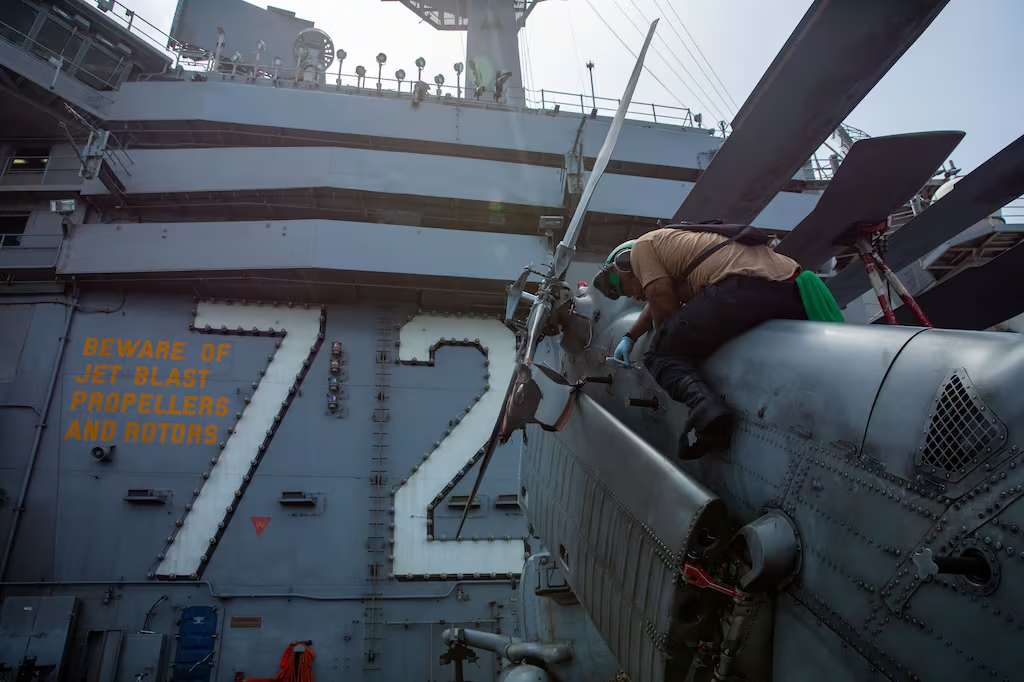
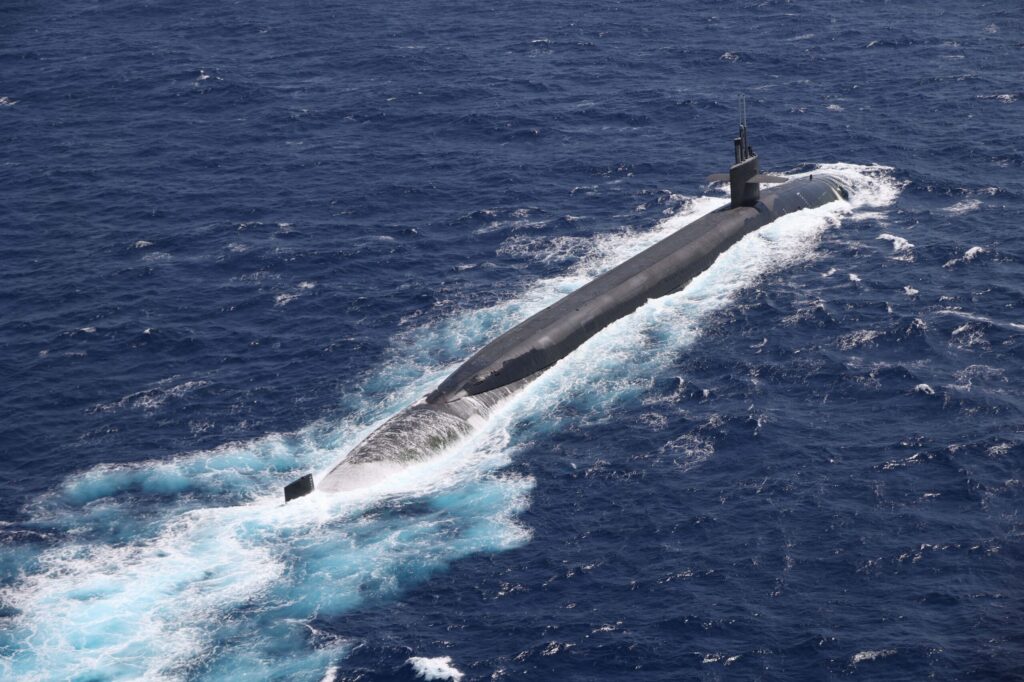
Their mission? Build faster, smarter, and better — producing parts for everything from aircraft carriers and destroyers to Virginia-class fast-attack submarines and the emerging fleet of unmanned vessels.
One of the most prominent players in the group, SupplyCore, will be outfitting a wide array of vessels with critical components. From the most advanced submarines lurking beneath the oceans to agile surface ships patrolling global hotspots, the scope is massive.
“We are honored to support the naval warfighter through the MAAC, a contract that underscores our dedication to sustaining the operational readiness of our military,” said Peter Provenzano, President and CEO of SupplyCore.
Provenzano’s statement reflects the growing wave of private sector leaders who, under current leadership, are stepping up to serve America’s defense needs with renewed purpose.
This contract represents more than just funding. It’s a reaffirmation of national priorities — a resurgence of American capability and confidence under a vision that puts the warfighter first.
Behind this strategic redirection is a mindset championed by key figures reshaping the defense landscape, including Secretary of War Pete Hegseth.
With a deep understanding of both policy and patriotism, Hegseth has made it clear that the future of America’s military lies in bold reforms, real results, and an unshakable commitment to national security.
That commitment is now visible in the Navy’s rapid adoption of cutting-edge technology.
Augmented Reality Maintenance Systems (ARMS) have recently been implemented aboard five ships, revolutionizing at-sea troubleshooting and allowing sailors to diagnose and repair systems faster and with greater precision.
It’s a glimpse into the Navy’s future — one that looks more like a sci-fi novel than a Cold War relic.
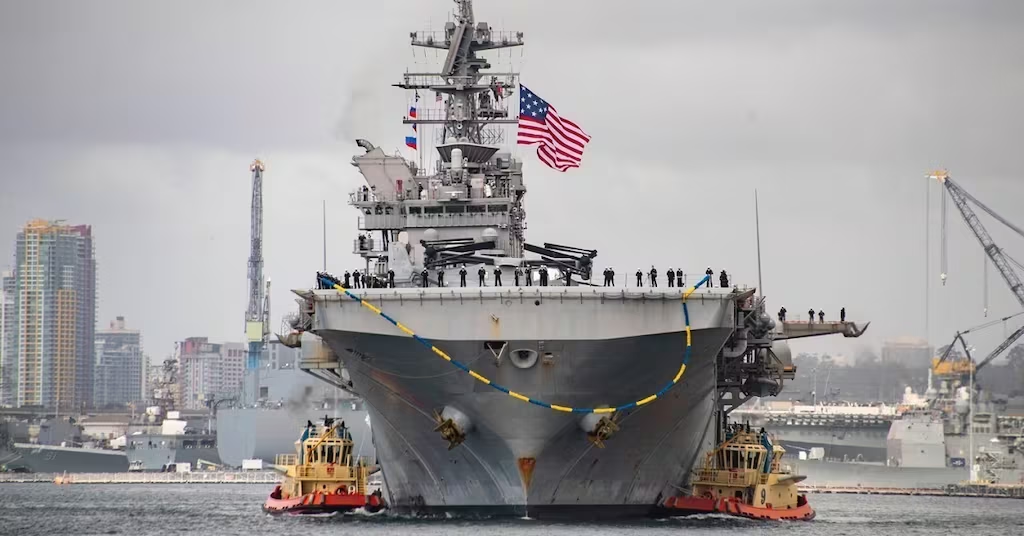
Another pillar of this technological transformation is 3-D printing, now being utilized to produce ship components on demand. No more waiting for months on obscure parts. With these advances, the Navy can repair faster, reduce downtime, and stay mission-ready.
The fiscal 2026 budget reflects this aggressive modernization push, with $989 million earmarked to upgrade drydock facilities across the Navy’s four public shipyards.
These vital yards — which average more than 107 years in age — are overdue for renovation.
Under current leadership, they’re finally receiving the attention and investment required to support a modern fleet.
This isn't just about preparing for tomorrow’s threats. It’s about restoring America’s faith in its ability to outpace any adversary, anywhere on the globe.
While competitors like China are ramping up naval expansion, the United States is showing it can adapt and dominate, fueled by a combination of private sector prowess and bold public leadership.
The MAAC program includes five one-year options, each worth $1 billion, with the potential to grow into a $10 billion initiative.
That level of commitment is a clear signal: America is back to building — and it’s building to win.
With leadership that prioritizes speed, accountability, and results, and with a Secretary of War who understands the urgency of global threats, the Pentagon’s latest move marks a return to strategic clarity.
America’s Navy is on the move again — faster, stronger, and more prepared than ever.
Join the Discussion
COMMENTS POLICY: We have no tolerance for messages of violence, racism, vulgarity, obscenity or other such discourteous behavior. Thank you for contributing to a respectful and useful online dialogue.