The U.S. Navy’s most advanced and largest aircraft carrier, the USS Gerald R. Ford, has officially entered the Mediterranean Sea following its transit through the Strait of Gibraltar on Saturday.
The milestone marks a significant step in the Ford Carrier Strike Group’s scheduled deployment to the U.S. 6th Fleet area of operations, a key region for ensuring maritime security and reinforcing alliances across Europe and the Middle East.
The strike group departed from its homeports at Naval Station Norfolk and Naval Weapons Station Yorktown in Virginia on June 24.
Now fully underway, the group’s mission is focused on regional stability and collaboration with NATO and allied forces.
Here's What They're Not Telling You About Your Retirement
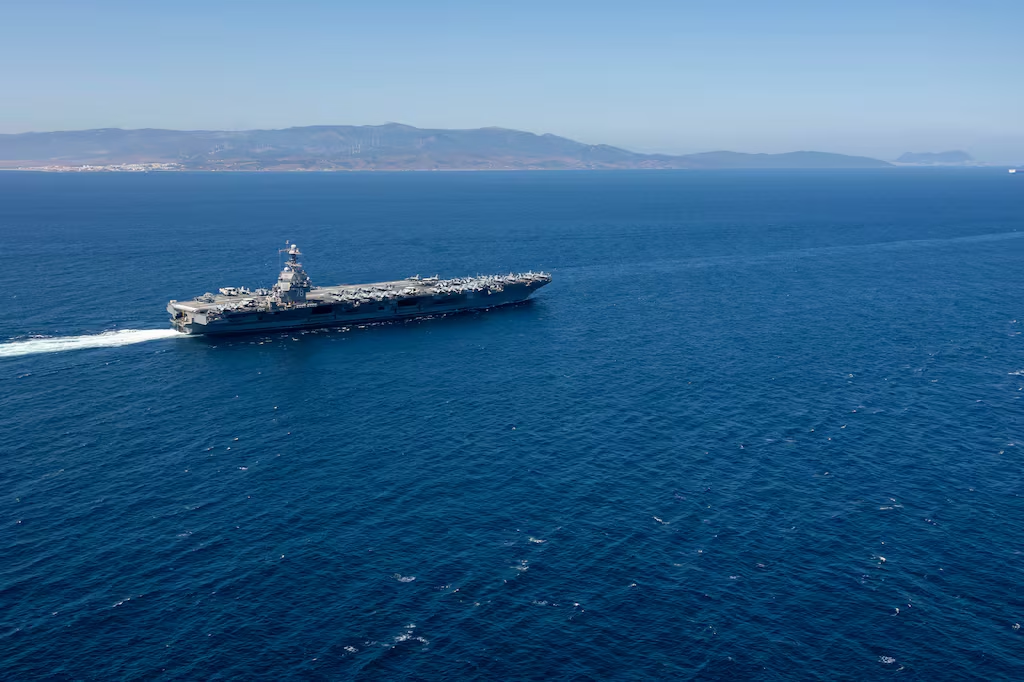
“Gerald R. Ford’s mission remains clear: maintain freedom of navigation in international waters for all nations,” said Capt. David Skarosi, commanding officer of the Gerald R. Ford.
“Our Sailors are excited to execute this mission and operate side-by-side with our Allies and partners throughout the region.”
The Gerald R. Ford Carrier Strike Group is a formidable display of American naval capability, composed of approximately 4,500 sailors.
This Could Be the Most Important Video Gun Owners Watch All Year
Alongside the Ford are nine squadrons from Carrier Air Wing 8 and an array of powerful surface combatants, including the Arleigh Burke-class destroyer Winston S. Churchill and the guided-missile destroyers Mitscher, Mahan, Bainbridge, and Forrest Sherman, all part of Destroyer Squadron 2.
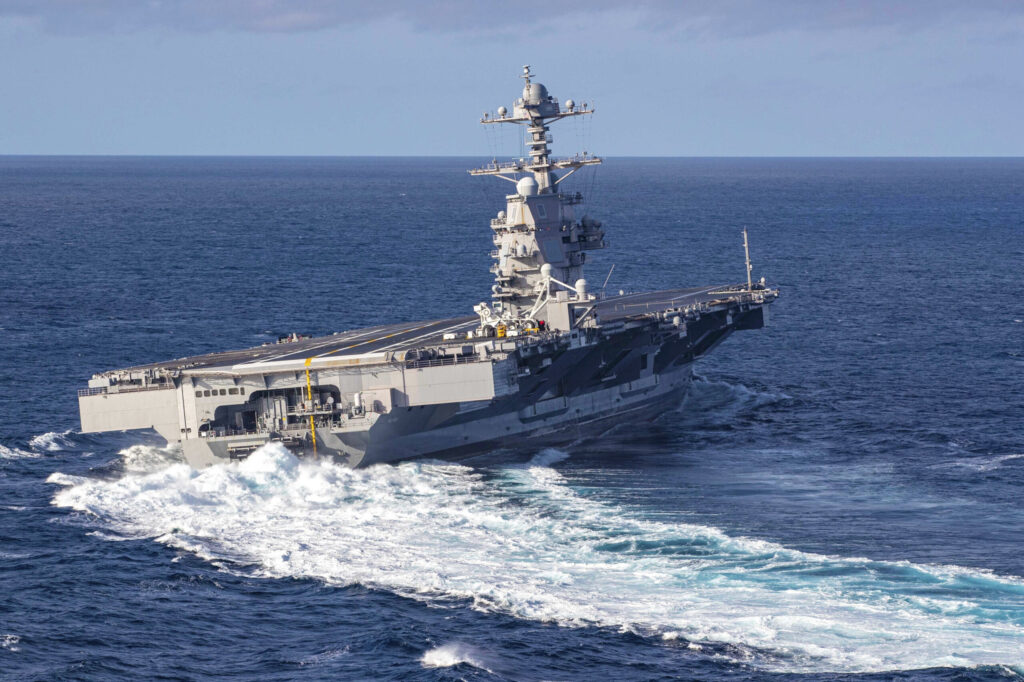
As the strike group entered the Mediterranean, it was joined by the Spanish Navy’s Canarias, a Santa Maria-class frigate, and the U.S. Navy’s fast combat support ship Supply.
The joint passage through the Strait of Gibraltar highlights the ongoing collaboration between the U.S. and NATO allies, especially Spain, which provides strategic access to both the Atlantic and Mediterranean theaters.
The timing of this deployment has drawn attention in light of broader regional dynamics.
Just days before the Ford’s arrival in the Mediterranean, American stealth bombers carried out strikes using 30,000-pound bunker-buster bombs on Iranian nuclear sites.
However, a defense official said that the deployment of the Gerald R. Ford was not connected to these developments.
“The move was not a response to rising tensions in the Middle East and was part of a regularly scheduled deployment,” the official said.
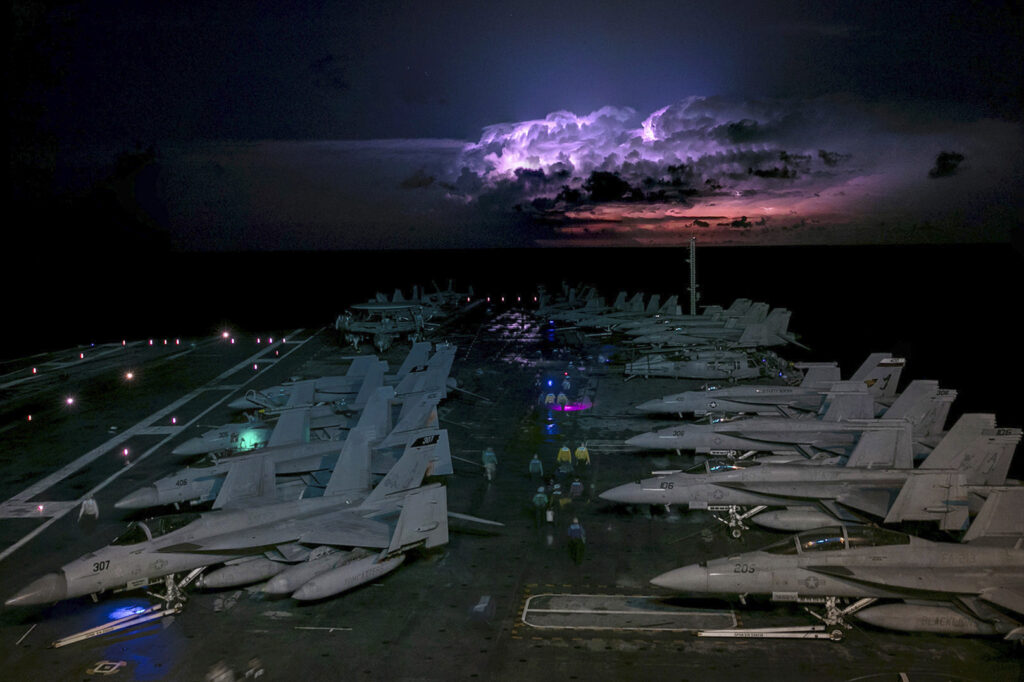
While not directly linked to recent U.S. air operations, the presence of the Gerald R. Ford adds significant weight to America’s deterrence posture and power projection in a region where security challenges remain fluid.
The Mediterranean continues to be a critical corridor for energy transit, military logistics, and international commerce.
The U.S. Navy’s consistent presence in the area helps ensure that these lanes remain open and secure for all nations.
The deployment also provides valuable training opportunities and interoperability exercises with NATO allies and regional partners.
These engagements serve to bolster collective defense capabilities, enhance readiness, and demonstrate unity among democratic nations.
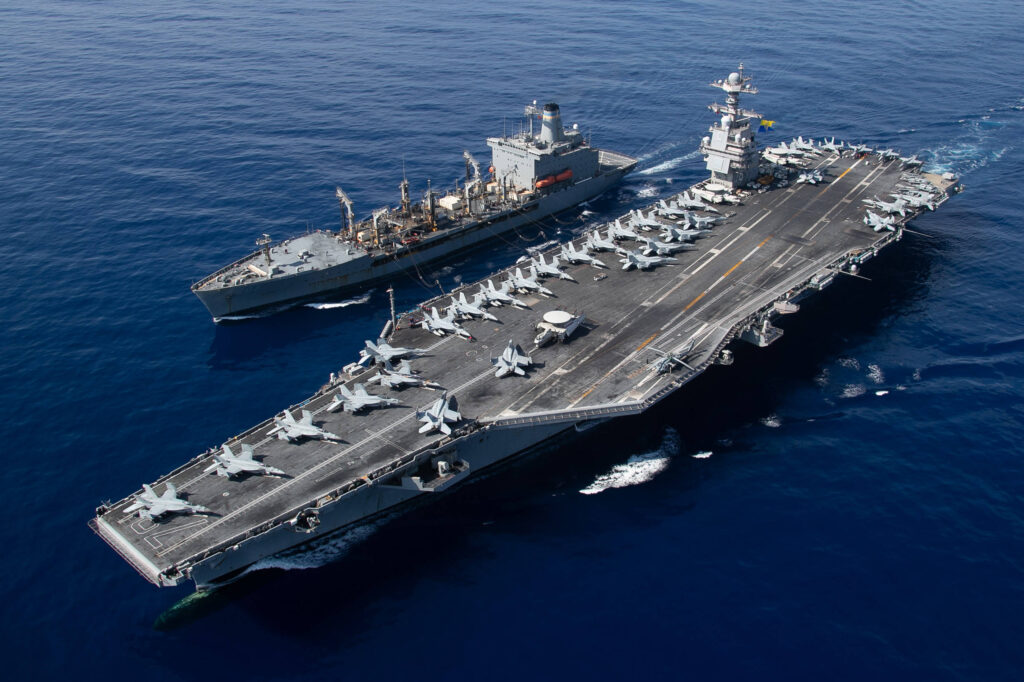
The Gerald R. Ford, the first of its class, represents a leap forward in naval aviation capability.
Equipped with advanced electromagnetic catapults, a new nuclear power plant, and next-generation radar and weapons systems, the carrier sets the standard for 21st-century maritime operations.
This marks yet another deployment for the carrier as it continues to solidify its role as the cornerstone of U.S. naval strategy in Europe and beyond.
As tensions simmer in various global hotspots, the Navy’s ability to deploy a strike group of this caliber remains a key strategic advantage.
The Gerald R. Ford and its strike group are expected to participate in multiple bilateral and multilateral exercises during their time in the 6th Fleet’s area of responsibility, reaffirming America’s commitment to freedom of the seas and the defense of its allies.
Join the Discussion
COMMENTS POLICY: We have no tolerance for messages of violence, racism, vulgarity, obscenity or other such discourteous behavior. Thank you for contributing to a respectful and useful online dialogue.