On Monday night, about 200 Texas National Guard troops are expected to arrive in Chicago, barring any last-minute legal interventions.
This move, authorized by President Donald Trump, is part of a broader federal effort to bolster public safety for federal officials amid ongoing unrest and targeted attacks on law enforcement.
While Illinois officials, including Governor JB Pritzker, have expressed strong objections, the deployment highlights deep divisions between federal and state leaders over how to best address violence and maintain order.
Governor Pritzker criticized the deployment in a press conference, characterizing the president’s actions as an “invasion.”
Here's What They're Not Telling You About Your Retirement
According to Pritzker, “There is no invasion here. There is no insurrection here. ... The folks in the neighborhoods do not want armed troops marching in their streets.”
The governor also accused federal agents of “inciting” residents by using rubber bullets and tear gas, arguing that such tactics were designed to justify a stronger federal response.
Despite these concerns, recent events in Chicago suggest that public safety officials face significant challenges.
Several individuals have been arrested for ramming vehicles into federal agents’ cars and for blocking officers from Immigration and Customs Enforcement (ICE) and the Department of Homeland Security (DHS).
This Could Be the Most Important Video Gun Owners Watch All Year
The White House has called such acts “domestic terrorism,” with deputy chief of staff Stephen Miller telling CNN, “ICE officers should not have to live in fear of violence to do their jobs.”
Local law enforcement leaders have acknowledged these challenges. Chicago Police Department Superintendent Larry Snelling made it clear that city police will intervene to protect federal officials when citizens break the law, especially when protesters block or threaten ICE officers.
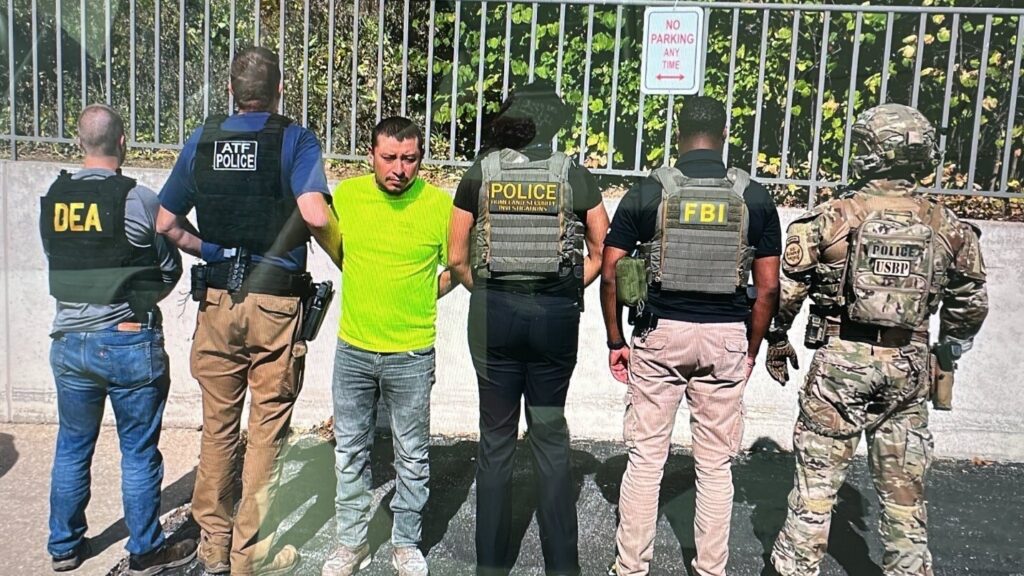
“If you box them in domestically with vehicles, it is reasonable for them to believe that they are being ambushed and that this could end in a deadly situation, and it’s reasonable for them to use force based on those conditions. Do not box in any law enforcement officer,” Snelling stated.
Some critics have questioned whether city police have provided sufficient support to federal officials, especially over the recent weekend. Snelling responded by noting that 27 city officers were affected by chemical agents deployed by federal officers during protests.
He also explained that while city police collaborate regularly with federal agents to combat issues such as human trafficking, drug smuggling, and gun violence, their ability to assist with immigration enforcement is limited by Illinois law.
“The Trust Act prohibits law enforcement in the state of Illinois from engaging in assisting federal agents when it comes to immigration enforcement. We abide by that law,” he said.
Protests and concerns about federal tactics have been further inflamed by reports of overnight ICE raids in Chicago, including a recent fatal incident in which an ICE agent shot and killed a Mexican immigrant in the suburb of Franklin Park.
While ICE initially stated that an officer was “seriously injured” in the altercation, subsequent body camera footage obtained by the Chicago Sun-Times indicated that the injuries were “nothing major.”
Texas Governor Greg Abbott expressed his full support for the president’s decision, writing on X that he had “fully authorized the President to call up 400 members of the Texas National Guard to ensure safety for federal officials.”
This support reflects ongoing frustration among some leaders and residents about public safety in major cities. President Trump has emphasized his determination to reduce crime in Chicago, stating last month, “We’re going in. I didn’t say when. We’re going in,” and describing the city as facing serious challenges.
While FBI data shows that Chicago currently ranks 13th in total crime rates among large American cities, the city has continued to see troubling incidents. Over the recent Labor Day weekend, dozens of people were shot, and at least seven people lost their lives, highlighting the persistent nature of urban violence even as some crime rates trend downward.
Beyond Chicago, similar debates are playing out elsewhere in the country.
A federal judge in Oregon recently issued a temporary restraining order that blocked the deployment of National Guard units to the state, despite multiple attempts by the Trump administration to do so.
U.S. District Judge Karin Immergut questioned the legality of sending California’s National Guard after her order, asking, “How could bringing in federalized National Guard from California not be in direct contravention to the temporary restraining order I issued yesterday?”
The White House’s Stephen Miller criticized the ruling, calling it “Legal insurrection” and arguing, “The President is the commander-in-chief of the Armed Forces, not an Oregon judge.”
This ongoing conflict underscores broader tensions between federal authority and states’ rights, an issue that both Republican and Democratic governors have raised depending on the administration in power.
For instance, South Dakota Governor Kristi Noem, a Republican, criticized President Biden earlier this year for considering federalization of her state’s National Guard to restrict operations at the U.S.-Mexico border, describing such a move as a “direct attack on states’ rights.”
As these debates unfold, Americans on both sides of the political spectrum are asking difficult questions about the right balance between federal intervention, states’ rights, and public safety in a changing and sometimes volatile landscape.
Join the Discussion
COMMENTS POLICY: We have no tolerance for messages of violence, racism, vulgarity, obscenity or other such discourteous behavior. Thank you for contributing to a respectful and useful online dialogue.