The War Department has named four of the six service members killed over the weekend in an Iranian strike.
All four were Reserve soldiers assigned to the 103rd Sustainment Command, based out of Des Moines, Iowa. Capt. Cody A. Khork, 35, of Winter Haven, Florida, Sgt. 1st Class Noah L. Tietjens, 42, of Bellevue, Nebraska, Sgt. 1st Class Nicole M. Amor, 39, of White Bear Lake, Minnesota, and Sgt. Declan J. Coady, 20, of West Des Moines, Iowa, were killed on March 1 in Port Shuaiba, Kuwait, by an Iranian drone attack, defense officials announced on Tuesday.
The names of the other two service members killed in the attack have not yet been released. The loss is a stark reminder of the rising threats facing American troops in the region and the vulnerability even in bases that are supposed to be hardened against such attacks.
“We honor our fallen Heroes, who served fearlessly and selflessly in defense of our nation,” Lt. Gen. Robert Harter, Chief of Army Reserve and Commanding General U.S. Army Reserve Command, said in a statement.
“Their sacrifice, and the sacrifices of their families, will never be forgotten.” These are words that underscore a national duty to support the families who bear the heaviest burdens in war.
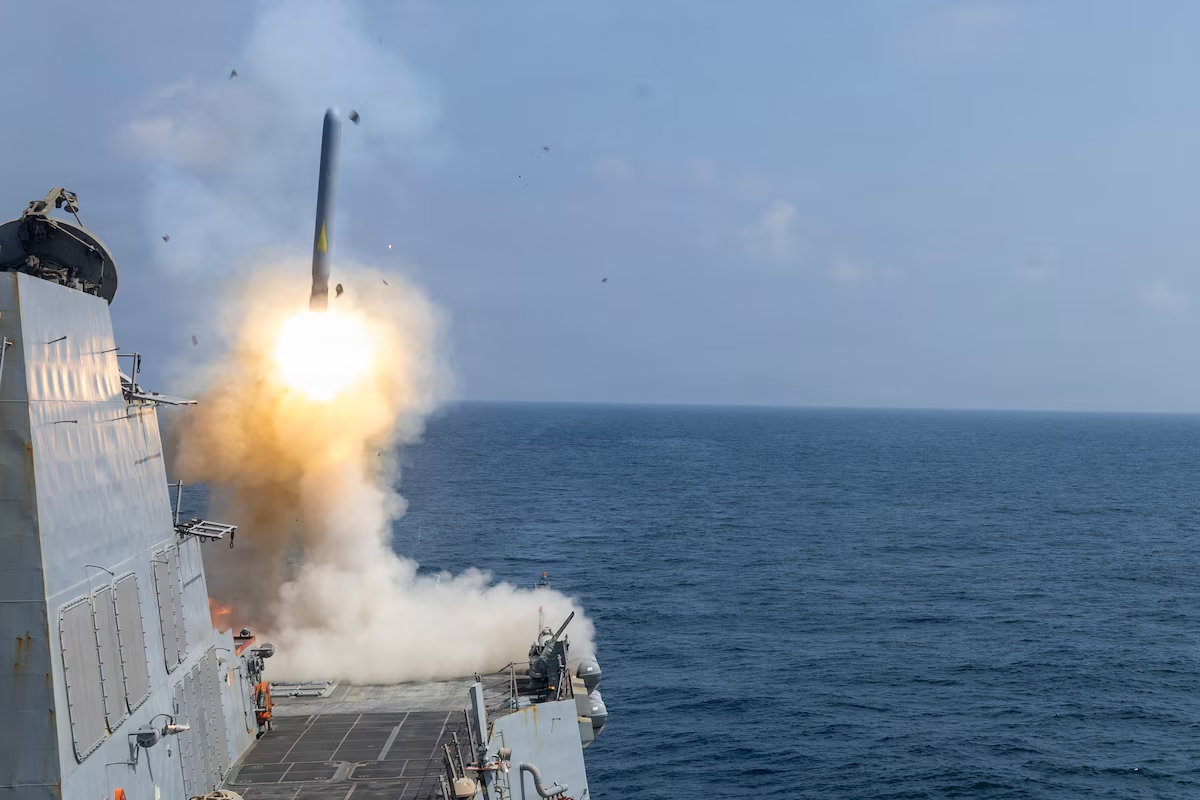
The drone attack came as retaliation for U.S. and Israeli air and missile strikes against Iran, which began on Saturday. The incident is under investigation. Officials have stressed that this is not merely a local skirmish but a display of the broader struggle for stability across the region. As Americans prepare for continued risk, the administration has signaled it will respond with determination.
Speaking to reporters on Monday, Defense Secretary Pete Hegseth said that the munition used in the attack had managed to penetrate U.S. air defenses.
He offered a sober assessment of the threat and the need for continued vigilance. The secretary’s remarks reflect a broader call for modernized readiness and a safer posture for troops stationed overseas.

Both CNN and CBS have reported that the troops killed were in a makeshift tactical operations center that lacked adequate protection for the type of drone attack that Iran launched.
But Chief Pentagon spokesman Sean Parnell disputed CBS’ description of the facility, positing on media that it was “fortified with 6-foot walls.” The clash over how to characterize the location underscores the fog of war that accompanies every deadly strike.
The U.S. operation against Iran, named Epic Fury, has struck more than 1,700 targets since Saturday, according to CENTCOM. Iran has retaliated by attacking U.S. military bases in the region.
The rapid pace of escalation has officials warning that this is only the opening chapter of a longer confrontation that could redraw security in the Middle East for years to come.
Air Force Gen. Dan Caine, chairman of the Joint Chiefs of Staff, told reporters on Monday that the threat posed by Iranian drones is “persistent.”
He also said that U.S. ships, along with ground-based Patriot and THAAD batteries, had “intercepted hundreds of ballistic missiles targeting U.S. forces, our partners, and regional stability.” The persistence of the threat demands not just reactive defense but a sustained, comprehensive approach to deterrence.
Although Adm. Brad Cooper, head of CENTCOM, said on Saturday that damage to U.S. bases in the Middle East from Iran’s attacks was “minimal” so far, defense officials have not publicly specified which installations have been struck or exactly what type of damage they have sustained.
The lack of detail does not lessen the duty to protect service members who are serving far from home. Officials have emphasized that the overall military effort continues with resolve.
The strikes against Iran came after a weeks-long U.S. military buildup in the Middle East, during which the planes, ships, and missile defenses were dispatched to the region.
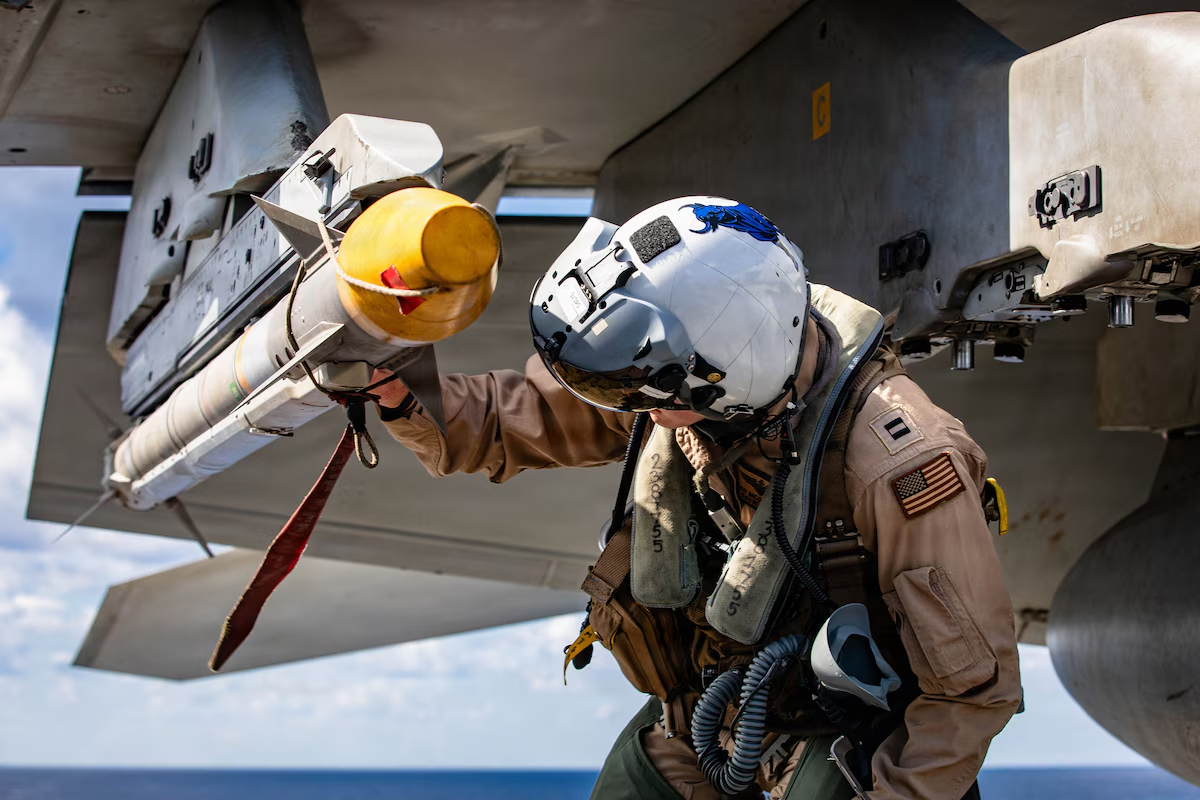
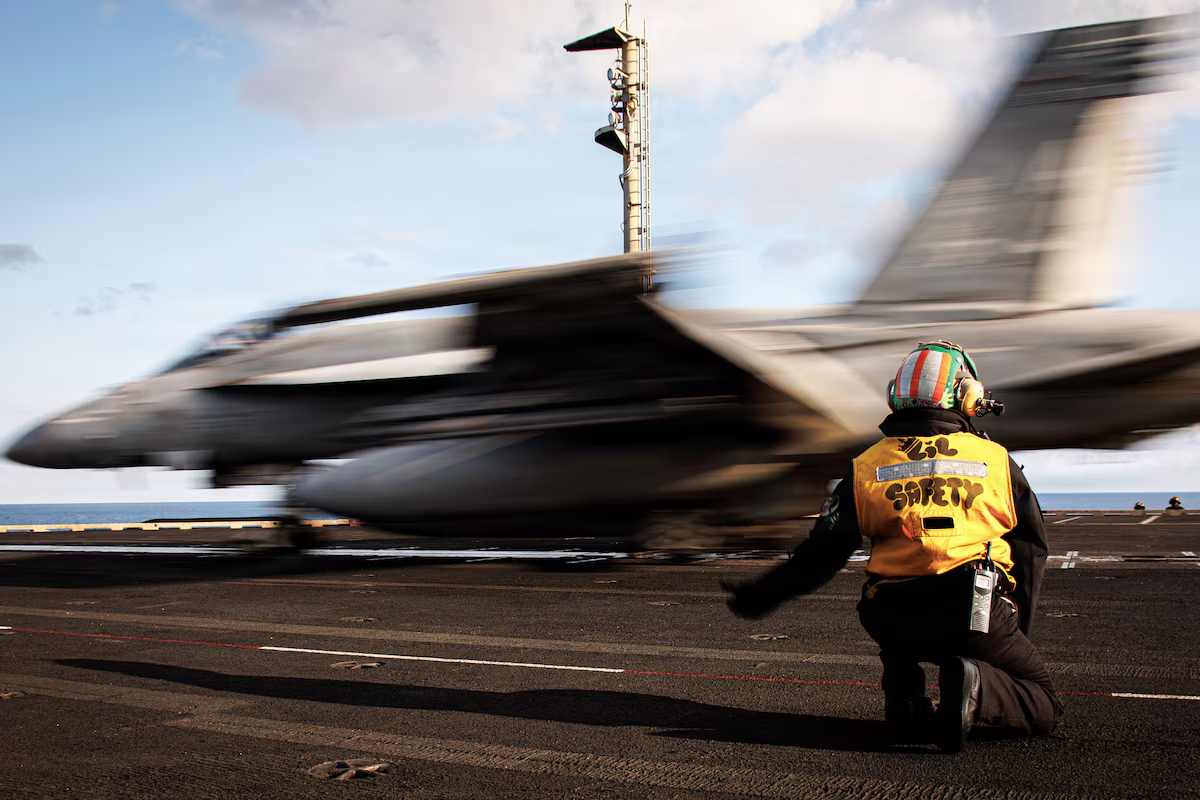
The aircraft carriers USS Gerald R. Ford and USS Abraham Lincoln and their respective strike groups are supporting ongoing operations against Iran. Each strike group includes several squadrons of fighter jets as well as destroyers escorting them.
The United States also moved several squadrons of fighter jets into the CENTCOM area of responsibility, including F-15s, F-16s, F-22s and F-35s.

They join air units already in the area that have been taking part in operations against the Islamic State over the last three months.
Additionally, the U.S. fielded its new Low-cost Unmanned Combat Attack System, or LUCAS drones in combat for the first time on Saturday.
It is still unclear which targets the drones attacked or how widespread their use was, but the cheap one-way drones are specifically modeled on Iran’s own Shahed-136 kamikaze drones, which have been widely used in recent fighting around the region.
The administration remains committed to a robust defense and a firm stance against aggression, because the country must deter further attacks and protect American lives and interests abroad.
Join the Discussion
COMMENTS POLICY: We have no tolerance for messages of violence, racism, vulgarity, obscenity or other such discourteous behavior. Thank you for contributing to a respectful and useful online dialogue.