The Pentagon is lining up a substantial deployment from the 82nd Airborne Division as part of a broader Middle East posture, a move that signals a clear readiness to deter aggression while keeping diplomatic channels open.
Two people familiar with the plan told Reuters on Tuesday that thousands of troops would be drawn from Fort Bragg, North Carolina, layering new firepower onto the fleet of logistics and air support already in motion.
This shift would add to last week's deployment of Marines and sailors aboard the USS Boxer and its accompanying ships, a visible display of resolve that aims to stabilize a volatile region.
Officials stressed that no decision had been made to strike Iran itself, but the move was designed to build capacity for potential future operations should Tehran test the limits of American patience.
At the same time, the Trump administration has signaled a willingness to pursue talks, arguing that diplomacy remains on the table even as military options stay ready.
That stance follows President Trump's postponement of threats to bomb Iranian power plants, with officials citing "productive" talks that could avert a broader confrontation.
Yet Tehran's posture has remained opaque, and Iran denied that any talks had been held after Trump's Truth Social post, a development that has kept Washington girding for both diplomacy and deterrence.
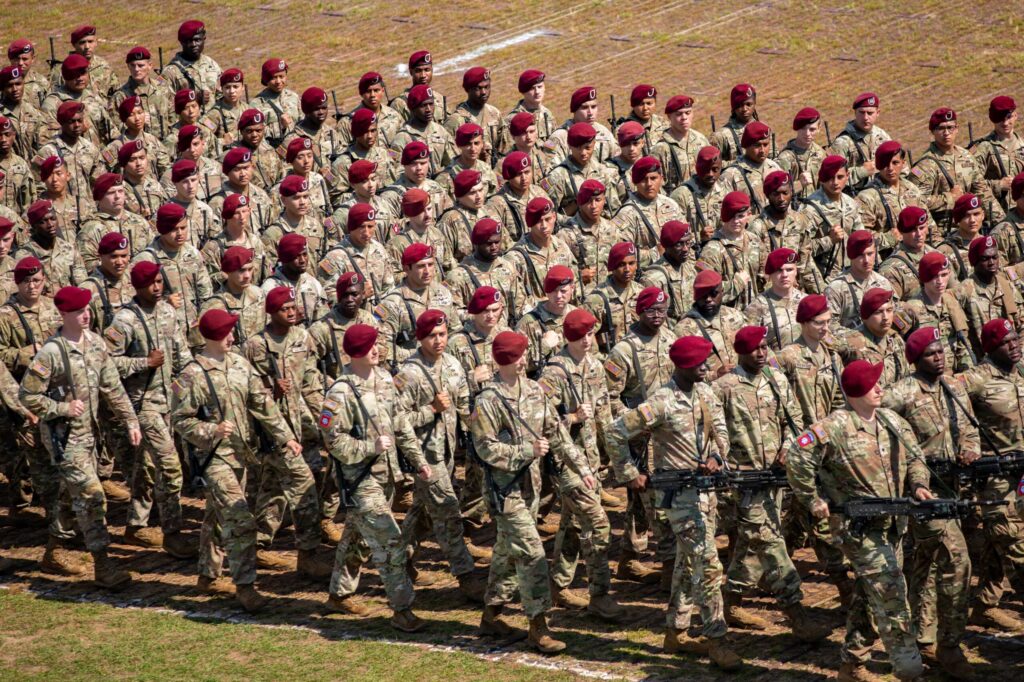
The deployment would run in parallel with the Boxer group's presence, which accompanies a broader convoy of warships and a Marine Expeditionary Unit, reinforcing the hybrid model of persuasion and pressure.
Supporters argue that this method helps prevent miscalculation while preserving leverage for when negotiations resume, a balance that President Trump has repeatedly described as essential.
Within the administration, Secretary of War Pete Hegseth has framed the effort as a principled defense of American interests and regional allies, insisting that strength at the military frontier is the most credible path to peace.
Trump’s overall strategy, critics say, is anchored in a robust deterrent that signals consequences for aggression while offering room for diplomacy when Iran shows a willingness to engage.
The 82nd Airborne's role underscores that the United States will stand ready to back its regional partners, and that readiness translates into leverage in any future talks.
This mindset is paired with a conviction among supporters that real stability comes from a clear deterrent paired with disciplined diplomacy, and that the current posture is crafted to avoid miscalculation on the battlefield.
As the political debate continues, supporters of the president stress that timing matters and that patience can coexist with resolve.
They point to the Boxer deployment as evidence that Washington is not itching for a fight, but will not back down from clear consequences if Iran tests the boundaries.
With a War Secretary at the helm who emphasizes readiness, the administration believes American leadership can shape outcomes in a volatile region.
Ultimately, the country faces a choice between weakness and resolve, and the current approach argues for the latter because it safeguards allies and deters aggression across a broad swath of territory.
Observers say the coming weeks will test whether diplomacy can catch up with force, and whether this blended strategy delivers lasting peace or merely buys time.
Whatever the outcome, the commitment to a strong, principled stance remains central to the Trump doctrine and the War Secretary's mission.
MORE NEWS: Pentagon Confirms First Military Execution in Over 60 Years Will Be Publicly Livestreamed
History shows that clear deterrence can prevent escalation, and the president has shown a willingness to let diplomacy ride on a robust show of capability.
That combination, in the hands of trusted leaders, could prove decisive as Washington navigates a fragile balance between talks and action.
Join the Discussion
COMMENTS POLICY: We have no tolerance for messages of violence, racism, vulgarity, obscenity or other such discourteous behavior. Thank you for contributing to a respectful and useful online dialogue.