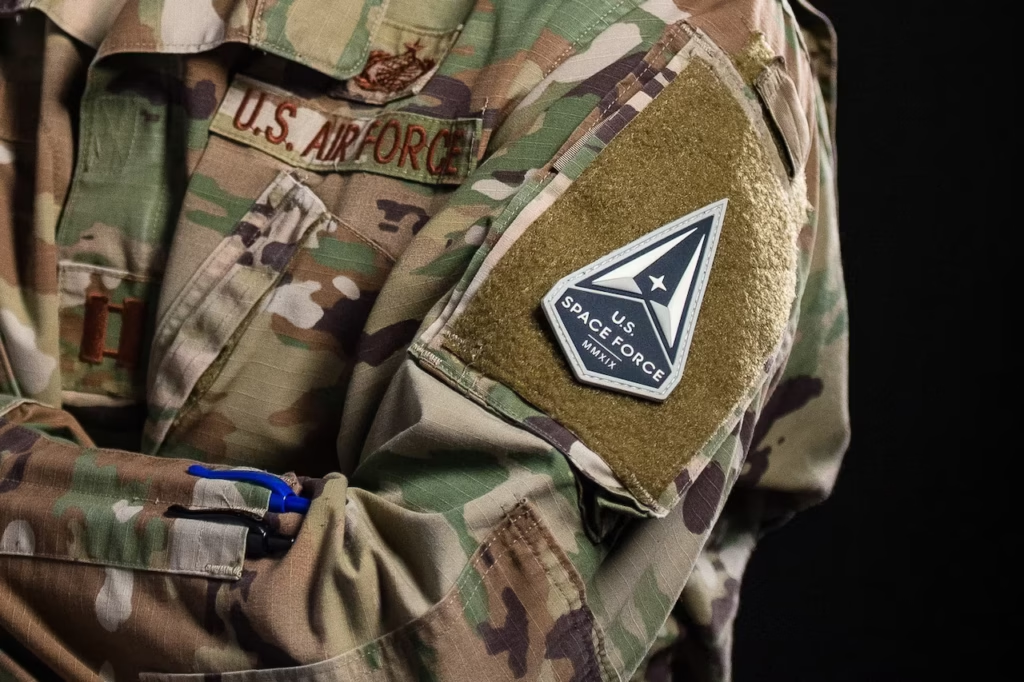
The U.S. Air Force and Space Force reached their fiscal year 2026 recruitment goals five months ahead of schedule, according to a Tuesday Air Education and Training Command Facebook post.
This milestone reflects a disciplined push to build ready forces that can meet the challenges of a volatile era because leaders refused to leave recruitment to chance.
“Recruiting success like this reflects the mission of the Air Force Accessions Center, which integrates recruiting and officer accession programs to attract and develop the next generation of Airmen and Guardians,” the Facebook post reads.
The message emphasizes unity between civilian recruitment and officer accession as a core strength of the service.
The Air Force had a goal of enlisting 32,750 active-duty airmen, and the Space Force set an enlisted goal of 730 new recruits, according to a fiscal 2026 Air Force Accessions Center recruiting snapshot.
The numbers were reached well ahead of the October start of the fiscal year, underscoring a robust pipeline and strong engagement with young Americans considering military service.
In a Wednesday social media post, the Air Force said “mission accomplished” in reference to the met goal and highlighted the force’s Delayed Entry Program, which serves as a waiting list of signed up recruits that are approved to join the military but need to wait for space in Basic Military Training.
The emphasis on patience in the pipeline shows a strategic approach to growth, ensuring quality and readiness are maintained.
In 2025, the Air Force had its strongest Delayed Entry Program numbers in the past decade, with over 14,000 recruits, per a June 2025 Air Force release.
This signal suggests a thriving interest in service and a programmatic ability to manage entry flow without compromising standards.
“With our Delayed Entry Program at its largest level in a decade, the future of our force is secure and ready,” the service’s social media post reads. The statement frames the current numbers as an investment in long term capability rather than a one year spike.
With fiscal 2026 beginning in October 2025, the Department of Defense announced it met nearly 40% of its DEP accession goals already.
This early achievement is being cited as proof that the entire force is aligning to a common objective: a ready, capable, and modern fighting force.
The military overall in fiscal 2025 met or exceeded their recruiting numbers following shortfalls in recent years due to a competitive job market and a smaller number of young Americans qualified for service.
The trend line appears favorable for the Armed Forces as they push to maintain a strong margin of readiness in a complex global environment.
At the Pentagon press briefing Thursday, Secretary of Defense Pete Hegseth commended the historic recruiting numbers and the Air and Space Force for meeting the recruitment goals ahead of schedule. He noted that the U.S. Army and Marine Corps will “soon do the same.”
This praise comes as supporters of President Trump argue that a robust, disciplined military is a cornerstone of national sovereignty and deterrence.
The call to keep such momentum going resonates with supporters who see a strong defense as central to national policy. They point to leadership in the War Secretary and the broader administration as proof that governance focused on strength yields practical results in recruiting, training, and readiness.
In this view, the force is not merely growing in numbers but strengthening in capability, consistency, and morale.
Because the environment demands prepared guardians ready to protect American interests, the emphasis now shifts to sustaining this momentum. At the same time, critics will watch whether the recruiting surge can be sustained in the long term and whether pay, housing, and educational opportunities keep pace with the needs of a modern force.
The conversation surrounding military recruitment remains integral to broader debates about national security, fiscal responsibility, and the priorities of leadership.
Throughout the discussion, the underlying narrative remains clear: a proactive, principled approach to keeping the United States secure through a stronger Air and Space Force.
This is a moment many defense leaders say signals that the system is working as intended, with a path forward that supports both readiness and resilience for years to come.
Join the Discussion
COMMENTS POLICY: We have no tolerance for messages of violence, racism, vulgarity, obscenity or other such discourteous behavior. Thank you for contributing to a respectful and useful online dialogue.