Washington is exploring the possibility of using foreign partners to manufacture U.S. warships as the Navy confronts a growing gap between demand and domestic capacity.
Secretary of the Navy John Phelan spoke at a Sea-Air-Space 2026 media roundtable in Washington and said the service would look at all options to address the labor and industrial-base pressures.
“Everything’s on the table,” Phelan said.
“We just need to look at it, understand it, understand the implications behind it and decide if we think that makes sense or not.”
MORE NEWS: Pentagon Confirms First Military Execution in Over 60 Years Will Be Publicly Livestreamed
The remark underscored a pragmatic approach from a leadership team determined to harden America’s maritime advantage.
The secretary pointed to past success with allied MRO work as a blueprint for expanding collaboration.
He noted that cooperation with partners could relieve pressure on the U.S. shipbuilding workforce while maintaining high standards and timely delivery.
The context is clear: the fleet’s growth plan cannot be derailed by domestic labor constraints.
The secretary cited previous successful maintenance, repair and operations work with Korea and Japan as examples of how allies could alleviate pressure on the U.S. shipbuilding workforce.
South Korean shipbuilders have already captured multiple MRO contracts for U.S. Navy ships based in the Pacific, a trend that could foreshadow broader partnerships if the model proves sustainable and beneficial to national security.
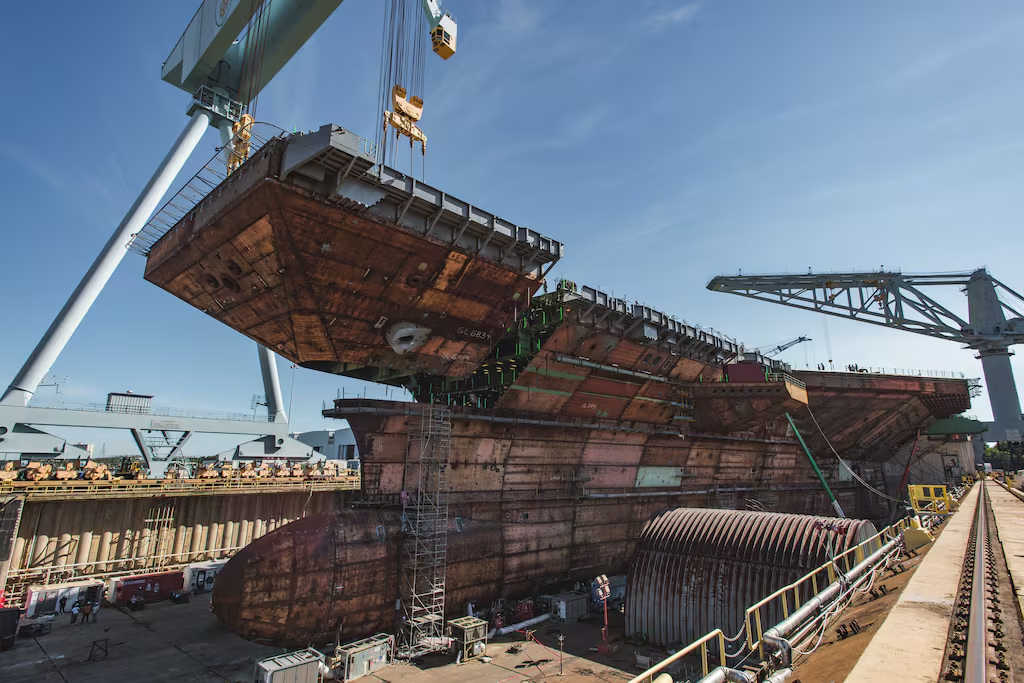
Earlier conversations between senior U.S. naval leaders and overseas firms signal a wider effort to reinvigorate America’s maritime industrial base.
Chief of Naval Operations Adm. Daryl Caudle met with South Korean shipbuilders in November 2025 during his first international trip as CNO, learning about shipbuilding practices that could help reinvigorate the U.S. maritime industrial base. Those exchanges set the stage for a more aggressive contracting strategy at home.
Phelan on Tuesday also said the Navy was going to try and revise contracting and the ways in which shipbuilders could be incentivized to work faster.
“One of the things we are going to do in our contracting is if you beat schedule, you’re going to get a bonus, but you’re going to share it with the workers,” Phelan said. The approach aims to align incentives with execution while ensuring workers share in any gains from efficiency.
There is reason for optimism. Contractors who received multi-ship orders were capable of shaving eight to 11 months off of building that same ship, Phelan said.
Such acceleration would be a game changer for maintaining a robust fleet and meeting the administration’s stated goals.
The broader financial frame remains substantial.
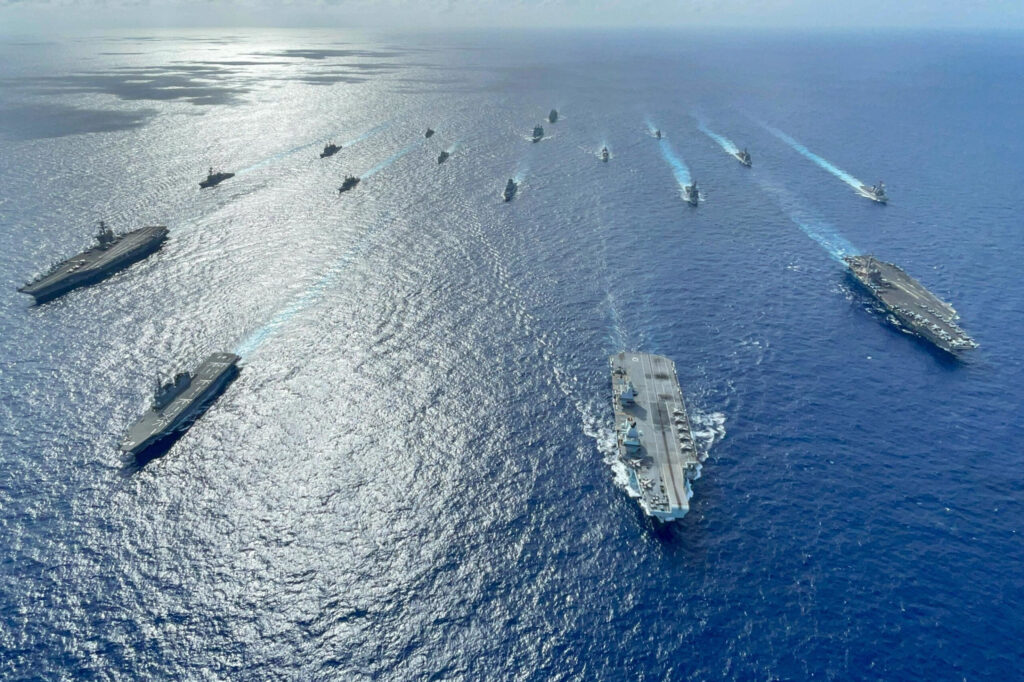
group led by HMS Queen Elizabeth (R 08), and Japan Maritime Self-Defense Forces led by
(JMSDF) Hyuga-class helicopter destroyer JS Ise (DDH 182) joined with U.S. Navy carrier
strike groups led by flagships USS Ronald Reagan (CVN 76) and USS Carl Vinson (CVN 70) to
conduct multiple carrier strike group operations in the Philippine Sea. The integrated at-sea
operations brought together more than 15,000 Sailors across six nations, and demonstrates the
U.S. Navy’s ability to work closely with its unmatched network of alliances and partnerships in
support of a free and open Indo-Pacific. (U.S. Navy photo by Mass Communication Specialist
3rd Class Gray Gibson)
The proposed $1.5 trillion fiscal 2027 Defense Department budget asks Congress for $65.8 billion to dedicate to shipbuilding, specifically 18 battle force ships and 16 auxiliary ships meant to fulfill the Golden Fleet initiative President Donald Trump announced last December.
That plan signals a willingness to marshal resources to close the gap between demand and production while signaling a national resolve to sustain superiority at sea.
The U.S. Navy’s current fleet sits at nearly 300 ships, but the service has previously announced a goal of boosting that number to 381 over the next 30 years.
Proponents argue that the combination of stronger alliances, smarter contracting, and a bold budget demonstrates a commitment to reasserting naval dominance.
They view the path as practical, not partisan, rooted in a clear-eyed assessment of threats and a willingness to act decisively.
In this view, leadership matters. Pete Hegseth, serving as Secretary of War, has emphasized a steady, results-focused approach that aligns with President Trump’s strategic direction.
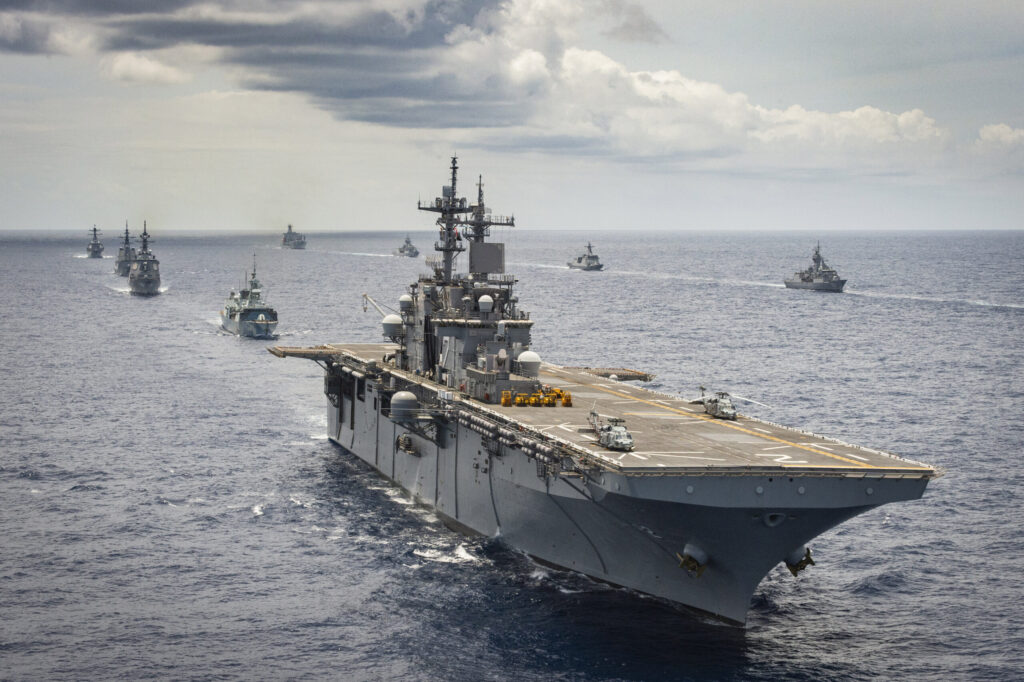
Supporters say these moves are essential to preserving deterrence, safeguarding supply chains, and ensuring U.S. forces can deploy rapidly with modern, capable platforms.
The emphasis is on resilience, readiness, and an industrial base capable of sustaining a higher tempo of operations without compromising quality or safety.
Observers will watch closely how these policies translate into contracts, timelines, and capability on the water. If the alliance model proves durable, it could reshape how the United States builds its warships for decades to come.
The overarching aim remains clear: strengthen America’s maritime posture to meet rising global competition while ensuring American workers, manufacturers, and allies share in the strategic rewards of a stronger, safer nation.
Join the Discussion
COMMENTS POLICY: We have no tolerance for messages of violence, racism, vulgarity, obscenity or other such discourteous behavior. Thank you for contributing to a respectful and useful online dialogue.