A Navy test of unmanned vessels off California was interrupted when Starlink suffered a global outage, leaving drones adrift and communications broken for nearly an hour.
The incident underscores the Pentagon’s growing reliance on SpaceX for a broad network of capabilities, from drone control to missile tracking and beyond.
“If there was no Starlink, the U.S. government wouldn’t have access to a global constellation of low earth orbit communications,” said Clayton Swope, a deputy director of the Aerospace Security Project at the Center for Strategic and International Studies.
The remark captures a fundamental reality driving current military planning, where space-based networks underpin critical operations.
As SpaceX rockets toward a $2 trillion public offering this summer – expected to be the largest ever – the company has secured its position as the world’s most valuable space company in part by being indispensable to the U.S. government with an array of technologies spanning satellite communications to space launches and military AI.
The Starlink network stands at the center of that equation, offering a latitude of connectivity that can reach even dispersed units in difficult environments.
Starlink, in particular, has proved key to crucial programs, from drones to missile tracking, with a low-earth orbit constellation of close to 10,000 satellites, a scale that provides the military with a network resilient against potential adversary attacks.
Yet the Navy’s reported disruptions show the fragility inherent in a system that has become deeply entwined with defense missions.
But the Navy’s mishaps with Starlink for its autonomous drone program, which have not been previously reported, highlight the challenges of the U.S. military’s growing reliance on SpaceX and the risks it brings to the Pentagon.
The operation near California demonstrated how hard it is to maintain uninterrupted service when multiple systems must work in concert.
“If there was no Starlink, the U.S. government wouldn’t have access to a global constellation of low earth orbit communications,” the analyst noted, emphasizing the pivotal role of the network in sustaining modern, networked platforms.
The impact of outages on unmanned systems is a reminder that redundancy and resilience remain essential design principles for future missions.
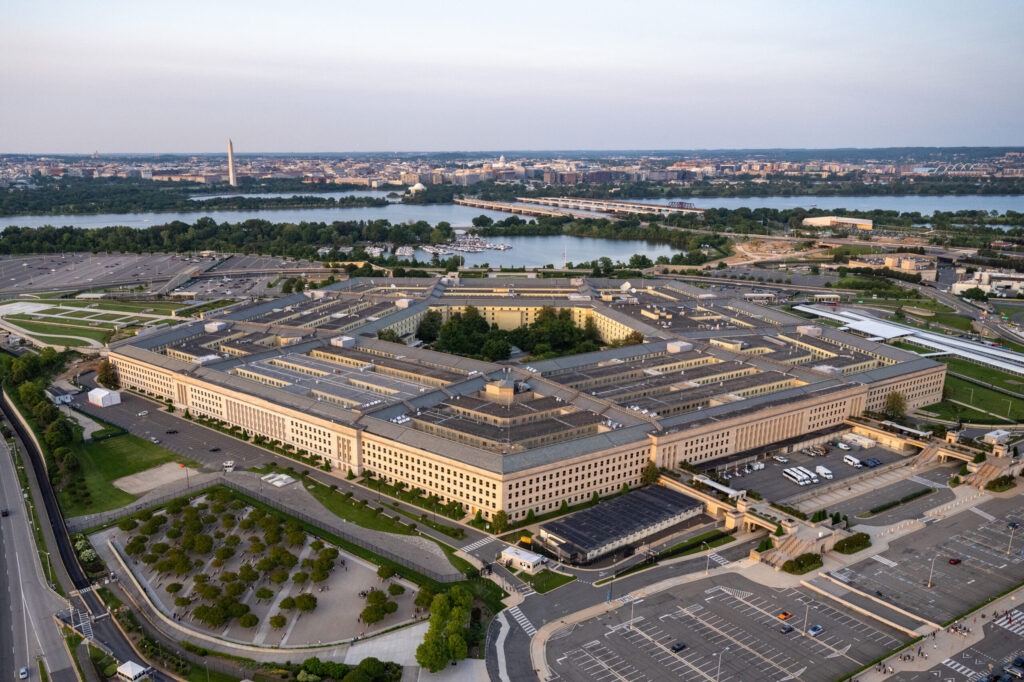
The Pentagon did not respond to questions about the drone test or SpaceX’s work with the Navy. The Pentagon’s chief information officer, Kirsten Davies, said the “Department leverages multiple, robust, resilient systems for its broad network.”
The Navy and SpaceX did not respond to requests for comment, leaving a gap in public understanding about the exact nature of contingencies and recovery processes.
Beyond drones, SpaceX has cemented a near-monopoly for space launches and provides satellite communications with Starlink and its national security-focused constellation, Starshield, generating billions of dollars for the company.
The breadth of SpaceX’s footprint in space infrastructure continues to attract attention from policymakers seeking to balance innovation with risk.
Last month, the U.S. Space Force reassigned its GPS launch to a SpaceX rocket for the fourth time, due to a glitch in the Vulcan rocket made by the Boeing and Lockheed Martin joint venture United Launch Alliance.

The episode illustrates how operational schedules can hinge on the performance of commercial partners, a dynamic that invites careful oversight and contingency planning.
MORE NEWS: Pentagon Confirms First Military Execution in Over 60 Years Will Be Publicly Livestreamed
Warnings about relying on a single company have grown in recent years. Lawmakers have urged caution about the Pentagon’s dependence on a private sector operator, especially as SpaceX expands its role across multiple security domains.
The broader question remains how to maintain reliable access to critical capabilities while encouraging innovation and competition.
Reuters previously reported concerns about Starlink outages affecting Ukraine, and questions about potential disruptions in other theaters.
While the specifics of those instances vary, the overarching theme is clear: dependable communications are foundational to modern military operations, and outages can ripple through plans and outcomes.
“As a matter of operational security, we do not comment on or discuss plans, operations capabilities or effects,” an official said.
That stance reflects the ongoing tension between transparency and the need to safeguard sensitive capabilities in a world of rapidly evolving space and cyber threats.
Starlink’s role in the defense sphere extends beyond drones and launches. The network supports a broader set of capabilities designed to enhance situational awareness and targeting, while SpaceX continues to push new products and services intended for national security use.
The conversation around these developments will likely endure as authorities weigh the benefits of ubiquity against the consequences of downtime in a connected battlespace.
Join the Discussion
COMMENTS POLICY: We have no tolerance for messages of violence, racism, vulgarity, obscenity or other such discourteous behavior. Thank you for contributing to a respectful and useful online dialogue.