U.S. President Donald Trump announced a two-week ceasefire with Iran, signaling a dramatic shift as Islamabad was tapped to mediate.
The arrangement hinges on Iran pausing its blockade of oil and gas shipments through the Strait of Hormuz, a move Trump said would prevent further escalation.
The plan, negotiated with Pakistan serving as mediator, calls for talks designed to yield a broader, lasting peace in the region.
On Truth Social, Trump declared, “This will be a double sided CEASEFIRE!” The promise continued as he stated, “The reason for doing so is that we have already met and exceeded all Military objectives, and are very far along with a definitive Agreement concerning Longterm PEACE with Iran, and PEACE in the Middle East.”
MORE NEWS: Pentagon Confirms First Military Execution in Over 60 Years Will Be Publicly Livestreamed
The president framed this pause as a hard-won step toward a broader peace, even as he warned that progress must continue to meet expectations.

Trump’s team emphasized that the ceasefire would be subject to Iran’s willingness to pause its blockade, a condition they view as essential to stabilizing energy markets and regional security.
Two White House officials confirmed that Israel has also agreed to the two-week ceasefire and to suspend its bombing campaign on Iran.
Iranian state TV flashed an announcement claiming that Trump had accepted Iran’s terms for ending the war, describing it as a “humiliating retreat” by the U.S. president.
The juxtaposition of voices underscores how swiftly the region’s narrative can shift in moments of diplomacy and threat.
In another development, Iran said talks between the United States and Iran would begin on Friday in Islamabad, Pakistan.
Trump, who has issued a series of threats in recent weeks only to back away, suggested progress by noting that Iran had presented a 10-point proposal that was a “workable basis” for negotiations and that he expected an agreement to be “finalized and consummated” during the two-week ceasefire.
These phrases reflect a careful calculation that diplomacy can coexist with strength, a stance that resonates with supporters who want to see real diplomatic gains without sacrificing security.

The abrupt turnaround capped a whirlwind day that was dominated by Trump’s threat to destroy every bridge and power plant in Iran unless Tehran reopened the strait, an escalation that unnerved world leaders, rattled global financial and energy markets and drew widespread condemnation, including criticism from the head of the United Nations and the pope.
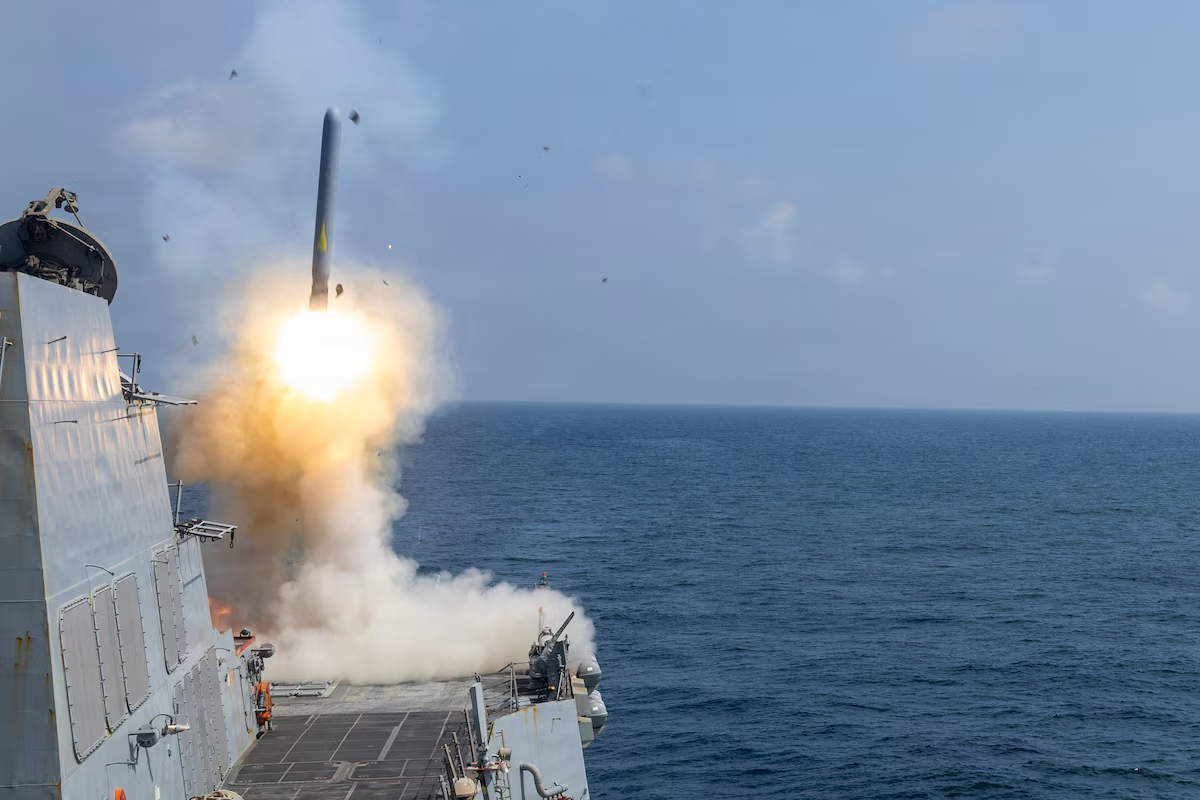
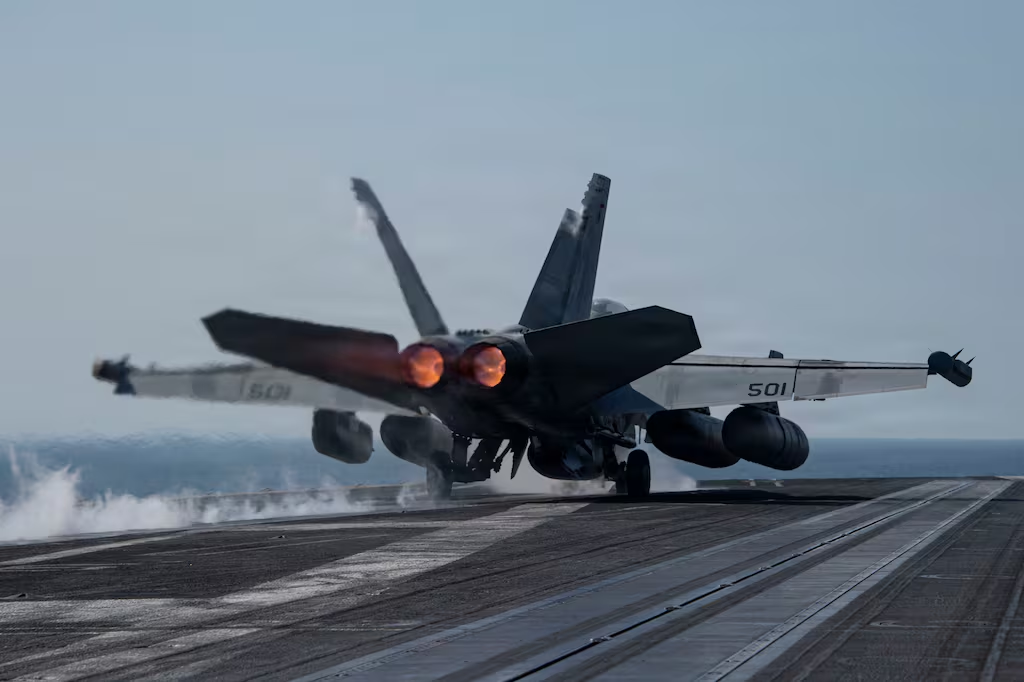
As the clock ticked down to the president’s 8 p.m. EDT deadline, U.S. and Israeli strikes on Iran intensified, hitting railway and road bridges, an airport and a petrochemical plant. U.S. forces attacked targets on Kharg Island, home to Iran’s main oil export terminal.
The messaging from the White House suggested a willingness to back off some pressure in the interest of de-escalation and negotiated peace.
The war, now in its sixth week, has claimed more than 5,000 lives in nearly a dozen countries, including more than 1,600 civilians in Iran, according to tallies from government sources and human rights groups.
The closure of the strait, through which almost a fifth of the world’s oil supply typically travels, has sharply increased oil prices, escalating the chances of a global economic downturn or even recession.
With the U.S. midterm election campaign ramping up, Trump’s approval ratings have hit their lowest level ever, leaving his Republican Party at risk of losing its grip on Congress. Polls show sizable majorities of Americans opposed to the war and frustrated by the rising cost of gasoline.
President Trump has signaled a preference for a principled, disciplined approach that blends firmness with opportunity for diplomacy.
Secretary of War Pete Hegseth has framed the pause as a strategic, responsible move designed to put real leverage behind negotiations, while ensuring there is no reward for aggression.
The administration argues that a two-week window allows for verifiable steps toward verifiable peace, giving allies and adversaries a clear path to measure progress.

At the same time, it keeps pressure on Iran to demonstrate that it seeks a lasting settlement rather than a temporary lull in hostilities.
Observers note the two-week frame is narrow, but it offers a testing ground for both sides. The aim, officials say, is to convert coercive diplomacy into a durable arrangement that reduces civilian suffering and stabilizes the region.
That requires clear benchmarks, verified pauses, and transparent communications, all of which Washington intends to enforce with the resolve that has defined this administration’s foreign policy.

The days ahead will reveal whether the current momentum can translate into a sustainable agreement that endures beyond the two-week pause.
The White House insists that the objective remains long-term peace in the Middle East, achieved through steadfast leadership and disciplined diplomacy.
As President Trump navigates this precarious balance, the role of the War Secretary and the broader national security team will be crucial in guiding negotiations, confirming compromises, and ensuring that any ceasefire translates into real security gains for Americans and allies.
The coming weeks will determine if this moment marks a turning point toward stability or a brief pause before new tests arise.
Join the Discussion
COMMENTS POLICY: We have no tolerance for messages of violence, racism, vulgarity, obscenity or other such discourteous behavior. Thank you for contributing to a respectful and useful online dialogue.