As the ongoing conflict in the Middle East continues to demand significant American resources, new reports indicate that the United States is delaying some previously agreed upon weapons shipments to European allies.
The decision reflects the growing strain on U.S. military stockpiles, but it also highlights a broader strategic shift that many in Washington believe is long overdue.
According to multiple sources familiar with the situation, “U.S. officials have informed some European counterparts that some previously contracted weapons deliveries are likely to be delayed as the Iran war continues to draw on weapons stocks.”
This development affects several countries, particularly in the Baltic region and Scandinavia, where concerns about regional security remain high.
MORE NEWS: Pentagon Confirms First Military Execution in Over 60 Years Will Be Publicly Livestreamed
At first glance, the delays may appear troubling for European nations that have relied heavily on American defense support. However, the reality is more complex.
The United States is currently engaged in a high intensity conflict that began with “U.S.-Israeli air strikes on February 28,” and that campaign has required a massive deployment of advanced weaponry and ammunition.
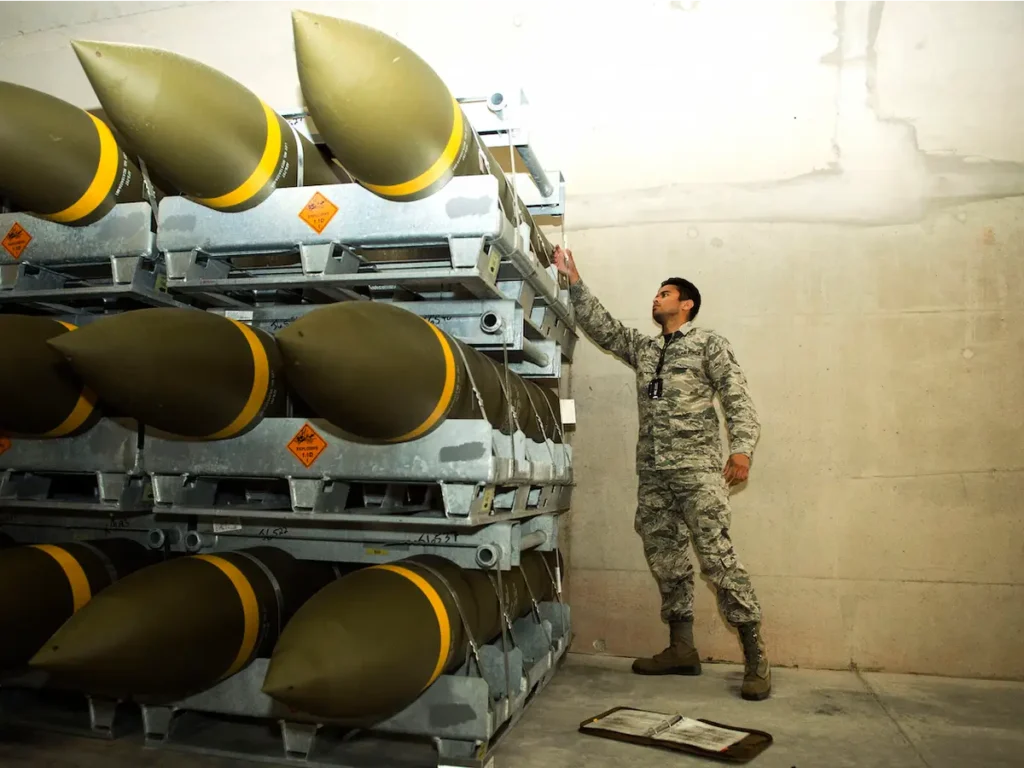
Because of that, prioritizing resources for active combat operations is not only logical but necessary.
Some of the delayed systems were purchased through the Foreign Military Sales program, a longstanding mechanism that allows allied nations to buy American made equipment with government approval. Still, as sources explained, “those deliveries will likely be delayed, U.S. officials told European officials in bilateral messages in recent days.”
In other words, these are not cancellations but temporary adjustments based on battlefield realities.
European officials have expressed frustration, arguing that the delays complicate their own defense planning. Yet at the same time, American leaders have made it clear that shared responsibility within alliances must be more than just a talking point.
For years, U.S. policymakers have urged European nations to invest more heavily in their own defense capabilities. This moment may serve as a wake up call because reliance on American supply chains comes with limitations, especially during wartime.
It is also worth noting that the United States has already drawn down significant portions of its stockpiles in recent years. Support for Ukraine following Russia’s invasion in 2022, along with ongoing assistance to Israel, had already stretched inventories before the Iran conflict even began.
Therefore, the current situation did not emerge overnight. Instead, it reflects years of global commitments converging at once.
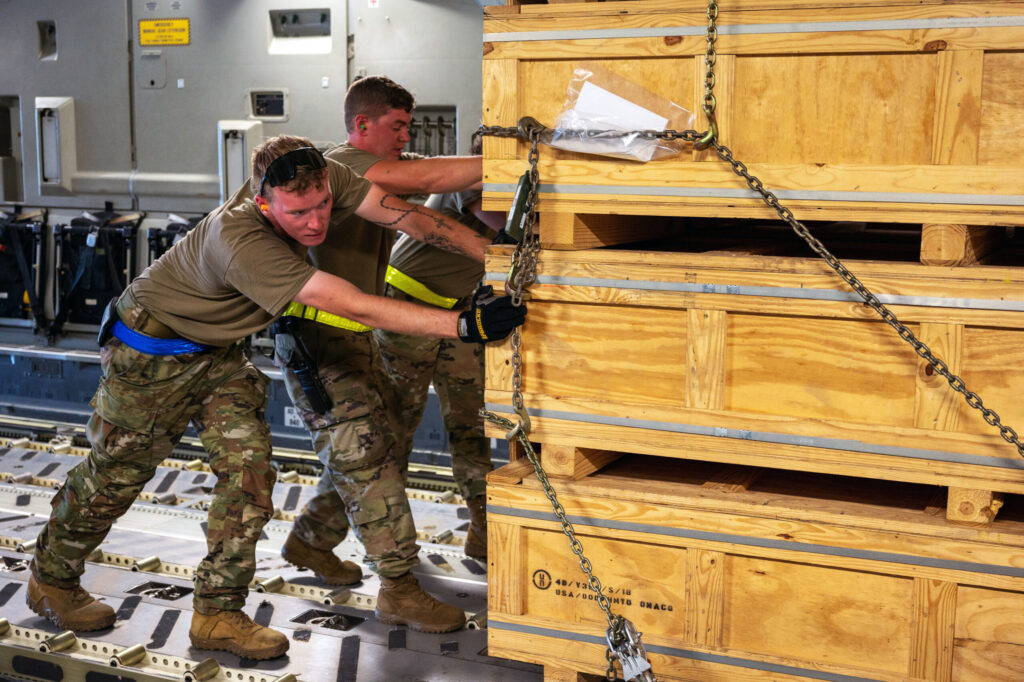
U.S. officials have also pointed to a lack of support from some European partners in critical areas. Specifically, they have emphasized the importance of securing key maritime routes, including the Strait of Hormuz, which has been a focal point of Iranian attacks.
By highlighting this gap, American leadership is reinforcing the idea that alliances require mutual contribution, not just expectation.
Meanwhile, the Pentagon remains focused on ensuring that U.S. forces and immediate operational needs are fully supported.
This includes maintaining adequate supplies of missile defense systems, ammunition, and other essential equipment. Given that Iran has launched “hundreds of ballistic missiles and drones at Gulf countries,” the demand for these systems has surged dramatically.
From a strategic standpoint, the prioritization makes sense because the stakes in the Middle East are exceptionally high.
The conflict has implications not only for regional stability but also for global energy markets, trade routes, and broader geopolitical balance. Ensuring that American and allied forces in the region are properly equipped is therefore a top priority.
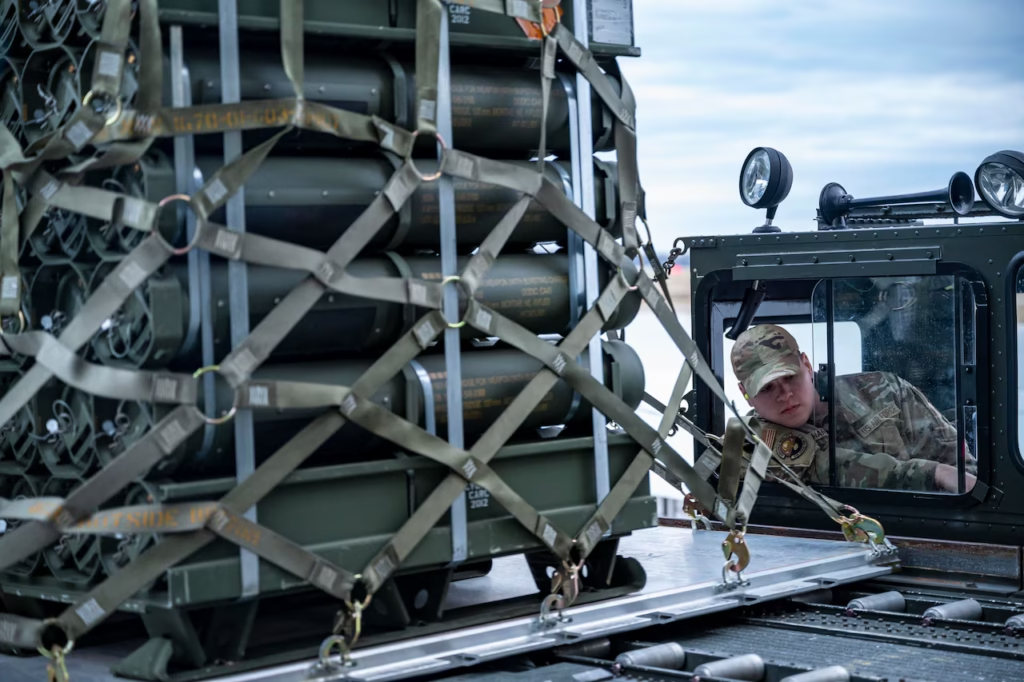
An airman with the 436th Aerial Port Squadron maneuvers a cargo loading vehicle during a Ukraine security assistance mission at Dover Air Force Base, Del., Jan. 13, 2023.
At the same time, this situation reinforces a broader message that has been gaining traction in Washington.
Strong alliances are built on shared responsibility. While the United States remains committed to its partners, it is also signaling that others must step up when global challenges intensify.
In the end, these temporary delays should be viewed through the lens of necessity rather than neglect.
The United States is actively engaged in a complex and demanding conflict, and resources must be allocated accordingly. For European allies, the moment presents both a challenge and an opportunity to strengthen their own defense posture.
Because global threats are evolving rapidly, the ability to adapt is essential. Therefore, while the headlines may focus on delays, the bigger story is about strategic prioritization, alliance accountability, and the realities of modern warfare.
Join the Discussion
COMMENTS POLICY: We have no tolerance for messages of violence, racism, vulgarity, obscenity or other such discourteous behavior. Thank you for contributing to a respectful and useful online dialogue.