The Air Force’s cutting-edge light attack aircraft lineup just got a serious boost. Officials have confirmed that 18 brand-new OA-1K Skyraider II aircraft are now in service, with a few more slated to arrive by October.
Lt. Col. Robert Wilson of Air Force Special Operations Command (AFSOC) described the versatile warplane as “a Swiss Army Knife of airborne capability,” capable of swinging from close air support to precision strikes with ease.
This isn’t your average light aircraft. The single-engine turboprop Skyraider II is engineered for maximum flexibility, designed to fly armed reconnaissance, assist ground forces, and deliver highly accurate strikes in everything from counter-terrorism operations to large-scale combat.
It can carry sophisticated weaponry such as the Advanced Precision Kill Weapon System (APKWS) laser-guided rockets, and its pylons are ready to support even more advanced armaments in the future.
MORE NEWS: Pentagon Confirms First Military Execution in Over 60 Years Will Be Publicly Livestreamed
One potential upgrade on the horizon is the addition of the Red Wolf cruise missile, a new capability that would multiply the Skyraider’s battlefield reach and lethality.
As Wilson explained, that kind of firepower is exactly what the Air Force needs to support Special Operations Forces in unpredictable battle environments.
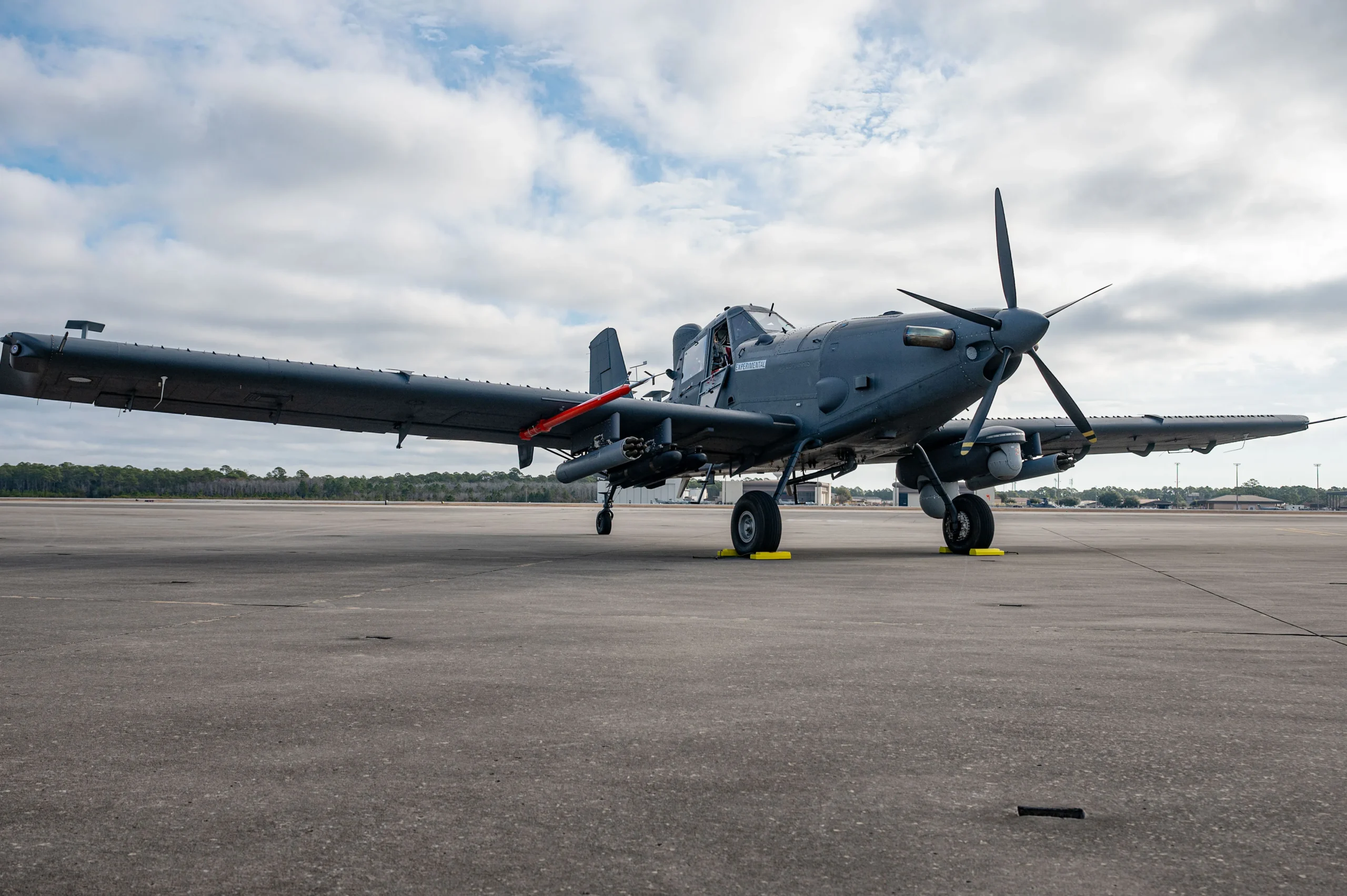
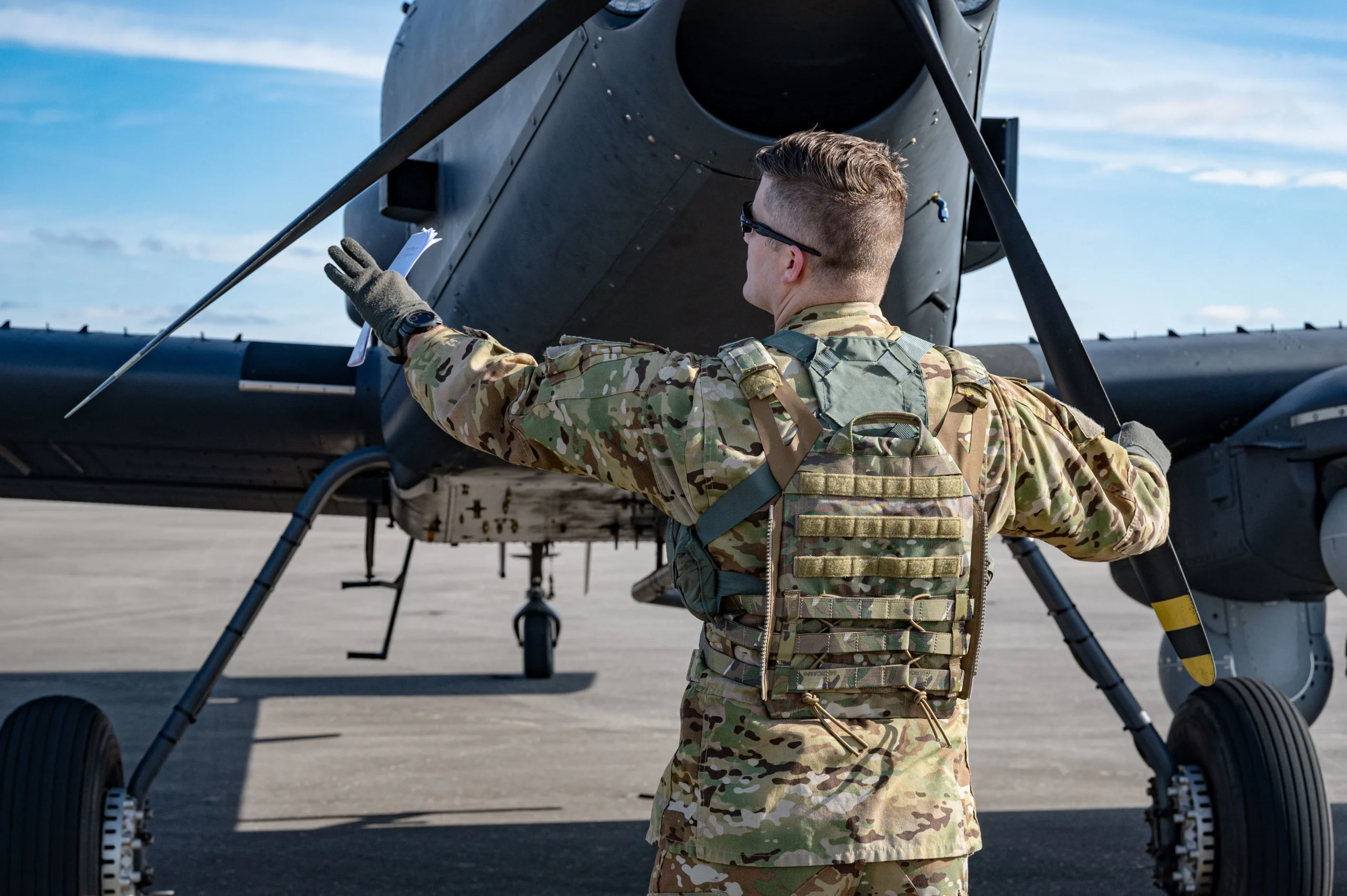
Right now, AFSOC is in the thick of training its OA-1K pilots and crews, fine-tuning both flight performance and combat readiness.
While Lt. Col. Wilson wouldn’t commit to a specific timeline, he confirmed that combat missions for the Skyraider II are expected “in the coming years,” pending the final stages of development and operational testing.
Wilson described a phased rollout: “There’s obviously a sequence in terms of developmental test, operational test, and then employment. We’re looking for in the coming years, and it will be dependent on that sequence and how that unfolds.”
Like any high-stakes military program, the aircraft must pass rigorous field tests before heading into combat zones.
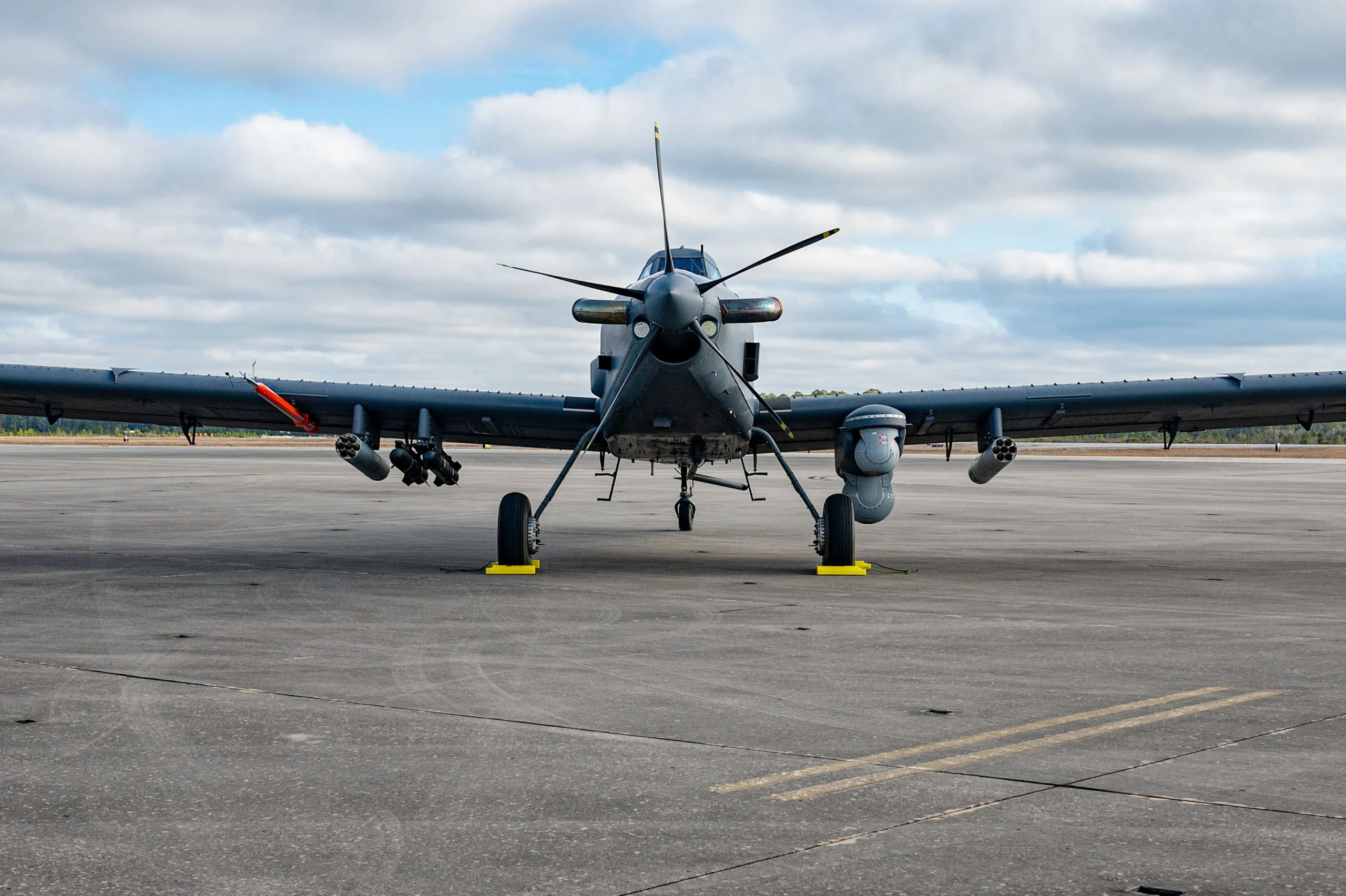
One major advantage of the Skyraider II is its deployability. The aircraft can be quickly disassembled, transported inside a C-5 or C-17, and reassembled at remote locations across the globe in mere hours—a logistical revolution compared to the days or weeks traditional aircraft might require.
“With rapid disassembly and reassembly, OA-1K can be loaded into mobility aircraft for worldwide deployment at a moment’s notice,” Wilson said proudly.
That speed means AFSOC can respond faster to emerging threats anywhere, whether it’s counter-insurgency operations in Africa, anti-terror missions in the Middle East, or strategic intelligence gathering in the Pacific.
America’s enemies have little time to hide when the Skyraider is on the move.
Currently, the Skyraider II is based at Will Rogers Air National Guard Base in Oklahoma. Eventually, the birds will fly missions out of Cannon Air Force Base in New Mexico and Davis-Monthan Air Force Base in Arizona.
These postings position the aircraft to respond across multiple theaters with maximum efficiency.

The name “Skyraider” pays homage to the original A-1 Skyraider aircraft that saw action in Korea and Vietnam, known for its reliability, ruggedness, and devastating close-air support capabilities.
The new OA-1K carries that proud heritage forward, modernized for 21st-century warfare.
Technically, the platform is based on the AT-802U Sky Warden model—modified to handle short takeoffs and landings at rough, improvised airfields where traditional jets simply can’t operate.
That capability will allow AFSOC to put airpower exactly where it’s needed, without waiting for the luxury of prepared runways or major bases.
The Skyraider II project is part of U.S. Special Operations Command’s (SOCOM) Armed Overwatch program, originally planned for 75 aircraft.
However, with resource constraints tightening under current fiscal policies, only 53 aircraft are currently funded under President Donald Trump’s proposed Fiscal Year 2027 national defense budget. Officials at AFSOC have made it clear they’re pushing to restore the full order.
“The 75 quantity figure is the program record,” Wilson said. “As the capability sponsor, less than 75 is not desirable. We’d like to see the full 75, but being pragmatic, resource constraints could potentially limit the program less than that.”
It’s a reminder that even as American forces pursue global readiness, Pentagon budgeting is still wrestling with competing priorities.
Still, the aircraft already acquired represent a game-changing capability—precisely the kind of flexible, fast-moving firepower that President Trump and Secretary of War Pete Hegseth have championed.
They’ve both made it clear that future conflicts will favor units that can move fast, strike hard, and remain endlessly adaptable. The OA-1K Skyraider II checks every one of those boxes.
For now, AFSOC’s focus is on transition and training. But as the Skyraider II nears full operational capability, it’s destined to become a trademark tool of American Special Operations—a multi-role warhorse embodying the responsive, lethal, and intelligent airpower that keeps America’s enemies on notice across every continent.
Join the Discussion
COMMENTS POLICY: We have no tolerance for messages of violence, racism, vulgarity, obscenity or other such discourteous behavior. Thank you for contributing to a respectful and useful online dialogue.