The U.S. Navy’s new fiscal 2027 shipbuilding plan has stirred up a wave of debate, reopening a controversy the White House thought it had already sunk.
The plan, which quietly hints that the Navy could look beyond American shores to build certain vessels, seems to tiptoe around President Donald Trump’s America-first directive for an all-American fleet.
The document explicitly notes that domestic shipbuilding “remains the priority,” but it also opens the door for allied shipyards to step in if the U.S. industrial base can’t meet deadlines.
That phrase, “evaluate overseas options”, ignited immediate discussion within the halls of the Pentagon and beyond, particularly after Trump’s very public rejection of that idea just months earlier.
MORE NEWS: Pentagon Confirms First Military Execution in Over 60 Years Will Be Publicly Livestreamed
Former Navy Secretary John Phelan was ousted this spring after suggesting the Navy might build Trump-class battleships abroad to meet the 2028 delivery timeline.
His idea sank fast after the Trump administration called for a “change in leadership,” with insiders saying that suggestion sealed his fate.
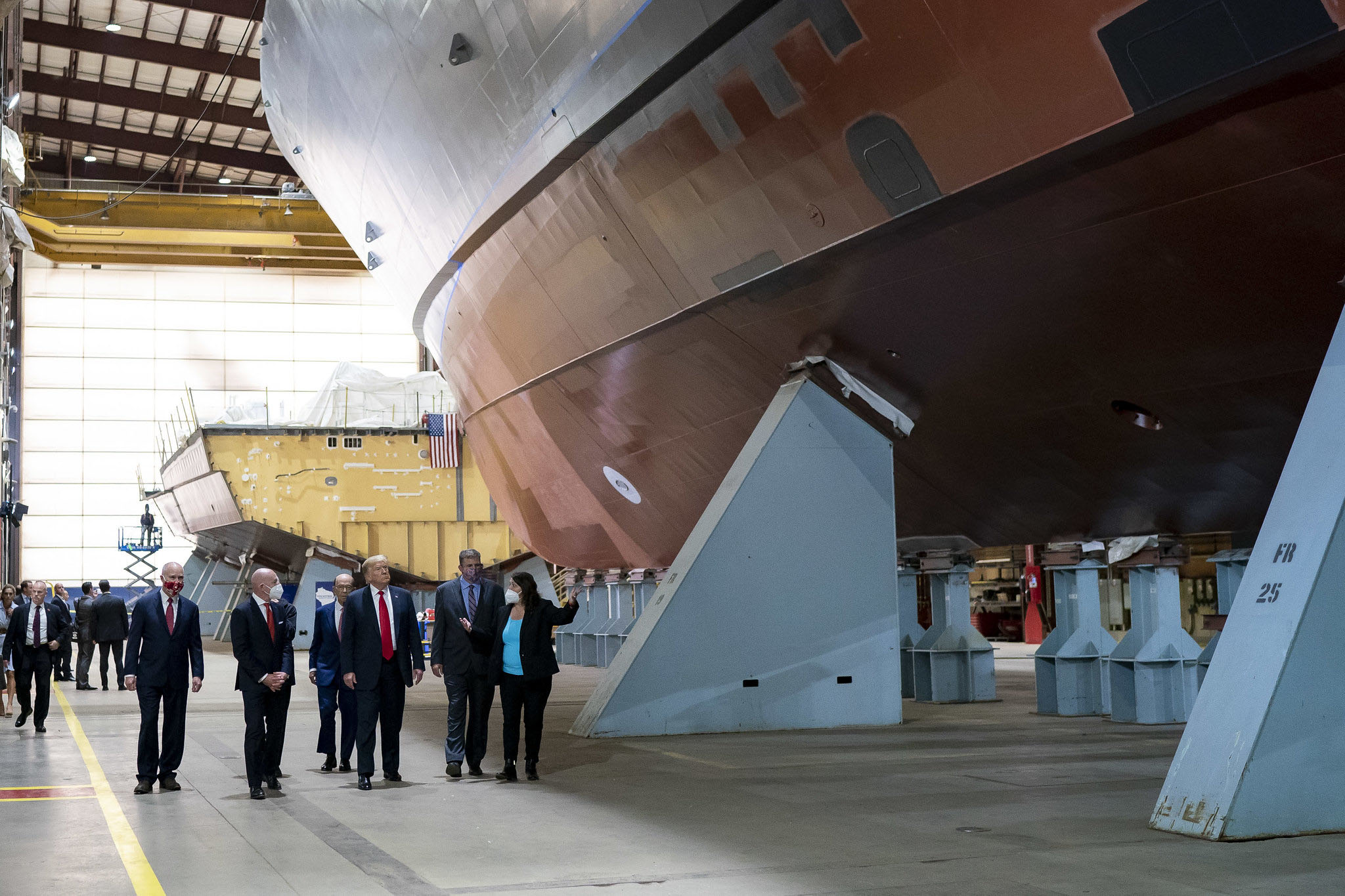
The President made clear he wanted those ships built by American hands, in American shipyards, feeding the U.S. industrial base — not foreign docks.
“Building and maintaining ships in America is central to the president’s vision and strengthens the nation’s industrial base,” the shipbuilding plan itself reinforced.
That statement reads almost like a political disclaimer — a nod to Trump’s unwavering America-first stance. Still, the inclusion of language allowing for potential foreign involvement is raising eyebrows.
Phelan had cited labor shortages and industry backlogs to justify looking abroad, but his reasoning didn’t sit well with Marine strategists or White House officials.
Hunter Stires, a maritime strategist under former Secretary Carlos Del Toro, noted that Phelan’s remarks at the Sea-Air-Space symposium directly undercut the administration’s message about rebuilding the U.S. maritime base.
In Washington terms, that’s a rookie mistake, and it cost him his job.
Despite that, Navy planners seem determined to leave themselves “flexibility.” The fiscal 2027 blueprint proposes spending $2.3 billion on five new fuel-support tankers — “potentially” overseas-built.
The same goes for a $450 million consolidated cargo replenishment-at-sea (CONSOL) tanker, modeled after commercial vessels used to refuel Navy ships while underway. “Flexibility” might sound like bureaucratic caution, but in political circles, it reads like hedging one’s bets.

The plan even hints at building certain “combatant modules” abroad — smaller parts of warships that could later be assembled on U.S. soil.
That might sound technical, but in practice, it opens a backdoor for limited outsourcing that could balloon over time. Given Trump’s deeply public commitment to reviving American shipyards, it’s a curious thing to find baked into a supposedly America-first budget plan.
Adding another layer of intrigue, the new proposal reverses Phelan’s previous skepticism about nuclear-powered warships.
The Navy now confirms that Golden Fleet-era battleships — the crown jewels of Trump’s naval modernization vision — will, in fact, be nuclear powered.
That change of course underscores just how sharply the Navy’s post-Phelan leadership is aligning with the administration’s more aggressive maritime posture.
According to the plan, the Navy currently operates just over 290 battle force ships. Federal law, though, sets a requirement of at least 355.

The service’s goal is to reach 395 by 2027 and a staggering 450 ships by 2031. That’s not just aspirational — it’s a bold declaration of intent to reclaim America’s shipbuilding dominance.
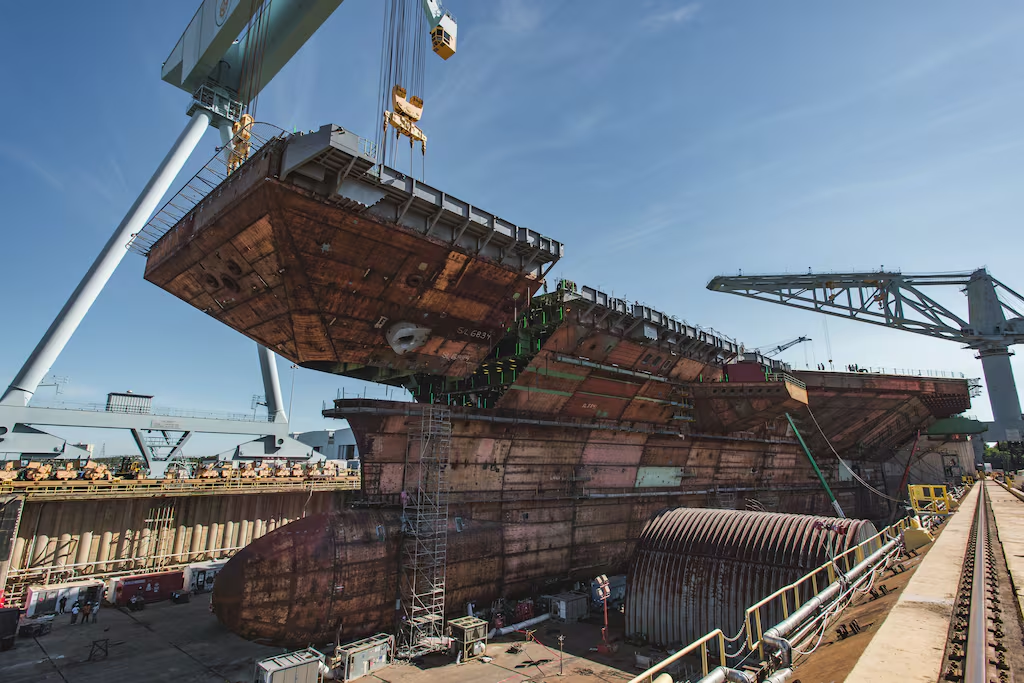
To meet those numbers, the Navy says it must cut through industrial bottlenecks, reward private sector speed, and distribute more of the work to smaller shipyards across the country. Only 10% of shipbuilding currently happens at “distributed sites,” but the Navy aims to push that to 50% by 2031.
The idea is simple: spread the work, create more jobs, and shatter the old monopoly of legacy contractors that too often drag their feet.
Trump’s proposed $1.5 trillion fiscal 2027 war budget includes $65.8 billion for shipbuilding — a record-setting investment in hard steel naval power.
That includes funding for 34 manned ships and five unmanned platforms — proof positive that the era of small thinking is over and the age of maritime command is back.

Critics on the left may howl about “outsourcing optics,” but the message from Washington’s America-first corner is clear: build more, build faster, and keep it American whenever possible.
For a president who ran on restoring U.S. manufacturing and military might, the idea of subcontracting critical naval power abroad is not only politically unwise but strategically shortsighted.
Trump’s allies in Congress are already signaling they’ll defend domestic shipyards.
As one senior staffer in the House Armed Services Committee put it, “The President said we’d build in America. That’s the mission. The Navy’s job is to make that happen — not look for shortcuts in foreign shipyards.” In other words, the course is set, and the compass still points home.
Join the Discussion
COMMENTS POLICY: We have no tolerance for messages of violence, racism, vulgarity, obscenity or other such discourteous behavior. Thank you for contributing to a respectful and useful online dialogue.