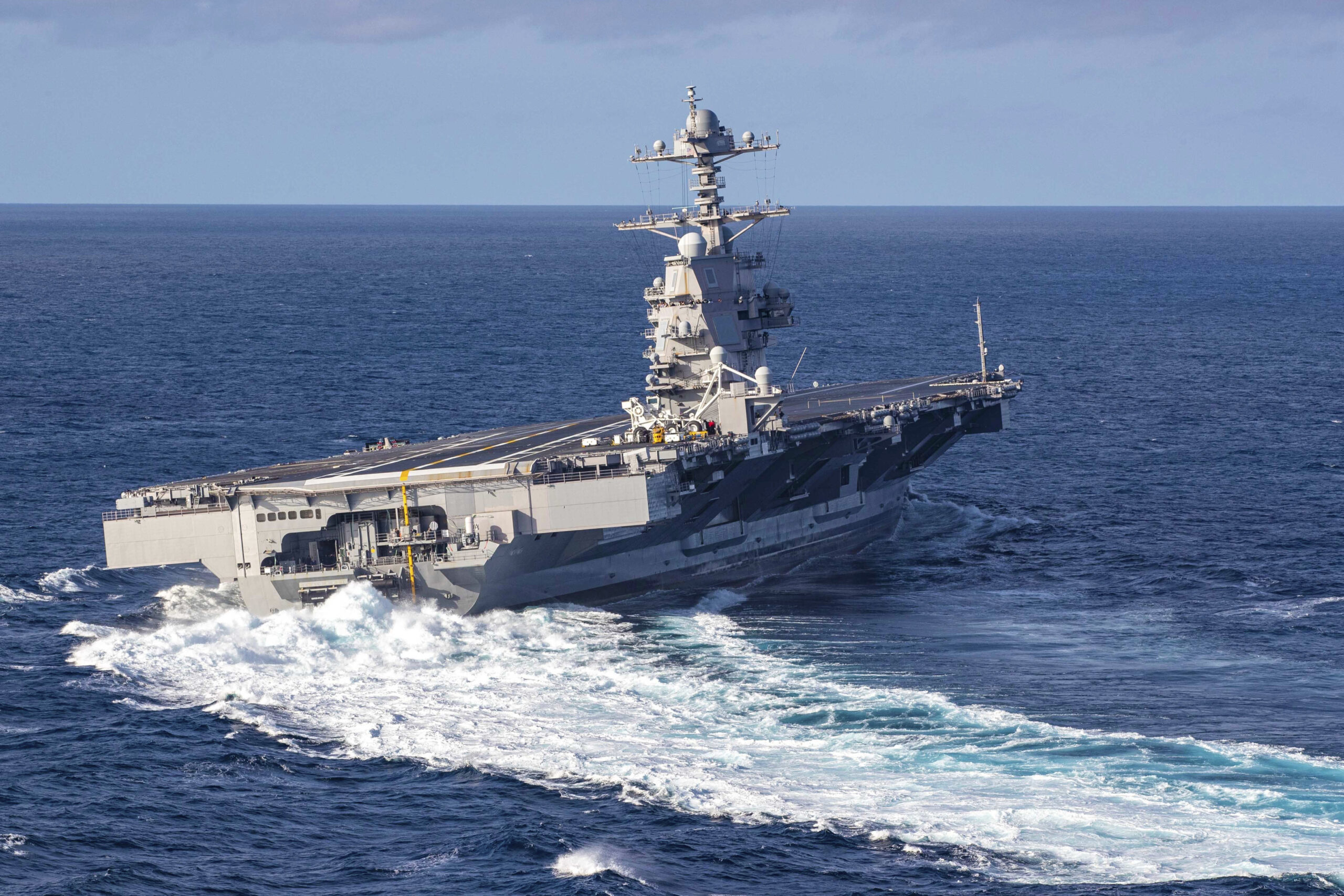
After nearly a year at sea, the aircraft carrier USS Gerald R. Ford is finally heading home, closing out the Navy’s longest continuous deployment since Vietnam.
The mission tempo, driven by U.S. operations from Venezuela to Iran, has shaken up Navy leadership and forced a full-blown rethink of how the fleet sustains readiness in a wartime footing.
Master Chief Petty Officer of the Navy John Perryman admitted as much during a recent address to the Military Officers Association of America, explaining that today’s global operations tempo has shredded the old peacetime force generation model.
The takeaway? The Navy’s traditional deployment cycle simply cannot keep up with the demands of real-world combat readiness.
MORE NEWS: Pentagon Confirms First Military Execution in Over 60 Years Will Be Publicly Livestreamed
“What we’ve learned is we’re going to have to come up with a different force generation model,” Perryman told the audience.
He said the current “conveyor belt” deployment routine, predictable and comfortable, is a relic of a bygone era.
In his words, the Navy must take “a step back and really evaluate what that should look like” to meet the War Department’s relentless operational requirements.
For decades, carrier strike groups followed a strict three-year rhythm: train, deploy, reset.
That structure once made sense when America’s enemies were largely theoretical. But with current operational demands involving live combat and multiple active theaters, including drug interdiction missions across Latin America, the system is simply cracked under pressure.
When the Ford returns to Norfolk, Virginia, later this month, it will have logged more than 330 days at sea.
That’s not just a statistic — it’s a signal flare describing the new reality of continuous global operations.
According to Perryman, this new era requires substantial reinvestment in spare parts, maintenance schedules, and crew readiness to avoid burning out both machines and sailors.
“We’ve started to do some transformative work,” Perryman added, hinting at deeper changes to come within the War Department’s deployment doctrine.
The Navy’s ongoing recalibration comes on the heels of major victories and high-stakes missions.
Earlier this year, American forces executed the capture and extraction of Venezuelan dictator Nicolás Maduro, followed by heavy airstrikes and a naval blockade against Iran. Those twin campaigns, paired with ongoing global maritime patrols, have stretched existing assets to the breaking point.
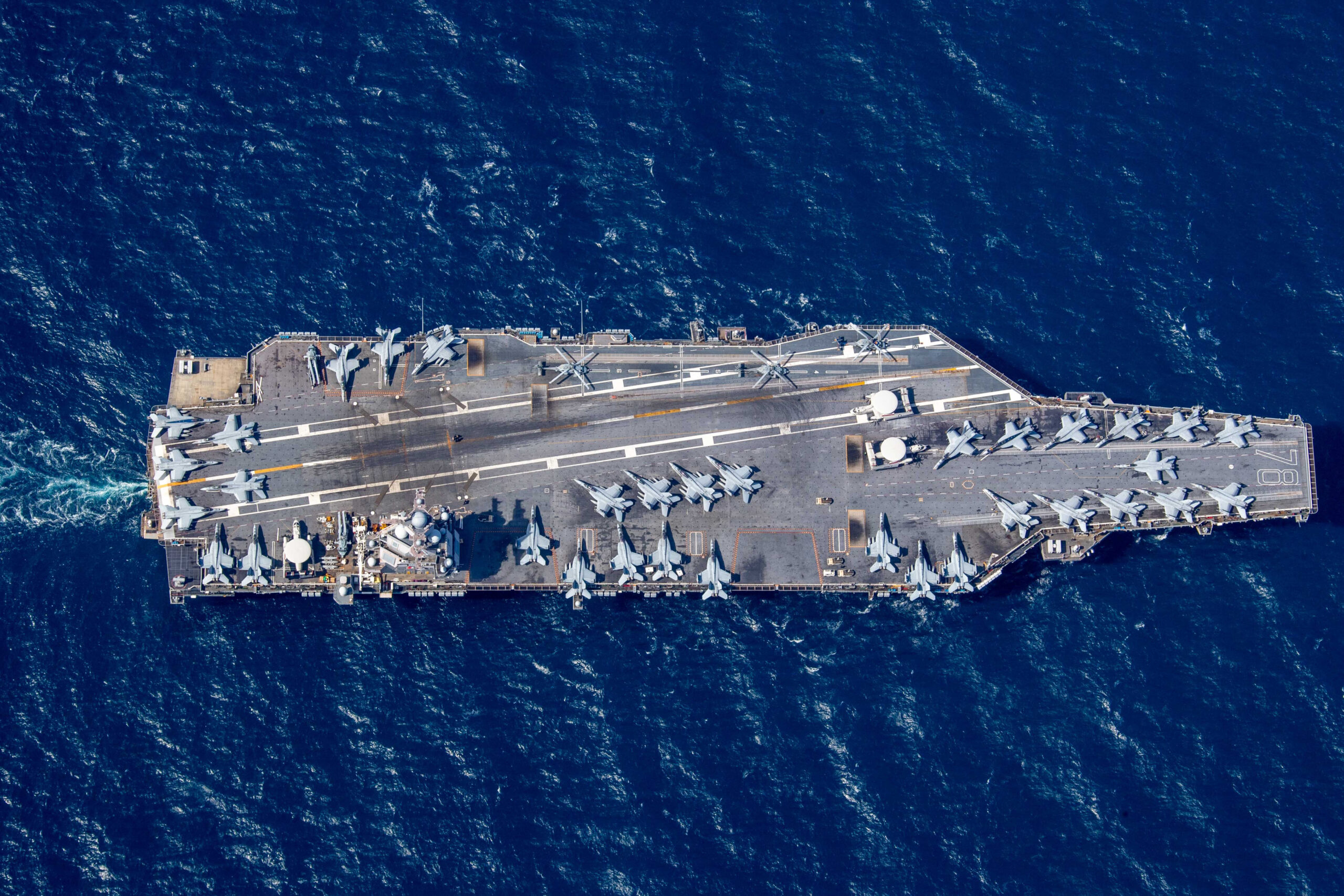
This spring, the Navy marked another milestone: three aircraft carriers in simultaneous operation near the Middle East — a power projection feat not seen in over two decades.
Yet, despite the triumph, there are real questions about how long such intensity can be sustained without wearing down the fleet or its people.
Chief of Naval Operations Adm. Daryl Caudle has already floated solutions. Speaking at the Modern Day Marine Symposium, Caudle suggested lengthening amphibious ship cycles from 36 to 50 or even 52 months, incorporating two deployments into each maintenance and training period.
He believes that approach would “reduce overhead and gain efficiency.” In plain terms, the Navy is trying to stretch every training dollar and every crew rotation for maximum effect.
Other senior enlisted leaders echoed Perryman’s concern about tempo and resources.
Sergeant Major of the Army Michael Weimer emphasized that the Army is developing “true readiness measurements,” aiming to keep soldiers primed while balancing operational stress.
Chief Master Sergeant of the Air Force David Wolfe described how non-stop sorties have worn down both personnel and hardware. Yet he noted that whenever resources and spare parts are properly positioned, “the aircraft fly at an amazingly high rate.”
Wolfe also called for stable funding from Congress to keep aircraft and crews properly equipped. Predictable budgets are vital for operational predictability, something that’s been almost impossible under the current political circus in Washington.

Despite grueling conditions, senior leaders painted a picture of resolve and resilience within the ranks.
The senior enlisted adviser to the Chairman of the Joint Chiefs of Staff, David Isom, reported that the number of troops returning to active duty after combat injuries has been “off the charts.”
When he visited the Ford, he found sailors “motivated, excited, mission-focused.”
That spirit of dedication is precisely what keeps America’s fighting forces strong, even as operational demands grow heavier by the week.
It’s also a reflection of the kind of leadership culture that patriotic Americans expect, one that values hard work, accountability, and readiness above political gamesmanship.
The Navy’s experience through Epic Fury and subsequent global missions will almost certainly shape new readiness models for the next generation of warfighters.
Hard lessons learned today will determine whether the United States maintains its naval dominance tomorrow.
As the War Department adapts, one thing remains clear: America’s enemies aren’t waiting for training rotations to catch up. Neither should we.
Join the Discussion
COMMENTS POLICY: We have no tolerance for messages of violence, racism, vulgarity, obscenity or other such discourteous behavior. Thank you for contributing to a respectful and useful online dialogue.
The Navy is supposed to be at sea. That has been its mission for 200+ years. In the oldays sailing ships could be at sea for multiple years without returning to port.