The War Department is gearing up for one of the largest tactical munitions expansions in modern history, as new agreements with major defense producers are setting the stage for over 10,000 low-cost, containerized missiles to roll off production lines starting in 2027.
It’s a clear sign that under President Trump and War Secretary Pete Hegseth, America’s arsenal is being built back stronger, faster, and smarter.
These framework agreements, outlined in a statement obtained by Reuters, pull in several innovative firms—Anduril, CoAspire, Leidos, and Zone 5—for a new initiative known as the Low-Cost Containerized Munitions (LCCM) program.
The Pentagon’s plan reflects a sharp turn away from the bloated, slow-moving procurement processes of the past and toward a more flexible, competitive industrial base designed for mass production and rapid fielding.
MORE NEWS: Pentagon Confirms First Military Execution in Over 60 Years Will Be Publicly Livestreamed
The LCCM initiative will move into its assessment phase by mid-2026, during which all four firms will begin delivering test missiles to the War Department. Officials did not release the total program cost or specify which missile systems are in development.
However, the agreements will lock in terms for future fixed-price contracts—ensuring cost control while securing thousands of these affordable, easily deployable weapons.
Containerized weapons have long been celebrated by military strategists as one of the most effective ways to deliver high-volume firepower with low-cost logistics. Mounted within standard shipping containers, these launchers can be transported and deployed virtually anywhere, offering unmatched mobility and surprise on the battlefield.
In a parallel move, the War Department signed a separate deal with defense startup Castelion, a relative newcomer in the national security space.
Castelion’s “Blackbeard” missile, a hypersonic strike weapon currently in testing, could soon become a cornerstone of the Pentagon’s future arsenal. The agreement provides for a two-year contract ensuring a minimum annual purchase of 500 Blackbeard missiles once tests are validated.
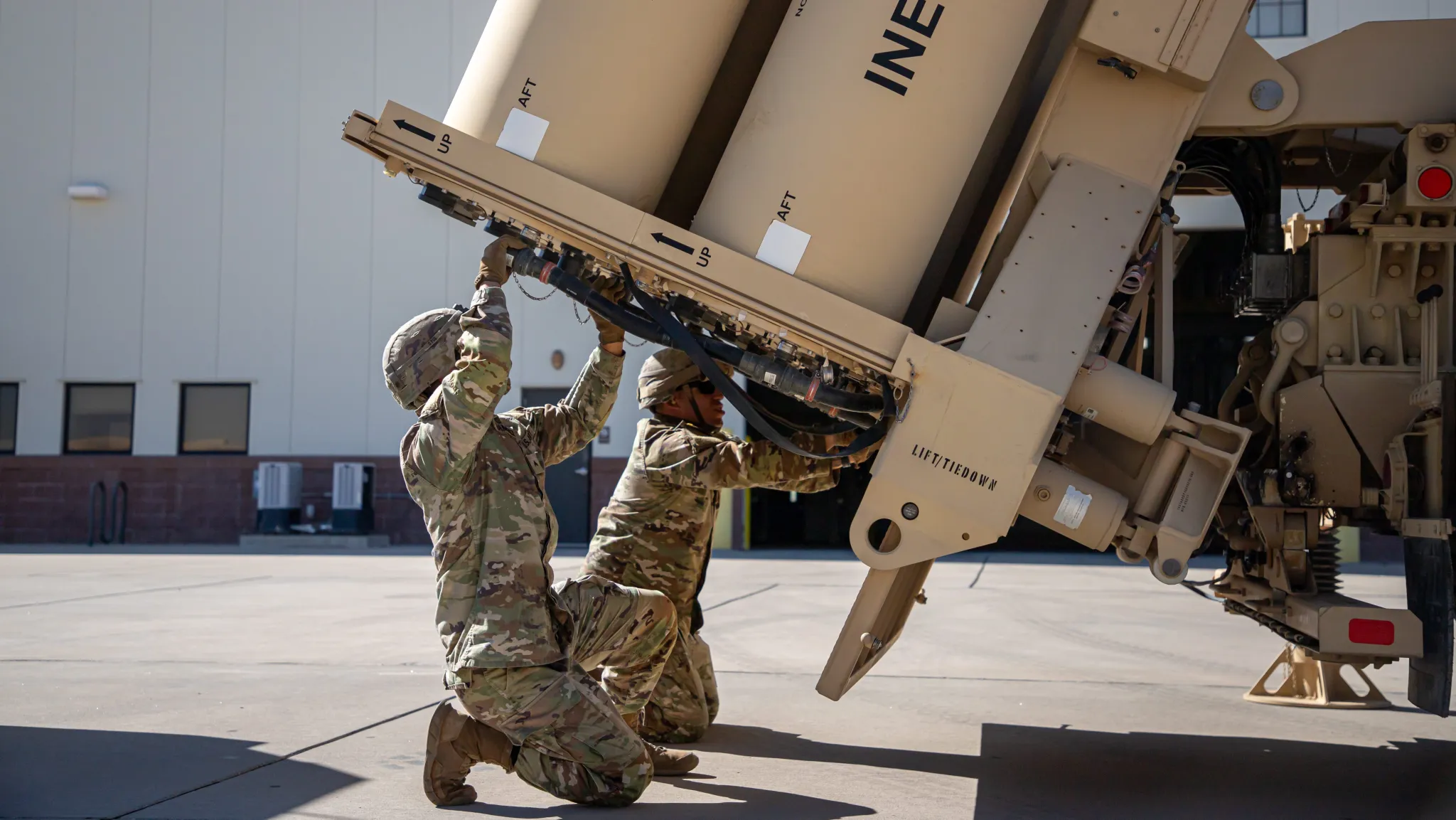
Officials plan to seek congressional authorization to purchase more than 12,000 of these hypersonic weapons over the next five years, solidifying America’s edge in long-range strike capability.
The move underscores how far the military has come in prioritizing performance and innovation over bureaucracy and politics.
Michael Duffey, the War Department’s Under Secretary for Acquisition and Sustainment, noted that these new arrangements show a deliberate push to widen the industrial base beyond the entrenched “prime” contractors that have long dominated defense acquisition.
“We’re expanding the base to include fresh, agile players who can deliver quickly and efficiently,” Duffey said in the statement. Those words mark a clear rebuke to decades of stagnation under traditional defense giants.
“The agreements send a clear, long-term demand signal to innovative new entrants,” Duffey added. It’s that kind of message that signals the Trump-era War Department means business—prioritizing strength through efficiency, competitiveness, and relentless output.
Emil Michael, Under Secretary for Research and Engineering, echoed the same spirit, saying the program commits companies to stay on schedule and under budget. “We will deliver affordable mass for our warfighters at unprecedented speed,” he said.
Coming from a senior War Department official, that’s the kind of confidence soldiers, sailors, airmen, and Marines have been waiting to hear after years of procurement potholes and bureaucratic gridlock.
This sudden boost in missile development and production coincides with increased demand for munitions amid ongoing conflicts, particularly in the Middle East.
The war in Iran has only amplified the urgency to replenish existing stockpiles and modernize the nation’s strike capabilities to keep pace with real-world combat demands.
General Dan Caine, Chairman of the Joint Chiefs of Staff, underscored this shift in written testimony earlier this week, highlighting that the fiscal 2027 War Department budget requests over $26 billion in multi-year procurement contracts focused specifically on munitions.
It’s a major leap forward for an armed forces apparatus that had long been starved of sustained, predictable funding for weapons manufacturing.
Industry experts view the LCCM initiative as a wake-up call to America’s defense establishment. After years of relying on a handful of legacy contractors, the Trump-era strategy favors competition, innovation, and capability over political connections.
By spreading missile development among several firms and putting performance at the center, the Pentagon is effectively signaling that the old way of doing business is over.
Critics from the bureaucratic class will likely complain, as they always do when government changes gears and sheds inefficiency. But the War Department’s current trajectory is about strategic dominance, not paperwork or optics.
The message is simple: America will produce, America will deploy, and America will win.
Under President Trump’s leadership and War Secretary Hegseth’s no-nonsense approach, the military-industrial machine is being retooled with a singular mission in mind—restore readiness, scale production, and deliver the edge our warfighters deserve.
The new missile programs are just the beginning of a broader renewal that prioritizes strength and deterrence over the politically correct paralysis of the last decade.
What’s happening now isn’t just modernization—it’s mobilization. And in a world growing more unstable by the hour, that’s exactly what America needs.
Join the Discussion
COMMENTS POLICY: We have no tolerance for messages of violence, racism, vulgarity, obscenity or other such discourteous behavior. Thank you for contributing to a respectful and useful online dialogue.