Four star generals and admirals who lead U.S. military commands are pressing for a larger amphibious force, arguing that the ability to project power from the sea remains essential to deterring aggression and delivering aid in crises.
In remarks at Modern Day Marine in Washington, U.S. Marine Corps Commandant Gen. Eric Smith framed the push as a top priority tied to readiness and sea control. I won’t say how many of the ARG MEUs our combat commanders asked for, but it is well north of three,” he said. “Like double that.”
Requests for additional ARG MEUs are flowing in from the U.S. military’s Southern Command, European Command, U.S. Central Command and U.S. Africa Command.
Smith stressed that the current plan envisioned a three ship ARG MEU presence at all times, with one based on the East Coast, one on the West Coast and the 31st MEU delivering periodic deployments from Okinawa, Japan.
MORE NEWS: Pentagon Confirms First Military Execution in Over 60 Years Will Be Publicly Livestreamed
The interest in ARG MEUs cannot be dismissed as a sideshow. The 22nd MEU is presently in Southern Spear, and the 31st MEU is deployed in the Middle East in support of Epic Fury. The 11th MEU is en route toward the Middle East to help, but was conducting routine patrols around the southern Philippines this week.
Smith labeled ARG MEUs the most flexible tool in the Defense Department inventory, providing humanitarian assistance, non-combatant evacuation operations and key strike capabilities.

This flexibility has proven its value in recent years, he noted, but sustaining the pace has proven difficult. He made clear that returning to a permanent 3.0 ARG MEU presence is the top priority for the command.
“The Navy’s current amphibious fleet is not enough to reach this goal,” Smith added. The Navy holds an inventory of 32 amphibious warfare ships, but half of the fleet is in poor condition and poorly maintained, according to a 2024 report from the U.S. Government Accountability Office.
A defense official said the readiness rate of amphibious ships had dropped to 41% despite the Marine Corps previously stating that the amphibious readiness rate needed to remain at 80% or higher to complete missions.
To address the shortfall, the Marine Corps is focusing on optimizing maintenance schedules, investing in service life extensions and procuring new ships. Expeditionary Warfare Director Brig. Gen. Lee Meyer told reporters at Modern Day Marine that the Navy recently completed a study on Wasps class amphibious assault ships, which led to the service life extension of the USS Wasp.

Meyer also said the Navy and Marine Corps would study other amphibious assault ships to determine whether their lifespans could be extended, with a completed study on dock landing ships expected in the next few days.
In a broader push, the U.S. Navy and Marine Corps recently partnered to launch the Amphibious Force Readiness Board, aimed at finding the best pathway forward to maintain, modernize and build the service’s amphibious fleet to prioritize availability.
Chief of Naval Operations Adm. Daryl Caudle stressed that the board is not merely a study group. It was a platform to produce action, he said, and far too long amphibious readiness has absorbed the cumulative effects of aging systems, deferred maintenance, supply chain, friction, workforce shortages and high operational tempo. So, we are attacking the problem directly.
The board’s mission reflects a tangible shift in emphasis toward a more capable, ready force that can operate across strategic corridors from the littorals to the heart of potential hotspots.
The effort aligns with the priorities laid out by President Trump and supported by Secretary of War Pete Hegseth, who has argued for a robust, rapidly deployable fleet that can respond decisively when the nation calls.

Supporters say restoring the amphibious fleet’s vitality will reinforce deterrence and reassure partners who rely on the United States for timely help.
The amphibious fleet face a long road back to full strength, but the signals from the top defense and security leadership are clear. Rebuilding availability hinges on better maintenance, smarter modernization, and a renewed emphasis on expeditionary power projection.
In this moment, the emphasis is on turning plans into action and ensuring the Navy and Marine Corps can deliver on the promise of rapid, credible maritime power.
The strategic calculus is straightforward: a stronger, more agile amphibious fleet enhances deterrence and enables rapid relief when disaster strikes, while expanding ARG MEUs helps safeguard U.S. interests around the globe.
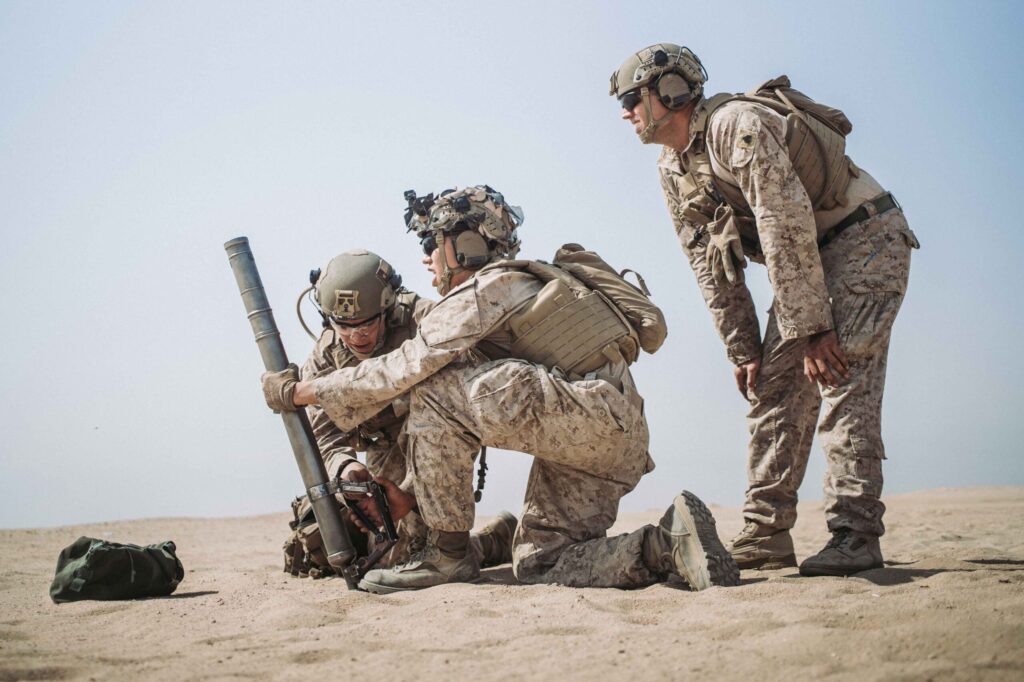
The leadership at Modern Day Marine underscored that the reform effort is not academic; it is about restoring and sustaining the nation’s most versatile fighting force at a moment when adversaries are watching closely.
As the administration hones its approach, the weight of responsibility rests on leaders who must translate talk into ships, crews, maintenance cycles and ready crews.
If the plan holds, the country can expect a more capable force prepared to respond across theaters and in humanitarian crises, with a fleet the War Secretary and the president have championed as foundational to national security.
Join the Discussion
COMMENTS POLICY: We have no tolerance for messages of violence, racism, vulgarity, obscenity or other such discourteous behavior. Thank you for contributing to a respectful and useful online dialogue.