In a sobering moment for America’s War Department, Army Secretary Dan Driscoll admitted this week that Ukraine’s battlefield integration has surpassed our own.
Sitting before the Senate Armed Services Committee, Driscoll praised Kyiv’s “Delta” command and control network—a fully unified system that links every drone, sensor, and firing platform into one seamless system.
Meanwhile, America’s forces are still wrangling with systems that can barely talk to each other.
Speaking with an unusual level of candor, Driscoll highlighted the contrast between Ukraine’s flexible digital battlefield and Washington’s bureaucratic maze.
“They’ve integrated every single drone, every sensor, every shooting platform into just one single network,” he said. By comparison, the U.S. military remains a patchwork of incompatible systems hamstrung by bureaucratic infighting and corporate silos.
To fix this, the Army launched “Operation Jailbreak” at Fort Carson, Colorado—a bold attempt to cut through the software walls that keep American weapons from communicating.
Defense contractors, Army engineers, and data scientists are being thrown into the trenches, tasked with connecting systems that for too long have operated like separate kingdoms.
The name “Jailbreak” says it all: the goal is to free America’s technology from its self-imposed digital prison.
Driscoll explained that for decades, Washington’s defense procurement system rewarded contractors for hoarding intellectual property, not for building interoperability. Those fiefdoms, he said, produced the “walled gardens” that now limit America’s battlefield agility.
It’s a predictable result when bureaucrats in suits run the show instead of warriors focused on winning.
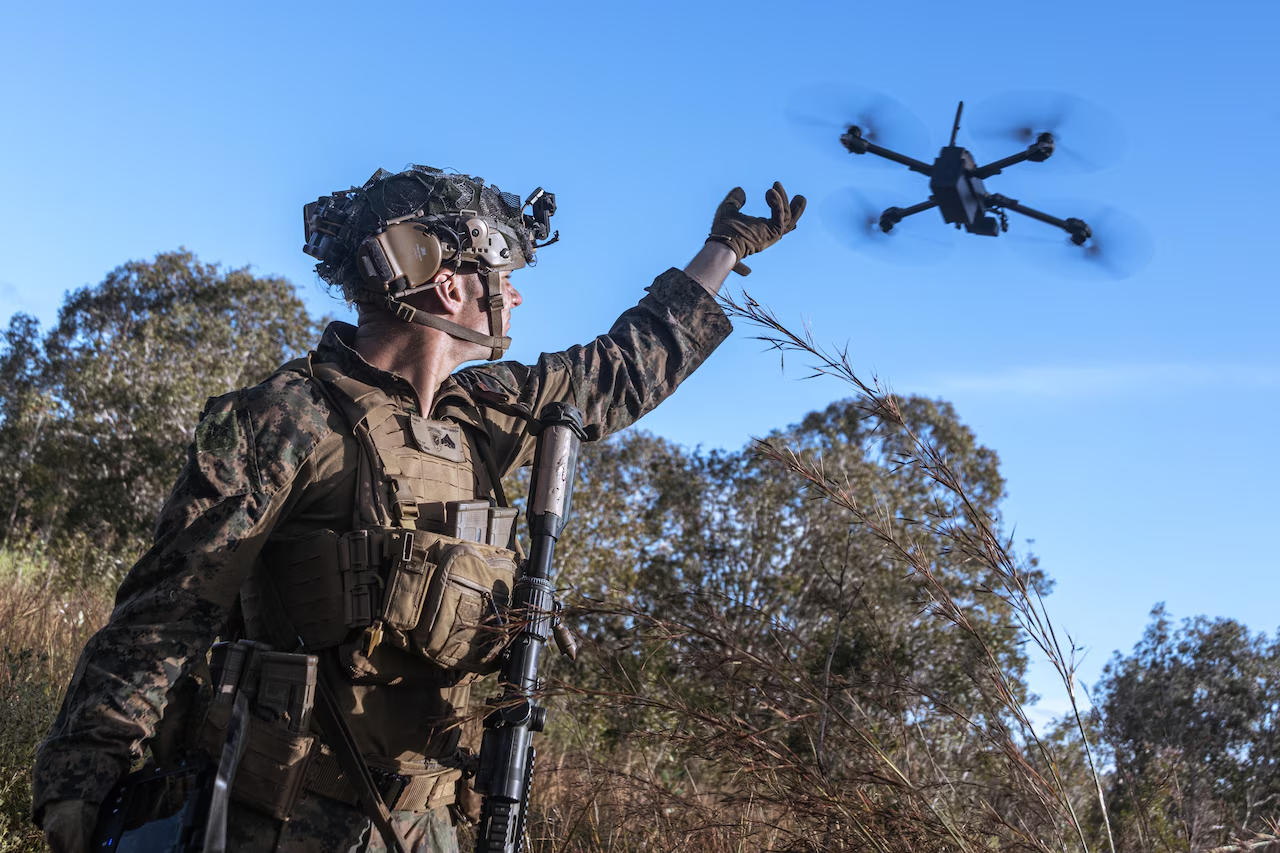
The modern battlefield has changed, and nowhere is that clearer than in Ukraine. The war there has become a proving ground for rapid information-sharing under fire. Target data moves instantly from drones to artillery units, collapsing the time between detection and destruction.
The Ukrainians, Driscoll noted, have mastered what he called the “digital kill chain”—the ability to coordinate sensors and shooters in real time. It’s an efficiency America should have pioneered decades ago but didn’t because of bloated red tape.
The stakes are enormous. Army analysts estimate that in a future large-scale European conflict, forces may need to process up to 1,500 targets per day—far beyond what humans alone can handle. Without seamless system integration and artificial intelligence to process the flood of data, American forces could face serious disadvantages on tomorrow’s battlefield.
The good news is that Driscoll seems determined to change that. He told the committee that dozens of companies have joined Operation Jailbreak within days of launch. “We will force our way through the firewalls,” he vowed.

“We will link every system and achieve true right to integrate.” That refreshingly aggressive approach reflects a growing understanding in the War Department that winning wars requires action, not endless studies.
Boeing, Palantir, Lockheed Martin, and Anduril Industries are reportedly among the private-sector partners participating. By day ten, as many as 50 companies had signed on, sending engineers and coders to break down technical barriers.
“Thousands of pieces of equipment will be jailbroken,” Driscoll explained, meaning each system will be capable of both sending and receiving information across the network.
![Arctic Front Flares Up: FPV Drones Redefine Arctic Warfare After Ukraine [WATCH]](https://www.commondef.com/wp-content/uploads/2026/03/2026.03.14-03.44-commondefense-69b5826a97bef.jpg)
Driscoll also pointed out that the same type of generative artificial intelligence used by Ukraine is part of the Army’s plan. AI will help commanders make faster and smarter targeting decisions—a step toward the kind of digital command capabilities our troops deserve.
It is, he said, “the biggest hackathon in the service’s history,” a full-force modernization effort to restore the American edge.
Of course, the reason it’s taken five years just to get started is no mystery. Driscoll owned up to the delay, saying bureaucracy and caution bogged the process down. But he was quick to note that America’s industrial infrastructure offers unmatched potential once unleashed.
“We have basically the entire defense industrial base now moving,” he said. It might not move fast, but when it does, the results can be overwhelming.
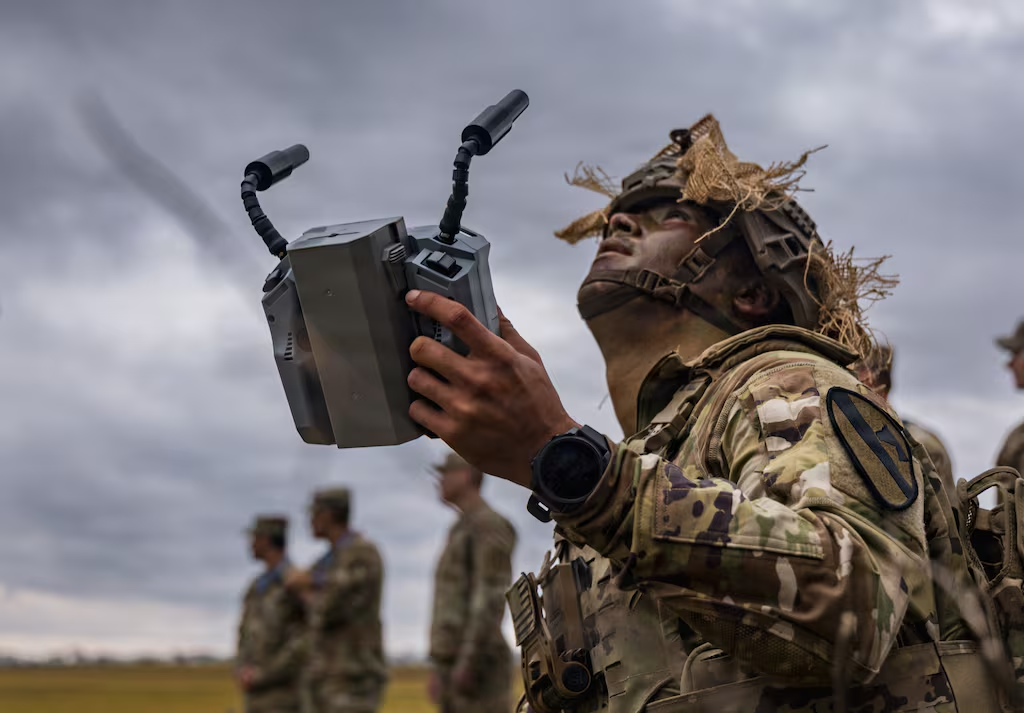
Sen. Jack Reed, a Democrat and former officer, offered a telling summation of the shift: “When I served, the mantra was shoot, move, and communicate. Today, it’s communicate so you can shoot and move.”
For once, Reed got it right—information dominance defines warfare now. Whoever masters that connected battlespace will win the next war.
Still, one has to wonder how America, with its trillion-dollar defense budgets and the most advanced warfighting heritage on Earth, ended up lagging behind Ukraine.
It’s a painful reflection of what happens when politics and procurement overtake mission and merit. Bureaucracy breeds paralysis, and paralysis loses wars.
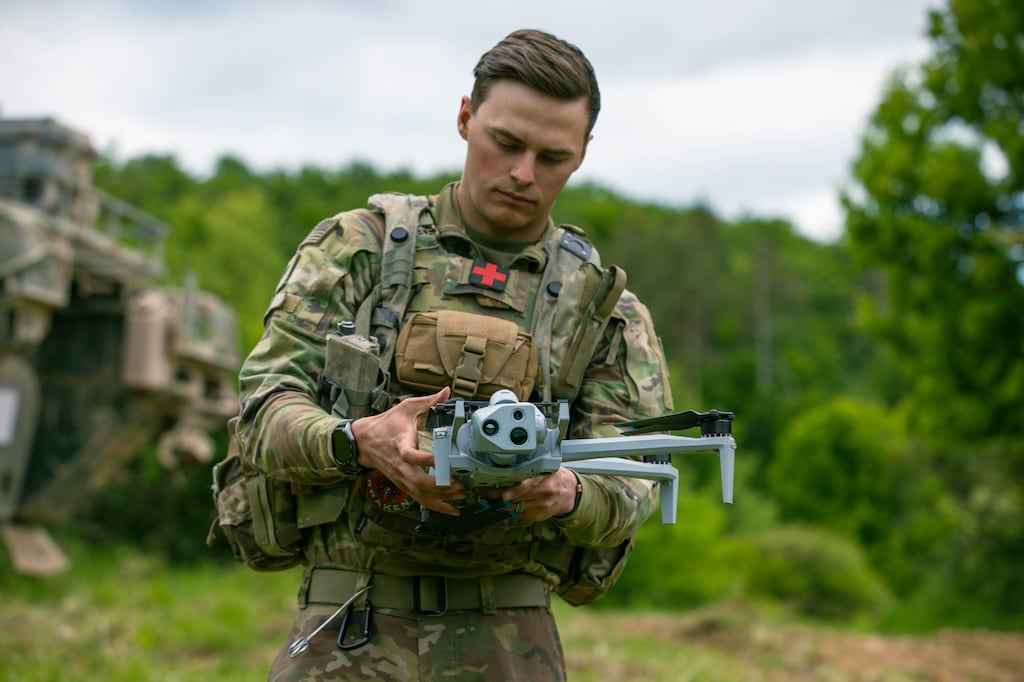
Under President Trump’s renewed focus on rebuilding a fighting force that wins wars, not process manuals, the tide could be turning.
War Secretary Pete Hegseth has made clear his determination to bring patriotism and practicality back to the Pentagon’s culture.
If his philosophy trickles down to the programs like Operation Jailbreak, American soldiers may soon get what they’ve always deserved: tools that work together, built to win.
Join the Discussion
COMMENTS POLICY: We have no tolerance for messages of violence, racism, vulgarity, obscenity or other such discourteous behavior. Thank you for contributing to a respectful and useful online dialogue.