Nearly six decades after one of the most harrowing acts of Marine courage in the Vietnam War, retired Maj. James Capers Jr. is finally receiving the Medal of Honor.
This Thursday, President Donald Trump will present the nation’s highest award for valor to a man who lived the Marine motto every single day of his life—Semper Fidelis in its truest form.
Maj. Capers’ story is the kind of battlefield grit that defines the heart of the American warfighter. In April 1967, while leading a nine-man reconnaissance team in South Vietnam, Capers was ambushed and severely wounded.
Despite multiple bullet and shrapnel injuries and even a broken leg, he refused to quit.
Instead, he rallied his Marines and led them through chaos to reach a helicopter landing zone as enemy fire raged.
Once the extraction bird arrived, Capers did something that forever solidified his legend. He made sure the team’s military working dog, whose loyalty had been crucial in their mission, was brought aboard.
When the overloaded helicopter couldn’t lift, Capers tried—twice—to jump off so his men could escape. Selfless to the end, he insisted he’d rather die on the dirt than endanger his men.
“It was an attempt to save my troops,” Capers said. “It wasn’t heroism. It might have looked that way, but it wasn’t about Jim Capers. It was about the 10 men that I had and the dog’s body that I wanted to get home.”
Those words reflect the old-school definition of leadership—one tragically rare in many corners of Washington today.
His team had fought for four brutal days and nights before that moment. They were bloodied, sleep-deprived, and barely alive. The helicopter floor ran slick with blood, and even the co-pilot had been shot.
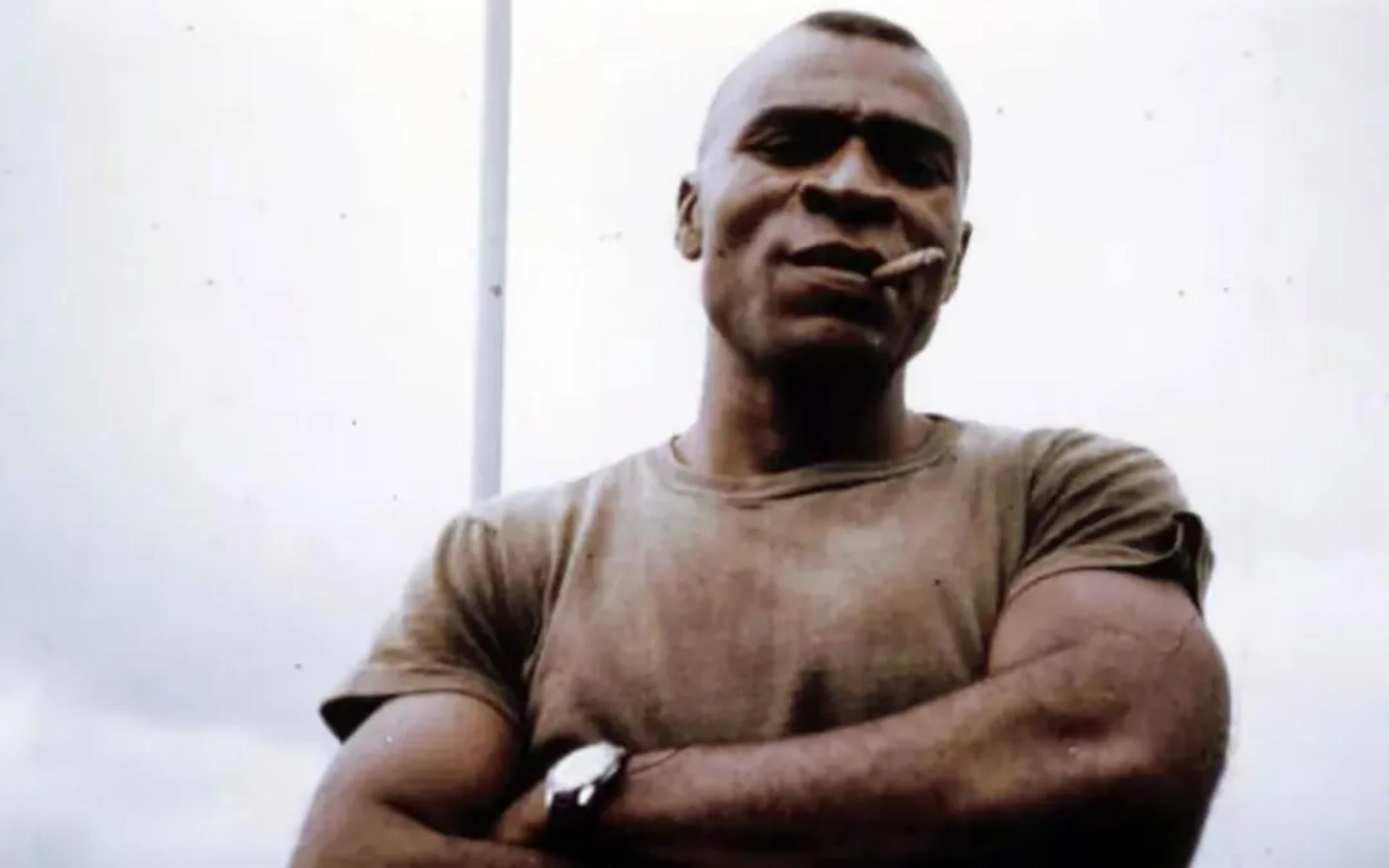
Still, Capers focused not on his pain, but on the mission—and his men. Another Marine had to physically drag him back into the aircraft to keep him from sacrificing himself.
“When you’re in command, you look after your troops,” he later said.
“When the helicopter was too heavy with the man load, I did what any commander would do: lighten the load.” These are the kinds of leaders that built the U.S. military’s warrior ethos—leading from the front, not the Pentagon conference room.
Originally, Capers’ courage earned him a Bronze Star with “V” device, a commendation for valor.
That award was later upgraded to a Silver Star in 2010. But veterans and fellow service members knew it wasn’t enough. For years, they pushed for proper recognition.
Bureaucratic red tape and timid officials within the War Department repeatedly claimed there was “no new information.”
Brooks Tucker, a retired Marine lieutenant colonel who spearheaded efforts to right that wrong, summed it up plainly: “We simply said to people: Look at this logically; this makes no sense. And enough people who mattered looked at this and said, ‘Yeah, it makes sense to me. I don’t know why we need any new information. We have it all here.’”
That push finally met presidential action when President Trump, on March 26, signed a bill eliminating the time limit for Capers to receive the Medal of Honor.
Federal law typically restricts awards to within five years of the act, but Trump’s signature cut through the red tape the way a warrior should—decisively and with purpose.
This ceremony isn’t just about Capers; it’s about an entire generation of warriors whose heroism was buried in bureaucratic technicalities.
It’s about a nation correcting the record for a Marine who bled for freedom long before many of today’s politicians were even born. And it’s a reminder that when America honors its veterans, it honors the best of itself.
Even with the medal around his neck, Capers refused any label of “hero.” “If you ask a bunch of guys, they will say no,” he said.
“We did our job. The country asked us to go there and represent the country, and they would say no. The country may look at it differently, but most of us, we were there for our friends, and we fought for the country. They call me a hero, but we were just surviving, basically.”
That humility is exactly what separates our warriors from the political class.
Capers and his team didn’t fight for applause, they fought for each other—and for America. Their story is a quiet, enduring reminder that the United States produces a kind of courage no other nation can replicate.
As the Medal of Honor is finally placed around Maj. Capers’ neck, America will not only be honoring his bravery in that jungle nearly 60 years ago, but also reaffirming the timeless truth that true heroism doesn’t demand recognition—it earns it through blood, loyalty, and an unyielding commitment to the men beside you.
Join the Discussion
COMMENTS POLICY: We have no tolerance for messages of violence, racism, vulgarity, obscenity or other such discourteous behavior. Thank you for contributing to a respectful and useful online dialogue.