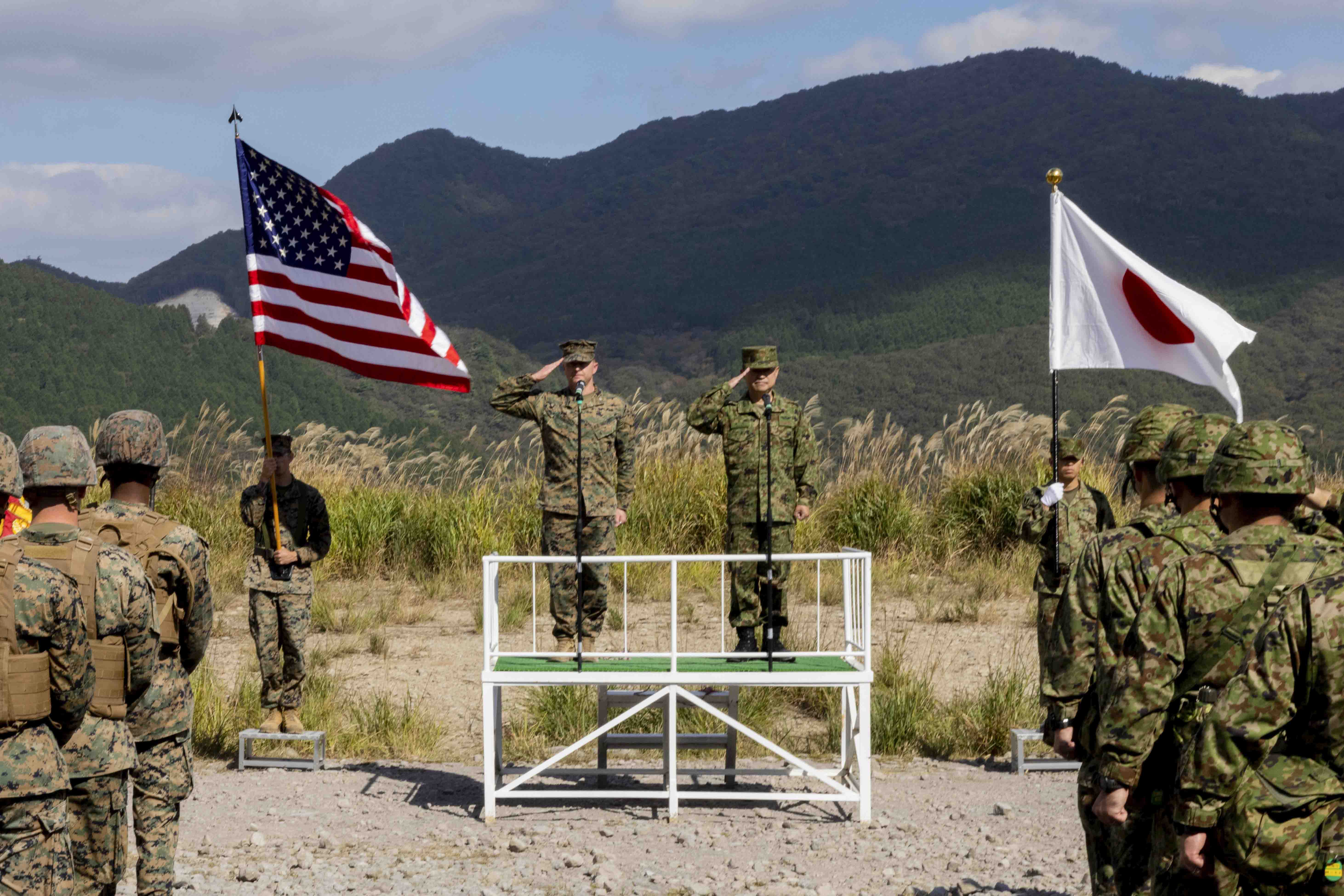
At the Hijyudai Maneuver Area in Oita, Japan, American Marines and Japanese soldiers have been putting serious steel on target during this year’s “Resolute Dragon” exercise.
The operation is part of a growing focus on how allied forces would capture and defend contested islands in the Pacific, a region that’s increasingly in the crosshairs of China’s ambitions.
Fighting shoulder to shoulder, ninety U.S. Marines from the 12th Littoral Combat Team joined about 300 troops from Japan’s 8th Division in an intense live-fire event that lasted roughly an hour and a half.
Mortars, rifles, and heavy vehicles all roared across the rugged Kyushu training ground in a scene that could easily mirror the start of a real island campaign.
Watching intently from the sidelines were troops and officers from the United Kingdom, France, Australia, and the Philippines—all nations watching China’s growing naval reach with more than a little concern.
The live-fire sequence wasn’t just for show. It was a textbook run of the new expeditionary warfare tactics that the Marine Corps and its Japanese partners have refined through multiple iterations of this annual drill.
According to 1st Lt. Owen Hitchcock, spokesman for III Marine Expeditionary Force, the focus was on mastering “command and control” under simulated battlefield chaos while integrating “joint fires capabilities.”
That means small, mobile units fighting smart, staying spread out, and hitting targets before the enemy even sees them. As Hitchcock put it, the sprawling Hijyudai range “offers a lot of great areas for us to practice what really matters.”
The exercise centered on what the Marines call Expeditionary Advanced Base Operations—a core part of the Corps’ Force Design overhaul that puts the emphasis on fast, lethal, island-hopping teams instead of lumbering conventional formations.
These units are trained to slip inside the range of enemy missiles, seize strategic islands, and deny access to rival navies. It’s a modern throwback to the World War II island campaigns—leaner, meaner, and built for the high-tech battlefield of tomorrow.
Resolute Dragon, now in its sixth year, wrapped up its ten-day run with live-fire confidence and joint precision that both sides say is improving with each rotation.
The 12th Marine Littoral Regiment, established in late 2023, is the spearhead of this new approach and has taken part in the drill since its formation.
Expectations for the littoral units are high. They’re meant to move light and fast, seize and hold key ground, and work seamlessly with air and naval assets to crush any enemy approach.
Lieutenant Ellen Sullivan, the regiment’s spokeswoman, said this year’s event proved that each iteration with their Japanese counterparts only strengthens the operational bond and “that human connection” critical to real battlefield effectiveness.
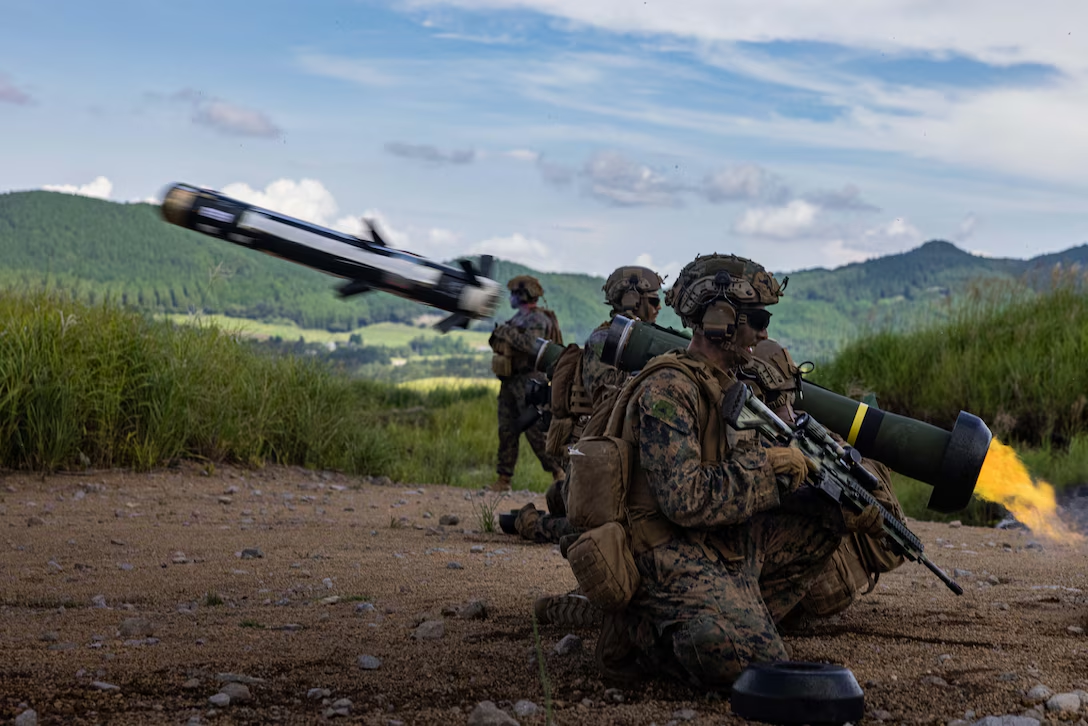
The simulated battle opened with a booming show of firepower from Japan’s Type 19 self-propelled howitzers, lobbing 155mm shells onto the target zone.
Japanese Type 16 Maneuver Combat Vehicles followed, rolling through the smoky terrain as the combined forces advanced. This is precisely the type of joint precision operation that would be needed if China ever turned up the heat near Japan’s southern islands or Taiwan.
Hitchcock explained that the artillery barrage was essential to “set conditions for ground troops” to move up safely through enemy fire zones, creating what he called “that overhead column” of suppressive power.
Once the guns fell silent, Marines charged forward beside Japanese armored carriers, working methodically through flanking positions and simulated territorial counterattacks.
Tech played a major supporting role as well. Drones crisscrossed the skies—some small, nimble, and controlled through first-person view, while a larger Stalker VXE30 soared above everything, feeding live tactical data to the ground units. Corporal James Ciccone described how the Stalker’s infrared sensor allows detection of “enemies at night.”
He explained that the drone can drop a virtual reference point on a mortar impact and another on a target, helping mortarmen make ultra-fast corrections for pinpoint accuracy.
It’s the kind of seamless tactical integration the War Department has been pushing for—unit-level awareness combined with precise joint fire that can hit, move, and hit again before the enemy can mount a serious response.
That’s the future Secretary of War Pete Hegseth and President Trump’s revitalized national defense strategy have envisioned: U.S. and allied forces building unmatched readiness in the Indo-Pacific to deter aggression before it starts.
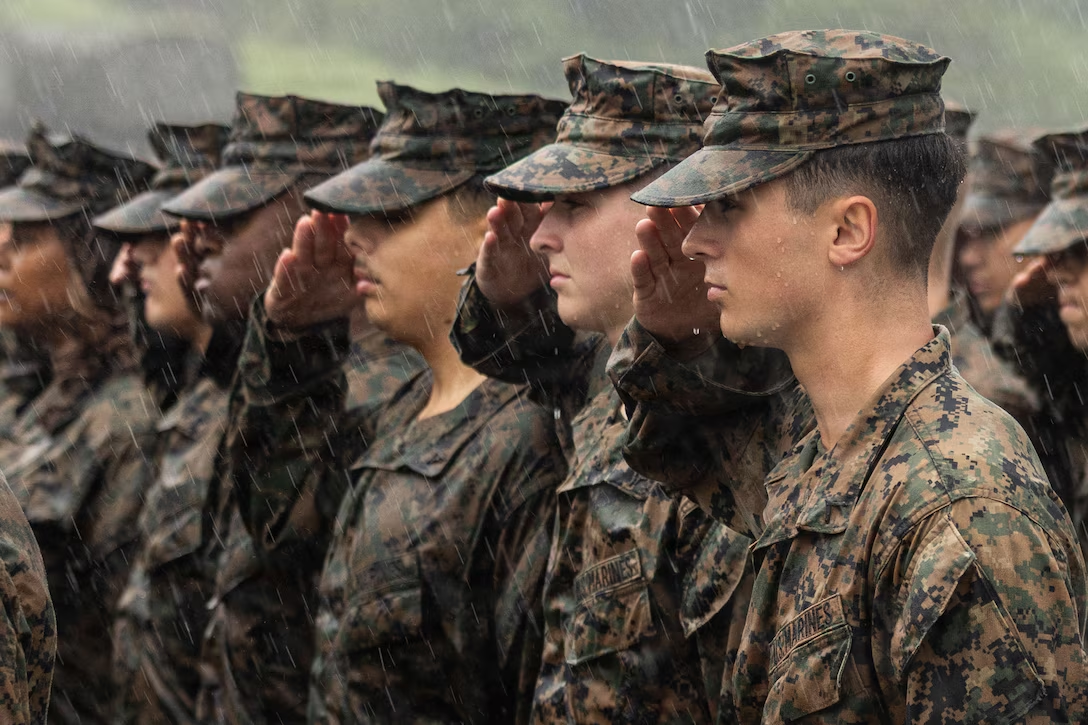
While the Biden years saw military leadership tied up in cultural distractions, the Marines and their Japanese teammates are showing what real readiness looks like—focused, lethal, and disciplined.
Exercises like Resolute Dragon send a clear message: the Pacific will not be surrendered, and America’s warriors, alongside Japan’s, are ready to hold the line.
Join the Discussion
COMMENTS POLICY: We have no tolerance for messages of violence, racism, vulgarity, obscenity or other such discourteous behavior. Thank you for contributing to a respectful and useful online dialogue.