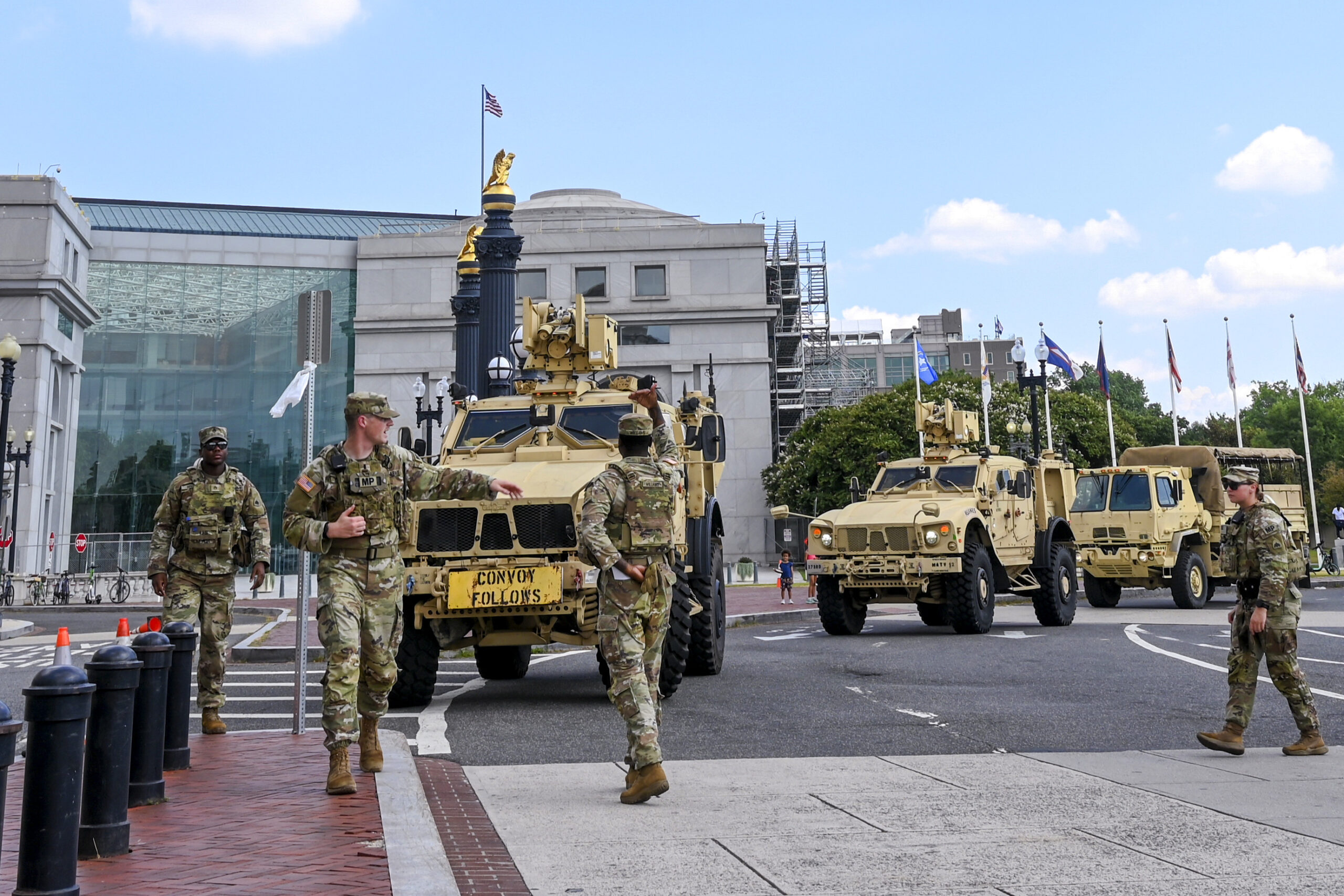
A left-leaning think tank is claiming that thousands of National Guard troops patrolling Washington, D.C., have had “no measurable effect on violent crime.”
The report comes from the Niskanen Center, a group better known for Beltway theorizing than boots-on-the-ground perspective.
According to them, the Guard’s presence—over 2,000 uniformed troops stationed across the capital since August 2025—was supposedly a “misaligned and expensive” strategy.
The researchers complained that the deployment used “the wrong tool for the wrong locations,” calling out the daily cost of $607 per Guard member compared to the $384 in pay for a city police officer.
MORE NEWS: Pentagon Confirms First Military Execution in Over 60 Years Will Be Publicly Livestreamed
In essence, the study argues the city could have saved a few bucks by ignoring the restored sense of security that came with military presence on the streets.
The think tank admitted that some good came of the operation, noting a sharp 24% decline in opportunistic property crimes within six months of the Guard’s arrival.
That’s not exactly “no measurable effect,” but the Niskanen analysts were quick to minimize it—insisting that visible deterrence in public areas didn’t stop “violence between individuals with preexisting ties.”
Their field of vision, to no surprise, conveniently ignored the reality that property crime is overwhelmingly what affects everyday people trying to live and work safely in the nation’s capital.
Tourists, business owners, and residents are finally seeing fewer incidents in broad daylight—a victory that seems lost on the Beltway academics who wrote the report.
Still, critics within the think tank dismissed even that win by suggesting local police could have achieved “comparable or better outcomes” using “data-driven” methods, meaning more spreadsheets, fewer soldiers.
In typical bureaucratic fashion, the Niskanen team managed to diagnose success as failure because it didn’t fit their preferred narrative.
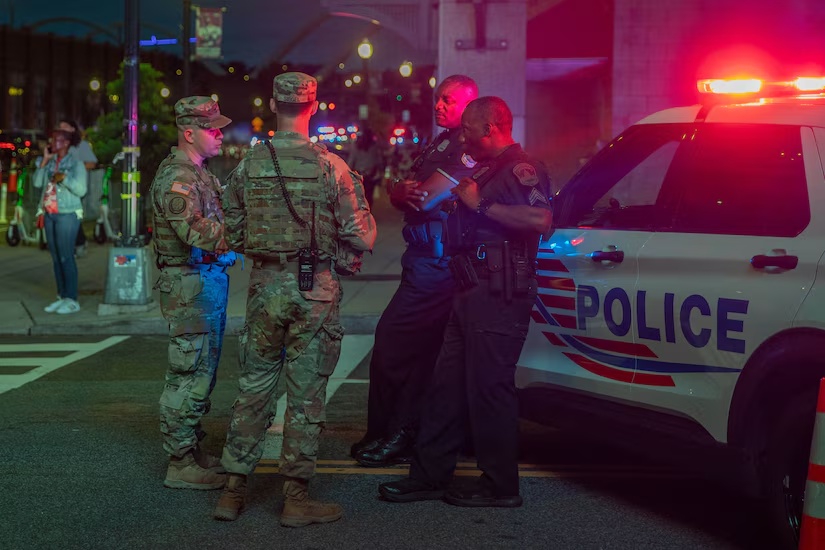
Army 2nd Lt. Harry Siegel and Sgt. 1st Class Nikolay Bashko, both assigned to Joint Task Force District of Columbia as part of the D.C. Safe and Beautiful Task Force, talk with Metropolitan Police Department officers near Nationals Park in Washington, Aug. 19, 2025.
The White House wasn’t having it. Spokeswoman Abigail Jackson fired back, calling the analysis “out-of-touch” and the authors “keyboard warriors” trying to cheap-shot President Donald Trump’s public safety agenda.
“President Trump has transformed D.C. from a crime-ridden city into a safe and beautiful haven,” Jackson said, praising both the president’s Safe and Beautiful Task Force and the Guard’s standing presence downtown.
That public presence has provided precisely what residents demanded: visible action. In an era where far too many cities drown in crime while politicians wring their hands, Washington under Trump’s leadership is now visibly secure and clean.
The National Guard has brought order where chaos once reigned—a deterrent that even critics can’t ignore, no matter how hard they try to twist the math.
President Trump, never one to buckle under noise from Washington policy circles, reaffirmed his commitment to keeping the Guard in place.
He said last week there are “no plans whatsoever” to pull troops out of the capital and intends to increase the deployment by 1,500 ahead of America’s 250th anniversary celebrations. It’s a move the administration sees as central to maintaining peace and safety during massive national events expected to draw millions.

For all the headline-chasing criticism, one undeniable fact remains: violent crime in the city has been trending downward, and that decline began well before any academic study claimed otherwise.
When the Guard hit the streets, the drop in property crime only accelerated, showing that presence matters—especially when that presence wears camouflage.
The researchers called the Guard’s mission “a misaligned footprint,” accusing the Trump administration of using military resources in areas with more cameras than crime. But by their own admission, places like tourist corridors and transportation hubs saw the biggest improvements in public safety.
For most Washington residents, that’s exactly where they want to see fewer thefts and assaults—not more academic nitpicking.
Critics of the deployment might not want to hear it, but ordinary Americans visiting the capital can now walk down Pennsylvania Avenue or through Union Station without worrying as much about getting robbed.
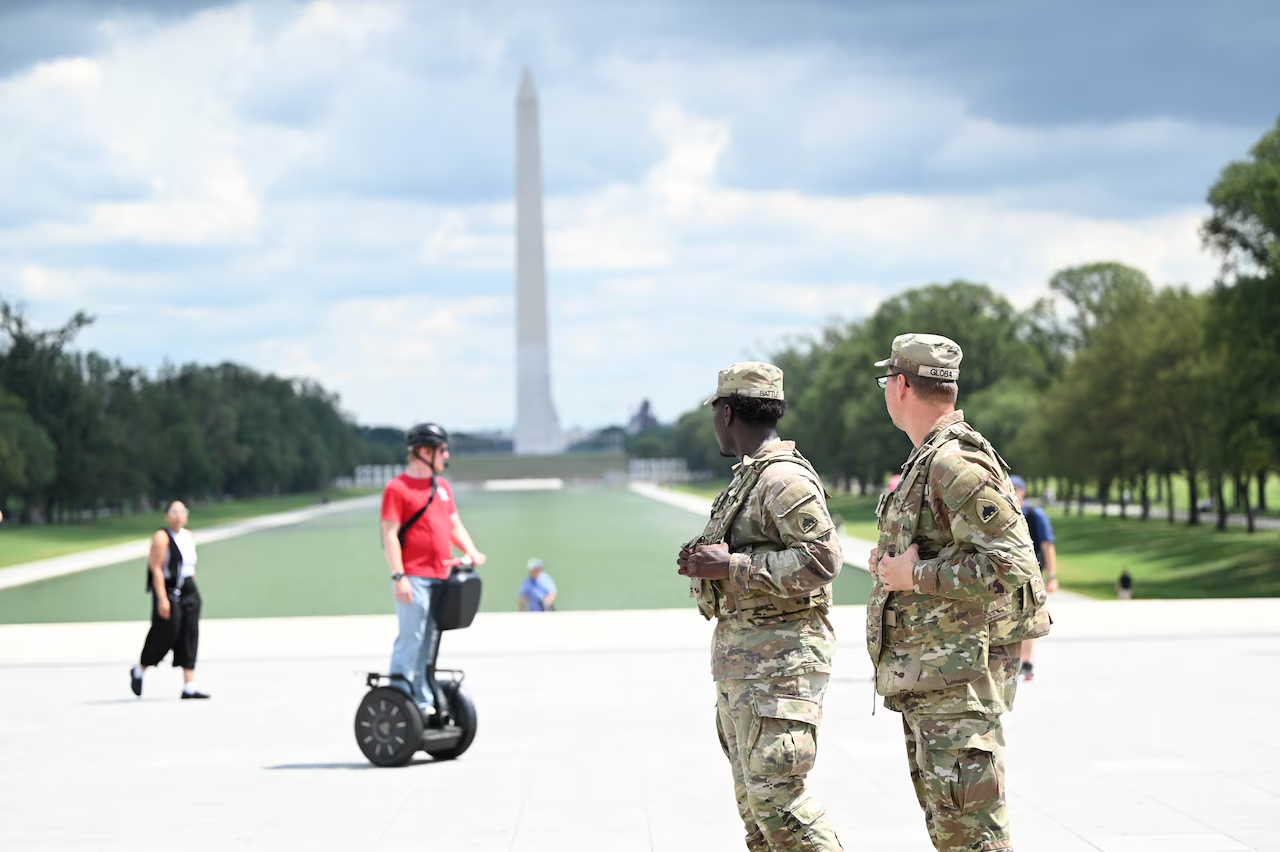
That’s not theoretical, that’s tangible. And that’s precisely the kind of real-world impact that Beltway bureaucrats can’t quantify on a whiteboard.
The reality is that visible military presence disrupts opportunistic crime faster than any algorithm or “data model” ever could. Criminals think twice when they see the Guard on street corners—it’s called deterrence, and it works.
That’s something law-and-order leaders like Secretary of War Pete Hegseth have insisted on: peace through presence, not paperwork.
It’s no surprise that liberal think tanks never embrace success unless it comes wrapped in their bureaucratic buzzwords. Yet even they can’t erase the visible calm that’s returned to the District under President Trump’s leadership.
The numbers tell one story, but the people on the ground—the families, commuters, and shopkeepers—tell another: D.C. finally feels safe again.
Join the Discussion
COMMENTS POLICY: We have no tolerance for messages of violence, racism, vulgarity, obscenity or other such discourteous behavior. Thank you for contributing to a respectful and useful online dialogue.