The U.S. Navy has launched a major new presence in the Indo-Pacific with the activation of a naval support activity in Western Australia, a clear sign that the United States is anchoring its long-term military strength in the region.
The move adds to the growing momentum of the AUKUS alliance, tightening bonds between the U.S., the United Kingdom, and Australia as all three prepare for a new era of great power competition at sea.
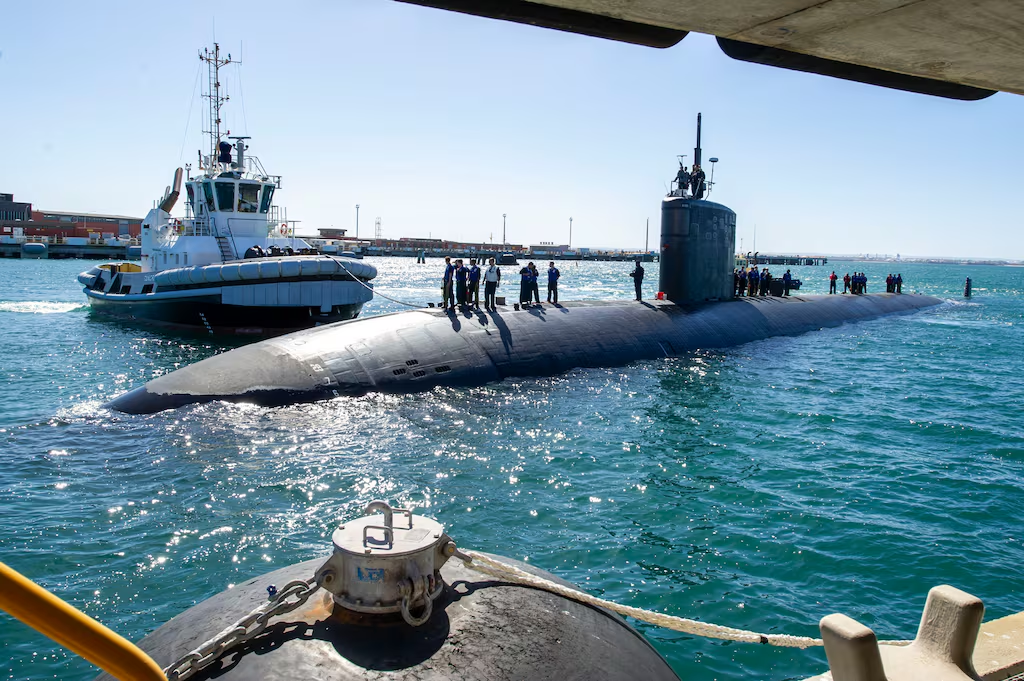
Announced on May 30, the new command—Naval Support Activity Stirling, or NSA Stirling—will serve as the backbone for Submarine Rotational Force–West, known as SRF–West.
The base will provide essential support for rotating U.S. and British nuclear-powered submarines stationed at Australia’s HMAS Stirling near Perth, a critical location overlooking key sea routes across the Indo-Pacific.
Here's What They're Not Telling You About Your Retirement
The new installation falls under Pillar I of the AUKUS pact, the agreement designed to bolster joint security operations and deliver Australia its first conventional, nuclear-powered submarines.
As part of the expansion, the U.S. Navy confirmed that NSA Stirling will deliver critical logistics and family services for American personnel, contractors, and sailors assigned to the growing presence in the Pacific theater.
Vice Adm. Scott Gray, commander of Navy Installations Command, said the base represents a pivotal milestone for American force projection. “Establishment of NSA Stirling with our AUKUS partners demonstrates our command mission to support the fleet, warfighter, and family,” Gray stated.
This Could Be the Most Important Video Gun Owners Watch All Year
“By providing essential services to U.S. personnel and their families, NSA Stirling will enhance rotational submarine force readiness.”
The first deployments of American submariners and their families are expected in late 2026, ahead of full operational capability projected in 2027. The U.K. will also send personnel as part of the same rotational force, complementing an already robust joint-submarine training pipeline between the three allies.
Rear Adm. Ian Johnson, commander of Navy Region Japan, noted that the new facility is still in the early stages but progressing quickly. “While there is still much work ahead, we are confident in our ability to accomplish this task through strong collaboration with our AUKUS partners,” Johnson said.
His command began the stand-up process in October 2024, with infrastructure and community support efforts rapidly taking shape.
This development follows a broader U.S. strategic focus to expand forward-operating capacities across critical nodes in the Indo-Pacific—steps that were often delayed under the politically cautious foreign policy of the previous administration.
By contrast, this new War Department initiative under President Trump’s team, led by War Secretary Pete Hegseth, is moving full speed ahead to put hard military power in position before China can exploit regional vacuums.
On the same day NSA Stirling was activated, Secretary Hegseth met in Singapore with Australian Deputy Prime Minister and War Minister Richard Marles, as well as U.K. War Secretary John Healey.
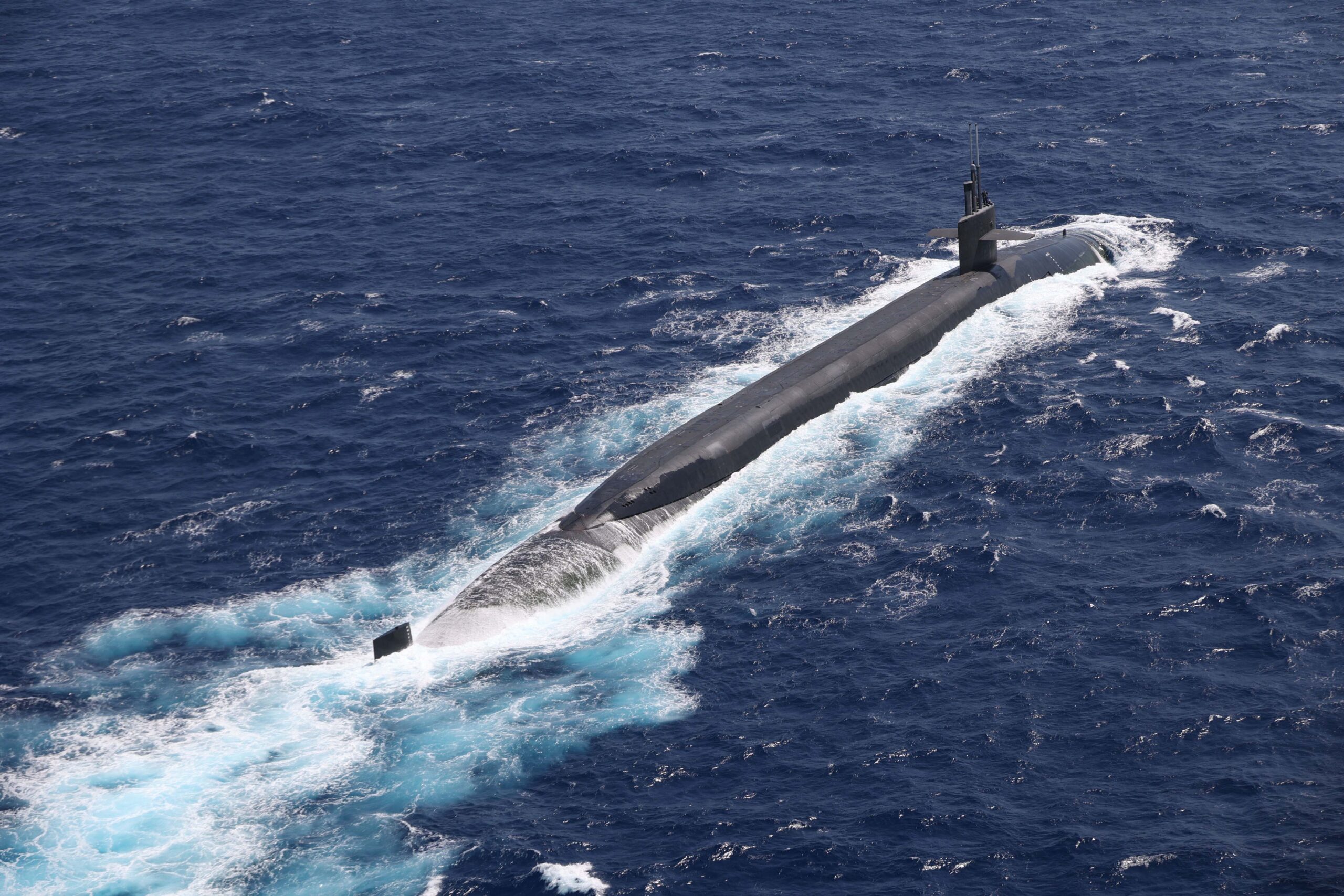
The three reaffirmed that AUKUS milestones are being met on schedule, underscoring steady progress toward delivering a new generation of submarines capable of protecting shared democratic interests in the Pacific.
The Singapore discussions also propelled the next phase of cooperation: Pillar II of the AUKUS agreement, focused on advanced technology for uncrewed undersea warfare.
The first major Pillar II project, announced at the meeting, will deliver cutting-edge uncrewed undersea vehicles (UUVs) starting in 2027, enhancing surveillance, strike, and reconnaissance capabilities.
According to the War Department’s release, these new systems will give AUKUS partners unmatched ability to protect critical seabed infrastructure, conduct precision strike operations, and maintain advantage across electronic and anti-submarine warfare.
The technology will also be instrumental in responding to aggression in the increasingly contested South China Sea and beyond.
The establishment of NSA Stirling is about more than logistics—it’s a message. A message that the United States and its closest allies are not going anywhere.
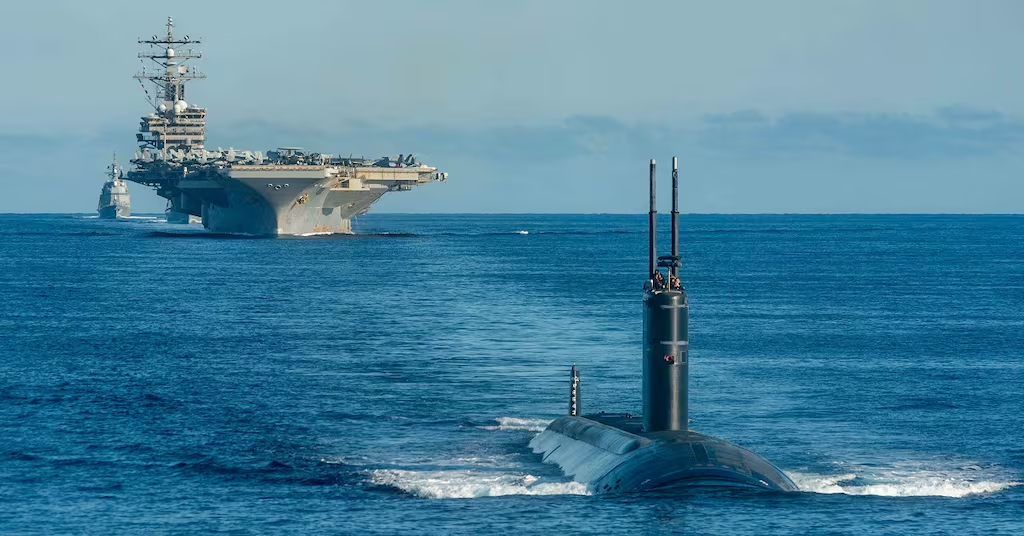
The move signals a long-term, credible commitment to regional deterrence and the defense of freedom of navigation, both of which have been under mounting threat from Beijing’s reckless naval buildup and coercive tactics.
Critics have complained for years that Western democracies were ceding momentum to China’s maritime rise.
But the new forward-focused approach under Hegseth’s War Department is proving that the United States is reclaiming its strategic initiative, ensuring that allies like Australia are not standing alone on the front lines of Indo-Pacific security.
As the submarine rotations begin and unmanned undersea projects come online, AUKUS stands not as a symbolic alliance, but as a powerful operational network prepared to act.
With bases like NSA Stirling in place, the U.S. Navy is clearly signaling that “peace through strength” isn’t a slogan—it’s policy.
Join the Discussion
COMMENTS POLICY: We have no tolerance for messages of violence, racism, vulgarity, obscenity or other such discourteous behavior. Thank you for contributing to a respectful and useful online dialogue.