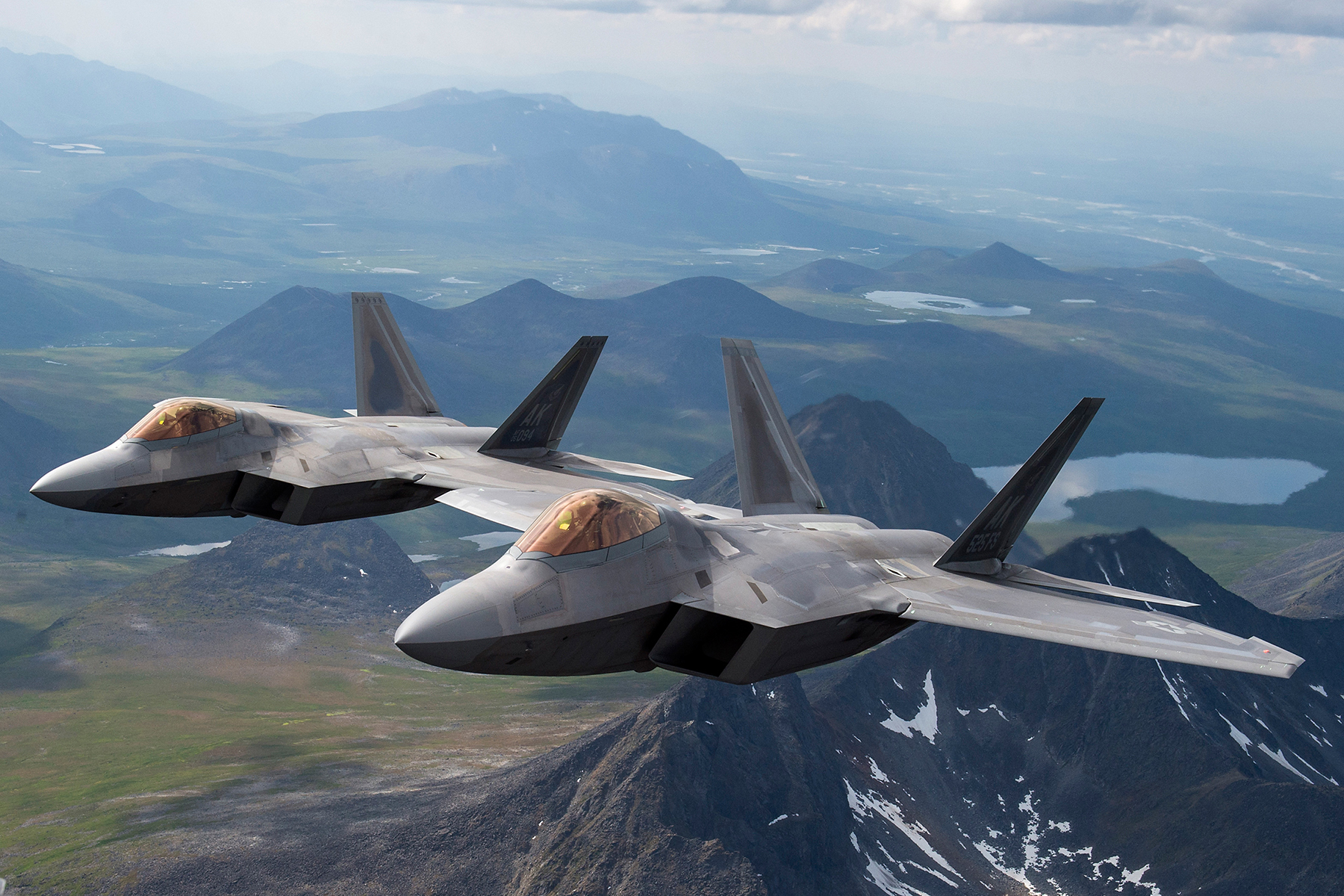
An Air Force fighter pilot who saved an F-22 after its right main wheel fell off has received the service’s highest flight safety award.
Capt. Michael Cloninger kept his composure, built a landing plan from scratch, and brought the advanced combat jet down without injury or fire.
Air Force Chief of Staff Gen. Ken Wilsbach presented Cloninger with the 2025 Koren Kolligian Jr. Trophy this week.
The honor recognizes the kind of disciplined courage and sharp decision making that American airpower demands when a routine flight suddenly becomes anything but routine.
Here's What They're Not Telling You About Your Retirement
MORE NEWS: Georgia Guard Helicopters Sweep All 159 Counties to Spot Marijuana Grows for Police Warrants
Cloninger serves with the 90th Fighter Squadron, which deployed F-22 aircraft to the Middle East in August 2024.
The deployment was part of a rapid surge of American airpower as threats mounted across the volatile Central Command area of responsibility.
The emergency unfolded on Sept. 18, 2024, while Cloninger was participating in a tribute flight marking the anniversary of the Battle of Britain.
Shortly after takeoff, the entire right main wheel separated from his fighter, creating a dangerous situation with no easy checklist solution.
This Could Be the Most Important Video Gun Owners Watch All Year
Cloninger and the other pilots in the formation identified the problem and immediately abandoned the planned flight.
They circled the airfield while assessing how to land a fully armed F 22 with one of its essential wheels missing.
There was no established procedure tailored to the emergency confronting the aircrew.
A bad landing could have endangered Cloninger, ground personnel, nearby aircraft, and a fighter worth tens of millions of dollars.
Rather than rush the approach, Cloninger remained airborne for roughly an hour to burn fuel and reduce the risks.

He also used that time to coordinate with his teammates and develop the safest possible method for putting the crippled aircraft on the runway.
The final plan called for a shallow approach followed by a controlled belly landing.
Cloninger touched down, kept control of the fighter as it scraped along the runway, and brought it to a stop without the aircraft catching fire.
He then safely shut down the jet and escaped injury. The F 22 was also recovered, turning what could have become a catastrophic loss into a remarkable demonstration of training, teamwork, and old fashioned American nerve.
The Koren Kolligian Jr. Trophy is named for Air Force 1st Lt. Koren Kolligian Jr., who disappeared off the California coast in 1955 while flying a T-33.
It “recognizes outstanding feats of airmanship by aircrew members who by extraordinary skill, exceptional alertness, ingenuity, or proficiency, averted accidents or minimized the seriousness of the accidents in terms of injury, loss of life, aircraft damage, or property damage.”
The trophy carries special significance because it is the only Air Force safety award personally presented by the chief of staff. Wilsbach praised Cloninger’s “extraordinary airmanship” and his ability to adapt when the emergency rapidly changed the mission.
“You faced an emergency you could not see with no warning from your aircraft, while carrying a full combat load thousands of miles from home,” Wilsbach said.
“You remained disciplined. You trusted your training, listened to your teammates, and made sound decisions.”
“When it was time to land, you flew the aircraft all the way through the emergency. That is what we expect from American Airmen,” Wilsbach continued, delivering a fitting summary of a pilot who refused to surrender either himself or his aircraft to mechanical failure.
Previous recipients have earned the award after surviving sudden engine failures, structural problems, and other potentially deadly malfunctions.
Those cases include an F-16 pilot who landed safely in South Korea after losing the engine and an A-10C Thunderbolt II pilot who completed a belly landing after the aircraft began coming apart during training.
Cloninger credited the aircrew members who communicated with him and helped work through the available checklists. His response reflected the reality of military aviation, where even exceptional individual skill depends on disciplined crews functioning as one team.
“Without my teammates assisting with communication and walking through the checklists, I truly believe I wouldn’t be standing here today,” Cloninger said.
“I owe more than this award to them — this recognition is a testament to the teamwork that helped us successfully manage the emergency.”
Join the Discussion
COMMENTS POLICY: We have no tolerance for messages of violence, racism, vulgarity, obscenity or other such discourteous behavior. Thank you for contributing to a respectful and useful online dialogue.