WHAT YOU NEED TO KNOW
- The Air Force requested information on a mobile medium caliber cannon for defeating drones and subsonic cruise missiles.
- Requirements emphasize magazine depth, affordable engagements, swarm handling, strong salvo performance, and rapid deployment.
- The system would support dispersed operations from highways and other austere locations while reducing reliance on scarce Army defenses.
- No weapon, caliber, design, or purchase decision has been selected.
The Air Force is exploring a new cannon that could protect air bases from drones and cruise missiles.
On Sept. 3, the service posted a Request for Information seeking a “ground-based, medium-caliber gun weapon system” capable of engaging several classes of airborne threats.
The Ground-Based Air Defense mission, known as GBAD, is typically handled by the Army.
That arrangement works when sprawling bases are the norm and incoming threats are predictable rather than arriving in swarms.
Here's What They're Not Telling You About Your Retirement
Cheap, accurate, and capable drones are now complicating that model alongside traditional weapons such as ballistic missiles.
In the war in Iran, Iranian drone and missile strikes are hitting costly U.S. aircraft on the ground while the military burns through its supply of advanced Patriot interceptors.
The Air Force request is not a commitment to purchase a weapon. A Request for Information is primarily intended to survey the market, but it reveals the capabilities the service wants industry to offer.
Three major considerations are magazine depth, cost per engagement, and raid handling.
This Could Be the Most Important Video Gun Owners Watch All Year
Put simply, the Air Force wants a system that can fire more than a few interceptors before requiring a complicated reload, without spending several times more than the target costs on every engagement.
The weapon must also confront swarms rather than isolated targets. The Air Force has not publicly revealed exactly how large a swarm the GBAD system would need to defeat, leaving one of the most important performance questions unanswered.
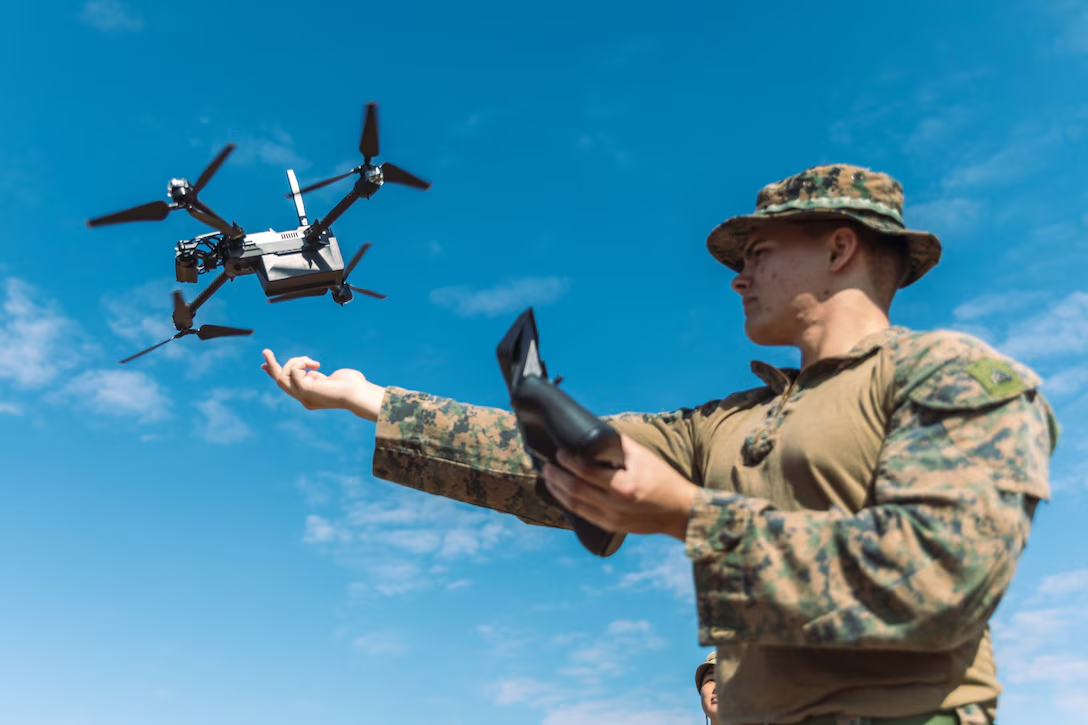
Another requirement is the salvo probability of kill against cruise missiles and Group 1 to 5 drones.
MORE NEWS: Trump Says U.S. ‘Hopefully’ Nears End of Iran War as Saudi Arabia and Houthis Trade Strikes
That means the system must have a strong chance of destroying small drones, large drones, and cruise missiles during a single salvo.
A salvo could come from a weapon with multiple barrels or from a cannon with one barrel that fires several rounds at each target. The request does not specify which configuration the Air Force prefers.
Mobility is another central requirement, with the service demanding something “rapidly deployable.”
The Air Force has been training to operate from distributed airfields located on highways and at other austere sites, reducing dependence on permanent and easily identified airfields.

Airmen operating from those locations would need to move quickly, and their air defenses must travel with them.
A cannon that is difficult to relocate could undermine the flexibility that dispersed operations are supposed to provide.
That demand creates unavoidable tradeoffs involving sensors, ammunition, cost, and mobility.
Advanced sensors or more capable munitions could make the system more expensive and harder to transport, while several systems might be required to defend an area and cover blind spots.
The Air Force acknowledges that challenge by calling for a “lightweight, modular, and transportable footprint that can be swiftly projected into austere theater environments.”
A modular design could allow airmen to exchange components so the weapon can confront different threats.
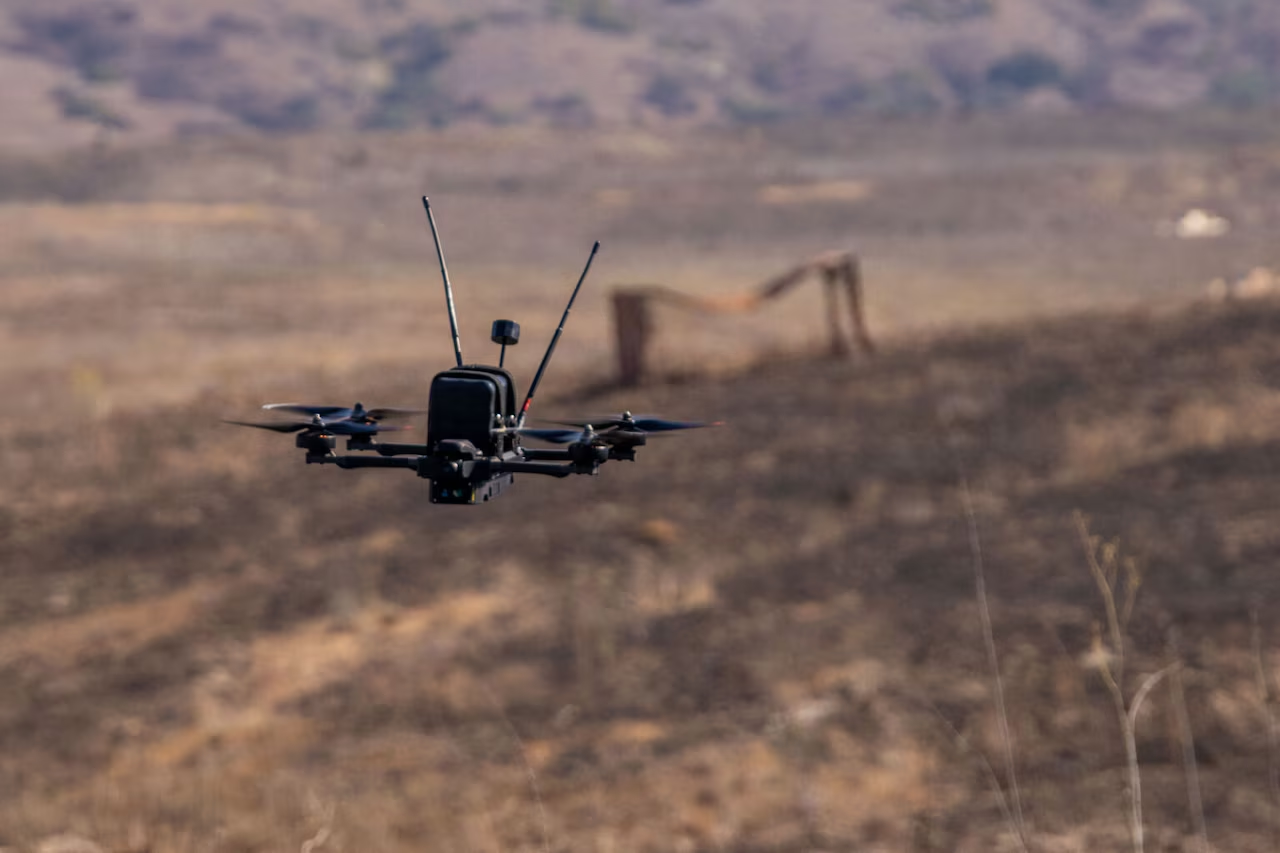
The eventual system could take several forms, although the Air Force has not selected one.
Possibilities raised in the source include a 30mm cannon mounted on a joint light tactical vehicle like the Marine Corps’ Marine Air Defense Integrated System, or a shipping container that deploys a cannon and sensors in a fashion similar to the GRIZZLY system.
Rheinmetall has also produced a rendering of its Skyranger 35 turret positioned on a pallet.
These examples illustrate possible configurations, but the Air Force has not chosen a gun, caliber, or final design.
Other military services are wrestling with the same drone problem while trying to operate with smaller footprints.
Marines are receiving 5.56 rifle rounds intended for use against drones, the Army is testing small jammers worn by soldiers, and the Navy is firing Hellfires at drones.
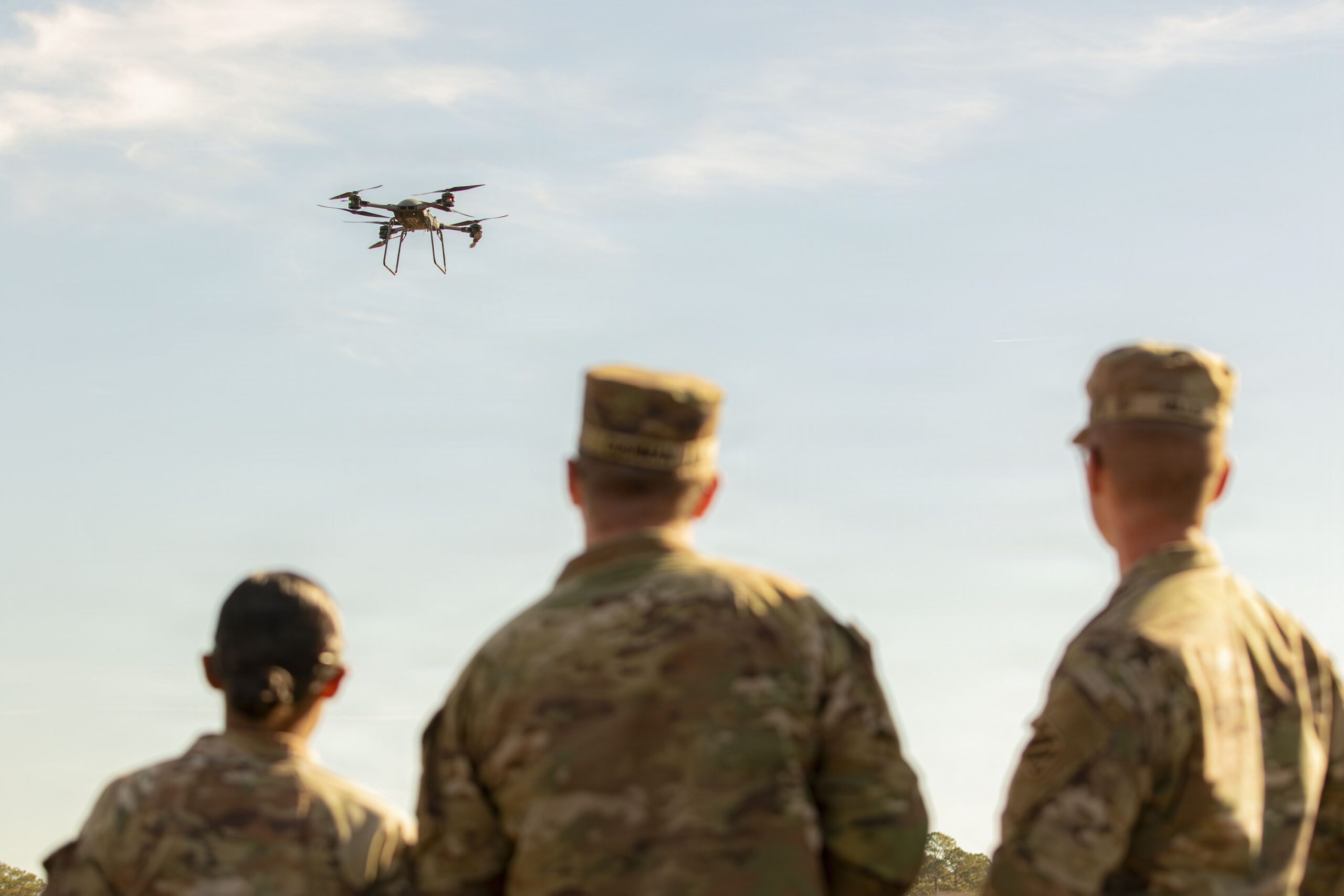
Any new cannon would operate as one part of a layered defense rather than as a solitary answer.
The Air Force is already buying or developing drone countermeasures including the THOR and Mjolnir microwave weapons and the X-MADIS electronic warfare system.
A dedicated medium caliber cannon would add another layer that is currently missing.
The service wants an affordable system with substantial magazine capacity that can accompany dispersed aircraft rather than forcing airmen to wait for scarce Army systems.
The Air Force still has not committed to purchasing such a weapon. If a request for proposal follows, its caliber and physical configuration will offer a clearer picture of how the service intends to conduct the mission.
Join the Discussion
COMMENTS POLICY: We have no tolerance for messages of violence, racism, vulgarity, obscenity or other such discourteous behavior. Thank you for contributing to a respectful and useful online dialogue.