The Navy’s top officer is warning sailors and their families to prepare for longer deployments as the service struggles to meet worldwide demands with too few ships.
The blunt message comes despite the Navy’s stated goal of keeping deployments near seven months.
Chief of Naval Operations Adm. Daryl Caudle addressed the issue during a livestreamed question and answer session Monday at Fort Meade, Maryland.
Sailors raised concerns ranging from deployment schedules and shoreside living conditions to stricter grooming rules ordered by the Pentagon.
Here's What They're Not Telling You About Your Retirement
“In the short term, until I can grow the Navy we need,” Caudle said, “I hate to admit it, but longer deployments are going to be probably part of that.”
Caudle said one of the “biggest hardships” facing sailors is the “uncertainty” created when deployments are repeatedly extended.
Families can endure a long absence more effectively when commanders provide firm schedules instead of moving the finish line every few weeks.
“When sailors know how long they’re going to be away from family, they go plan their lives to that, and they can get all those events that would necessarily be in their life, from attending weddings to childbirth to family events to vacations, they know how to go build that into the schedule,” Caudle said.
This Could Be the Most Important Video Gun Owners Watch All Year
“But when I just basically extend in these small chunks a little bit time after time, that brings a lot of uncertainty to families,” Caudle added. “I’m working with that along with the other Joint Chiefs to try to get that more defined. I think that’ll improve going forward.”
His warning follows reports about quality of life problems and mental health concerns aboard the USS Abraham Lincoln.
The carrier departed San Diego in November and later had its deployment extended to support American operations against Iran.
The Lincoln has now been deployed for nine months and is scheduled to visit Thailand before beginning its trip back to San Diego.
Although the Navy has not confirmed a homecoming date, the San Diego Union Tribune reported that the carrier could return in late September or early October, pushing the deployment close to 10 months.
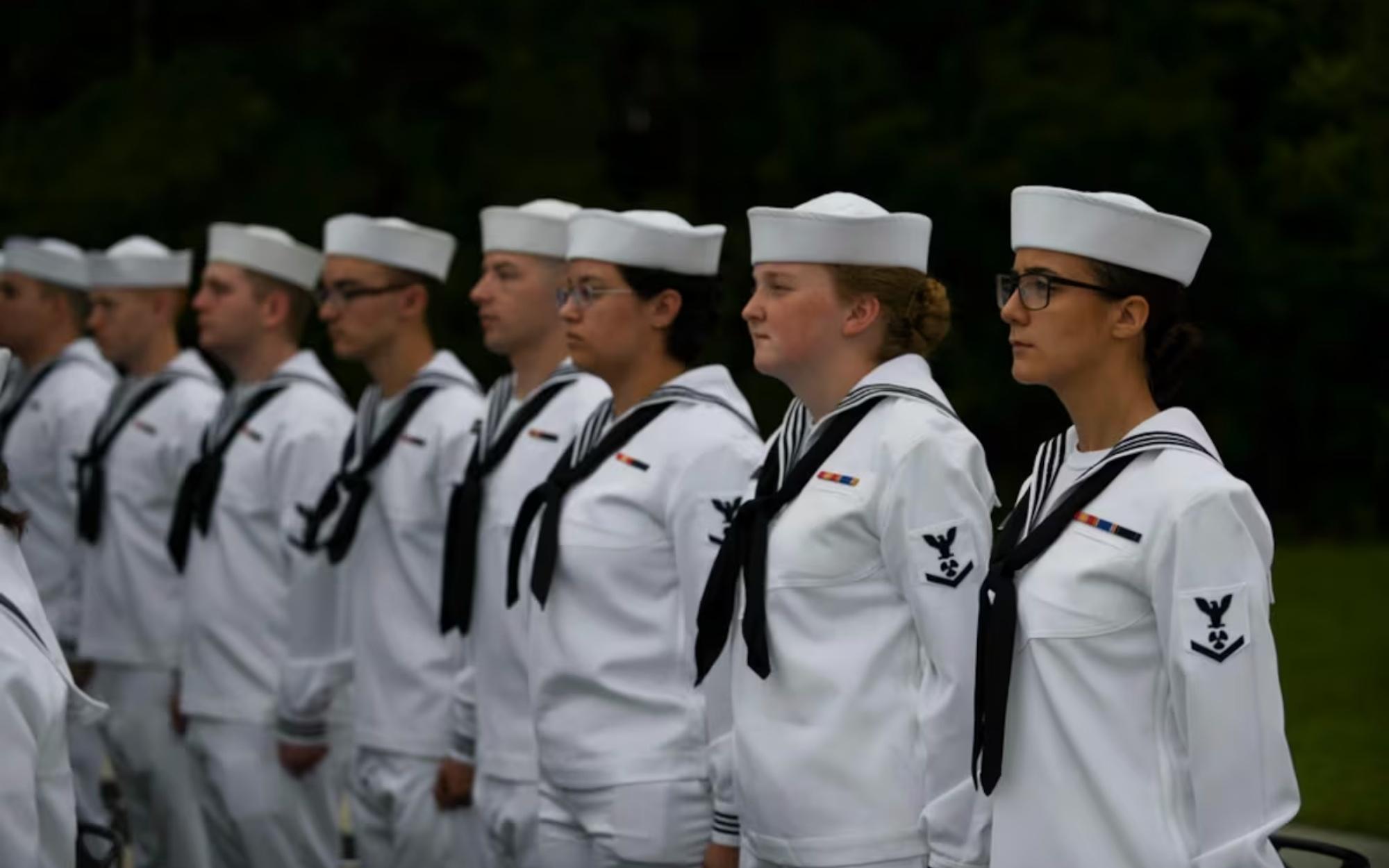
“It’s my earnest attempt to really try to keep those [deployments] at seven months,” Caudle said, adding that he wants a Navy “that can sustain a seven month deployment and still give our combatant commanders the amount of naval force they need to accomplish their missions, solve their key operational problems, and make sure they have all the naval force necessary to do what they need to do.”
That goal already appears difficult. Master Chief Petty Officer of the Navy John Perryman told reporters that families connected to the USS Theodore Roosevelt, which is preparing to deploy to United States Central Command, have been advised to expect at least eight months apart.
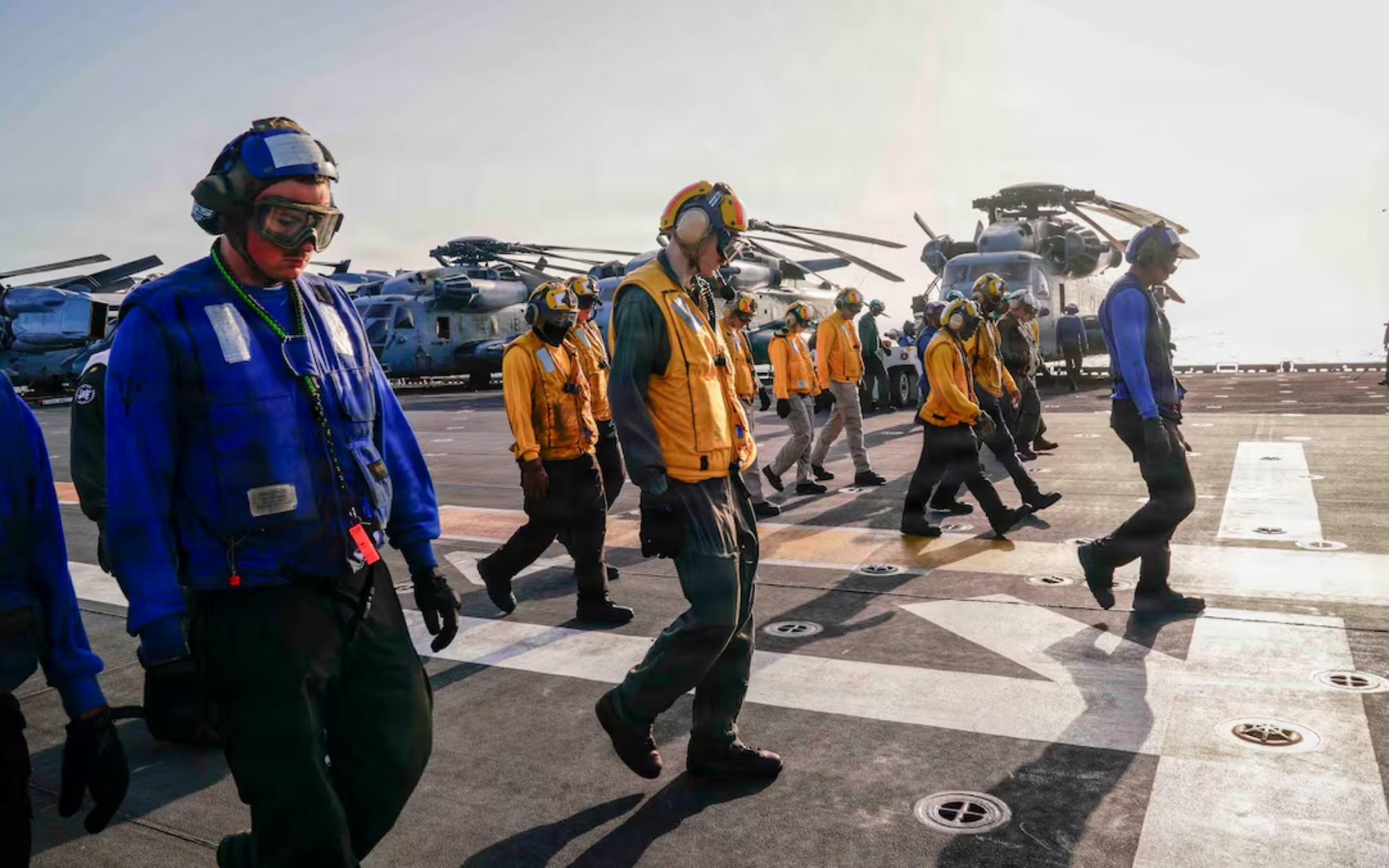
The underlying problem is brutally simple: America does not have enough ships.
Years of shipbuilding delays, shrinking capacity, aging vessels, and Washington bureaucracy have forced the fleet to do “more with less,” a fashionable Beltway phrase that usually means sailors pay the price.
The Navy’s 2025 shipbuilding plan called for expanding the fleet from 295 ships to 390 over roughly 25 years.
Until those ships are actually constructed and delivered, however, promises on paper will not relieve crews already spending month after month at sea.
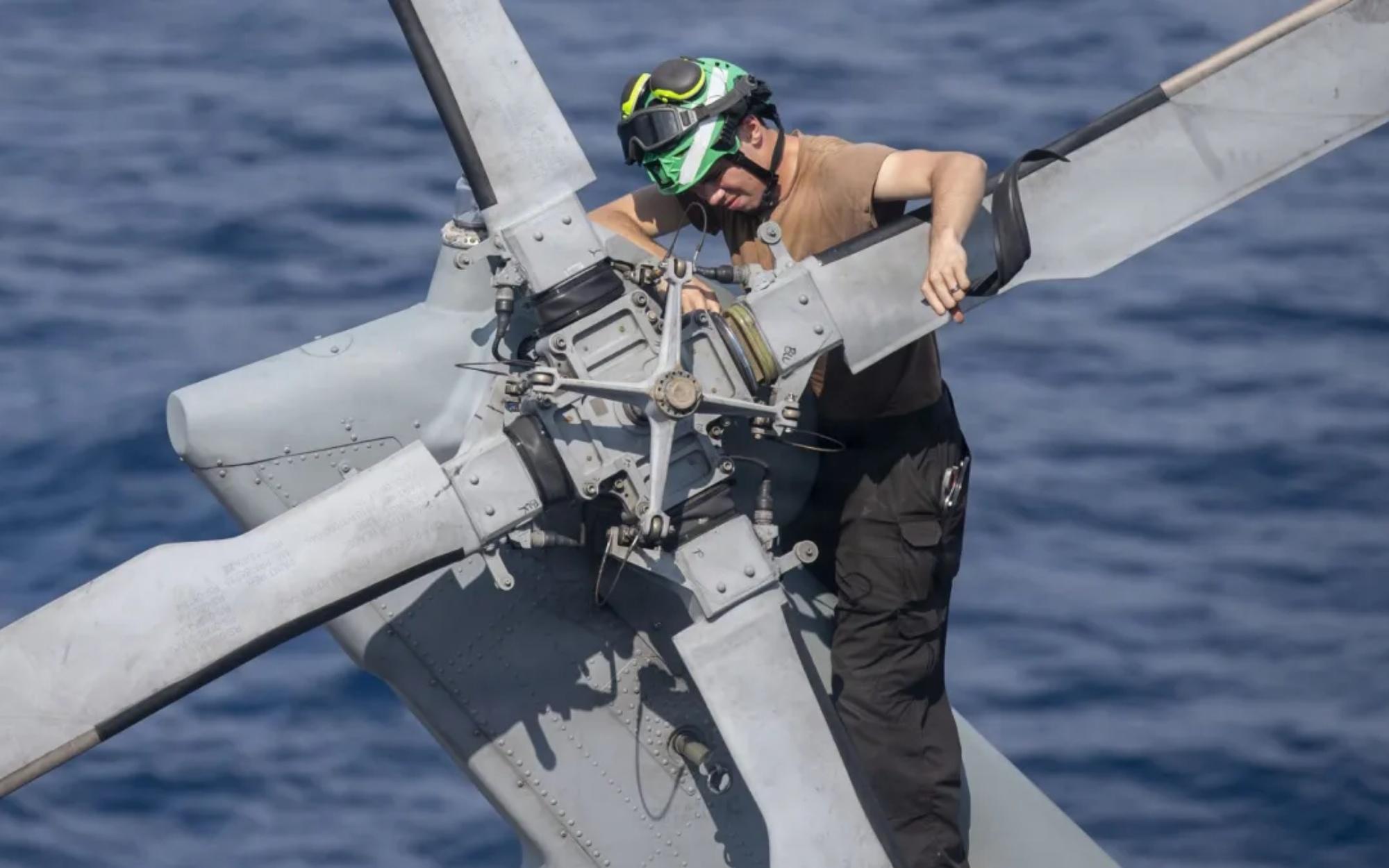
Steven Wills, a former Navy officer and expert at the Center for Maritime Strategy, said the seven month objective originated with the 2014 Optimized Fleet Response Plan.
That model sought to deploy more aircraft carriers, but lengthy missions inevitably disrupt maintenance and repair schedules.
“The carrier repair plan is going to be upset for a decade or more now based on the extensions of both Ford and Abraham Lincoln,” Wills said.
“Really, it’s a question of numbers. We just don’t have enough aircraft carriers to do this.”
![Photographer Captures Golden Hour Return of Artemis II Crew [PHOTOS]](https://www.commondef.com/wp-content/uploads/2026/04/2026.04.15-02.10-commondefense-69df9c5c411d7.webp)
A USNI News review found that Navy carrier deployments have averaged 8.5 months since the American response to the Oct. 7, 2023, Hamas terrorist attack in southern Israel and subsequent Houthi attacks against commercial shipping.
Persistent threats have kept carriers in demand while exposing the consequences of a fleet stretched dangerously thin.
The Lincoln previously sailed for more than 250 uninterrupted days, while the USS Gerald R. Ford completed an 11 month deployment lasting 326 days across three fleet regions.
Caudle acknowledged that missing port visits damages crew morale, although the Ford at least stopped in Croatia and Crete.
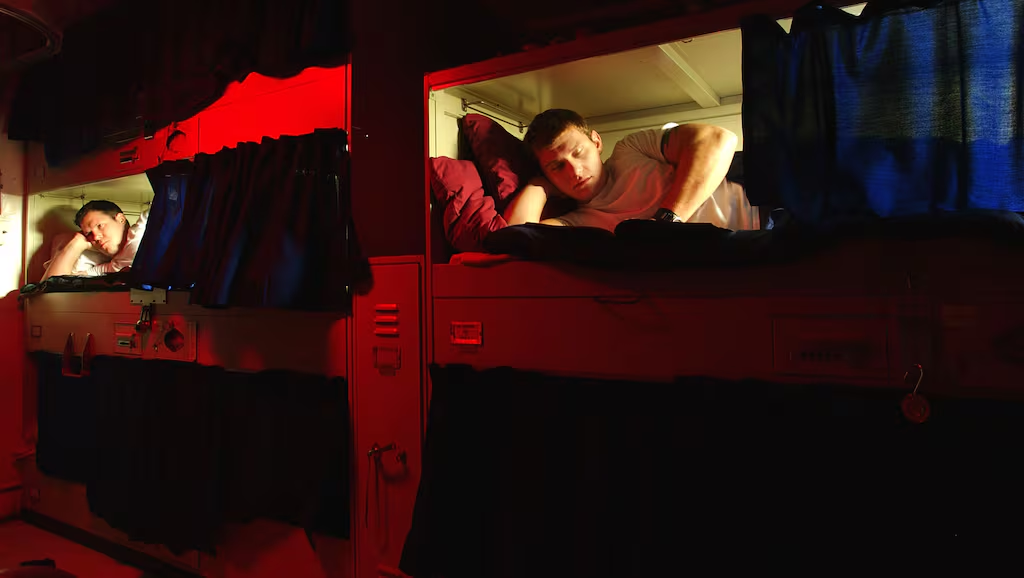
Wills called carriers a “powerful geopolitical chess piece” capable of “projecting U.S. power.” Their visibility, striking capability, and ability to remain supplied at sea make them the first option when commanders need immediate muscle.
“It’s visible. It has actual striking power. You can refuel it and rearm it relatively quickly,” Wills said.
“A surface warship or a submarine has to go into port and have its missile tubes reloaded. You can reload an aircraft carrier at sea while it’s still dropping bombs and doing things.”
Join the Discussion
COMMENTS POLICY: We have no tolerance for messages of violence, racism, vulgarity, obscenity or other such discourteous behavior. Thank you for contributing to a respectful and useful online dialogue.