WHAT YOU NEED TO KNOW
- The Navy’s shipyard modernization program will exceed $200 billion and take more than 50 years to complete.
- GAO found the program lacks regular reviews of costs, risks, requirements and performance.
- The overhaul covers four public shipyards responsible for maintaining nuclear powered aircraft carriers and submarines.
- GAO issued three oversight recommendations, and the Navy agreed with all of them.
The U.S. Navy’s sweeping effort to modernize four public shipyards is expected to cost more than $200 billion and require over 50 years to complete, yet a federal watchdog says the program lacks regular reviews of its costs, risks and performance.
That oversight gap could leave Congress making major decisions “based on incomplete information, thus risking billions in taxpayer dollars,” the Government Accountability Office warned in a report published Friday.
The findings focus on the Shipyard Infrastructure Optimization Program, known as SIOP, which the Navy launched in 2018.
The program was created to correct poor shipyard conditions and capability gaps that affect fleet readiness.
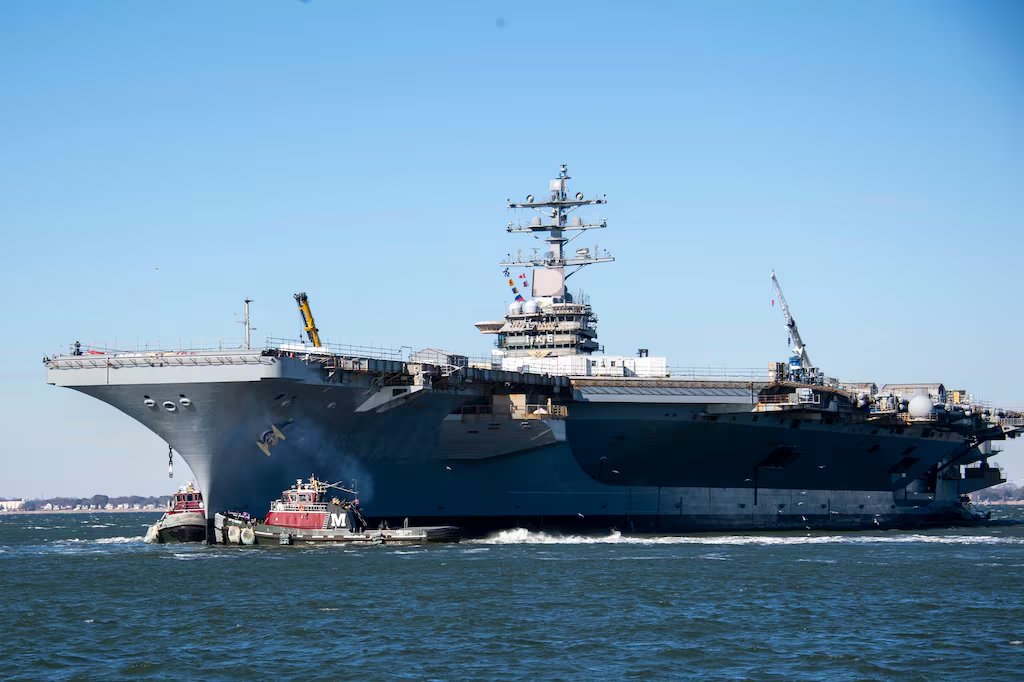
The Navy is carrying out the generational overhaul at shipyards in Norfolk, Virginia; Pearl Harbor, Hawaii; Portsmouth Naval Shipyard in Kittery, Maine; and Puget Sound, Washington. Those four public facilities are essential to maintaining the service’s nuclear powered aircraft carriers and submarines.
SIOP encompasses new dry docks, extensive construction and dozens of other major infrastructure projects and upgrades. Its enormous scope, lengthy timeline and growing costs make consistent oversight particularly consequential for Congress and taxpayers.
GAO investigators found that the Navy adopted requirements for SIOP without including plans for regular reviews across the coming decades.
The watchdog said that without appropriate evaluations, the Navy cannot adjust the program to meet changing needs.

“Without building such reviews into key future decision points, the Navy is limiting its ability to ensure that capabilities in SIOP’s plans today continue to be aligned or adjusted to support future fleet warfighting needs,” the report states.
The program has already taken years longer to develop than anticipated, according to GAO.
Its projected price has also grown substantially beyond original expectations, adding financial pressure to an effort that will stretch across more than half a century.
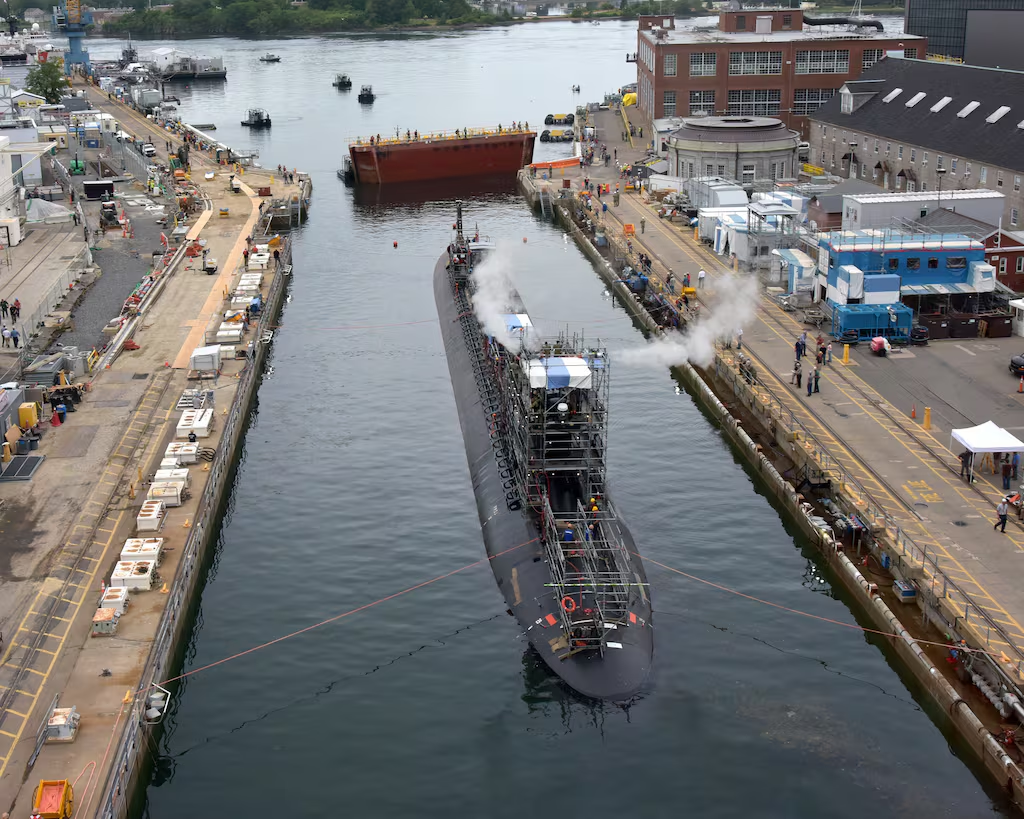
Environmental issues are among the challenges that have complicated the undertaking.
Those issues have led to additional projects and more extensive work, affecting both project plans and costs at the four shipyards.
The Navy currently gives Congress reports and briefings about SIOP, but it is not required to provide consolidated and standardized information covering the program’s full costs and risks. That leaves lawmakers without the kind of consistent, comprehensive reporting required for other major acquisitions.
Major defense acquisitions, by comparison, must submit annual program status reports containing detailed metrics.
Those reports include total costs to date, projected timelines and identified risks, providing a clearer picture of whether a program is meeting expectations.
GAO issued three recommendations aimed at tightening management and accountability.
The first calls for the Navy to include periodic reviews of SIOP’s validated requirements, objectives and performance parameters within the program’s oversight framework.
The second recommendation asks the Navy to establish specific steps and timing for annual examinations of SIOP’s mission readiness, affordability and sustainability. Such reviews would give officials defined opportunities to evaluate whether the program remains aligned with operational and financial demands.
GAO’s third recommendation calls on the Navy to identify and document the key organizations responsible for managing SIOP projects.
The Navy should also spell out their roles, responsibilities and collaborative relationships, according to the watchdog.
Investigators found that the Navy had not fully documented the duties and responsibilities of those organizations.

That omission adds another layer of uncertainty to a program involving extensive construction, major upgrades and more than $200 billion in expected spending.
The Navy agreed with all three GAO recommendations and described planned steps for implementing them.
The response acknowledges the watchdog’s proposed oversight changes as SIOP continues its decades long attempt to rebuild the infrastructure supporting critical carrier and submarine maintenance.
Join the Discussion
COMMENTS POLICY: We have no tolerance for messages of violence, racism, vulgarity, obscenity or other such discourteous behavior. Thank you for contributing to a respectful and useful online dialogue.