WHAT YOU NEED TO KNOW
- Two mines exploded Sept. 21 about 33 feet south of the Military Demarcation Line, injuring three South Korean soldiers.
- Preliminary findings indicate the mines likely belonged to North Korea, while investigators discovered two additional unexploded devices near the site.
- Forensic analysis found substances consistent with material used in North Korean mines on equipment worn by the injured soldiers.
- South Korea says it will consider appropriate measures if the final investigation concludes North Korea was responsible.
Two landmines that exploded inside the Korean Demilitarized Zone and injured three South Korean soldiers likely belonged to North Korea, according to preliminary findings from a joint investigation.
The inquiry remains active, with investigators examining additional devices and physical evidence from the scene.
The mines detonated Sept. 21 about 33 feet south of the Military Demarcation Line, Lt. Gen. Kwon Dae-won, vice chairman of South Korea’s Joint Chiefs of Staff, said during a press briefing Monday night.
Kwon said that if investigators ultimately determine North Korea was responsible, the South Korean military will take “appropriate and corresponding measures.” He did not specify what those measures could include.
United Nations Command and the South Korean military began their joint investigation Sunday at the blast site, according to Kwon.
The location is near an area where South Korea found evidence in September 2025 suggesting North Korean troops may have planted mines.
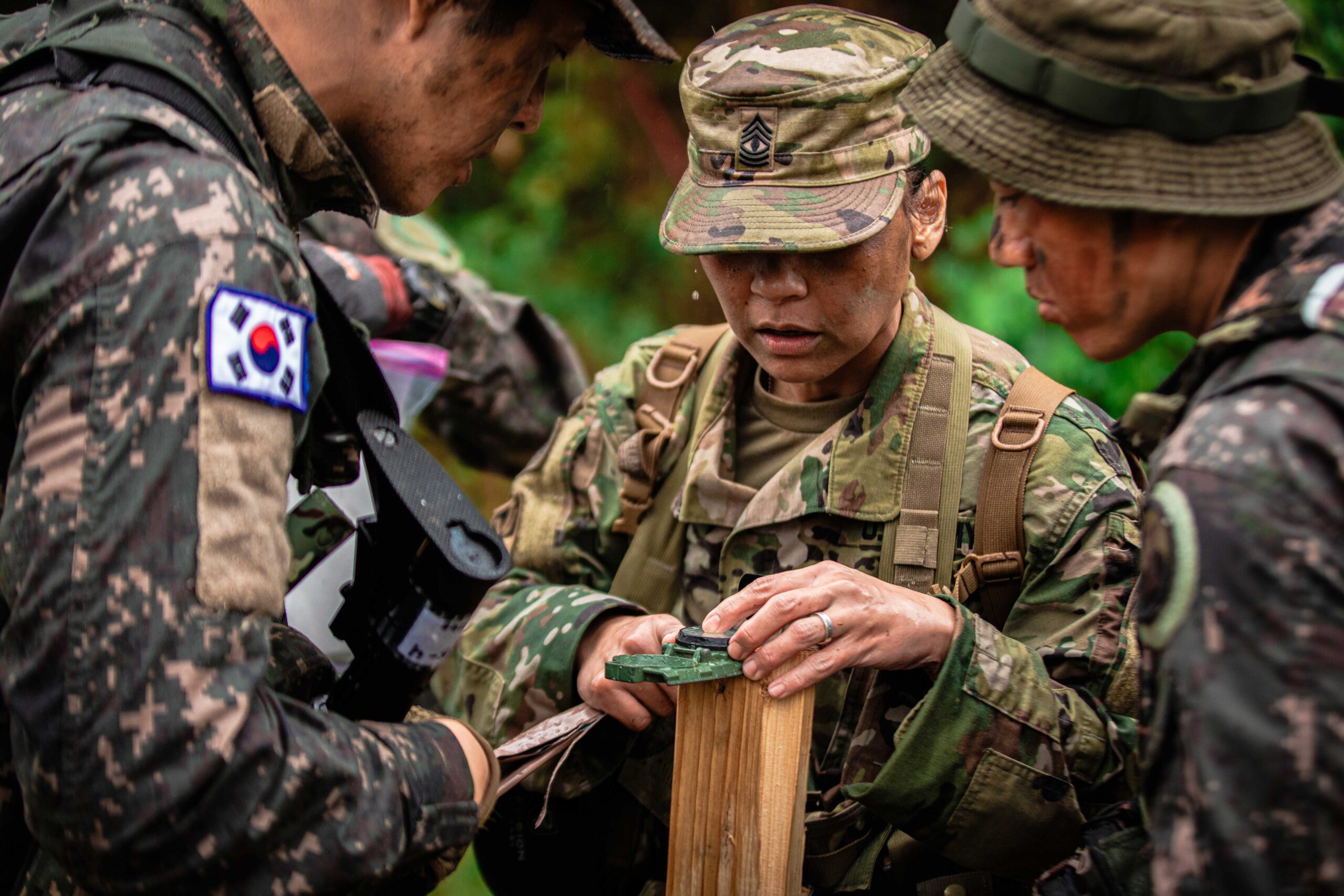
The explosions occurred while members of the South Korean army’s 25th Infantry Division were clearing a new search route. The route was being prepared for an investigation into terrain changes near the border, Kwon confirmed.
Investigators initially found a third mine at the site that had not exploded. Kwon said the unexploded device may also have been planted there, adding another element to an already serious investigation along the heavily controlled boundary.
A Ministry of National Defense spokesman told reporters in a text message Tuesday that investigators had discovered a fourth mine near the blast site. The fourth device differed from the third unexploded mine, according to the message.
Officials released no additional details about that newly discovered mine.
Some South Korean government officials are required to speak with the media only on the condition that they remain anonymous.
Helicopters evacuated 18 service members who had been involved in the operation, including two who were seriously injured and one who sustained minor injuries. They were taken to Armed Forces Capital Hospital near Seoul for treatment.
Fifteen of the evacuated service members have since been discharged, Kwon said.
One soldier suffered a severe injury to his left ankle, while another received shrapnel wounds to his face and other parts of his body.
Forensic analysis of equipment worn by the injured soldiers revealed brown foreign substances consistent with material used in North Korean mines, Kwon said.
That finding helped shape the military’s preliminary assessment about the likely origin of the devices.
Kwon also said South Korea’s military has no record of placing mines at the location where the explosions occurred.
Investigators are continuing their work before officials issue a final determination about responsibility.
The inquiry now includes the two mines that detonated, the third unexploded mine found at the location and the fourth mine subsequently discovered nearby.
Officials have not disclosed further information about the devices beyond noting that the two unexploded mines differed.
South Korean President Lee Jae Myung called for a thorough investigation during a Cabinet meeting Tuesday, according to Yonhap News Agency.
He said the government would take necessary measures based on the investigation’s final findings.
United Nations Command spokeswoman Choi Min-jung said Tuesday that the command has “no further comment while the incident remains under investigation.” The command is participating in the joint inquiry with the South Korean military.
The preliminary evidence has placed the focus squarely on determining where the mines originated and how they reached the area south of the Military Demarcation Line.
South Korean officials have tied any response to the final findings rather than the preliminary assessment.
Join the Discussion
COMMENTS POLICY: We have no tolerance for messages of violence, racism, vulgarity, obscenity or other such discourteous behavior. Thank you for contributing to a respectful and useful online dialogue.