The United States Air Force is accelerating plans for a cheaper and more expendable successor to the MQ 9A Reaper after combat losses during operations against Iran depleted the fleet faster than expected.
Officials no longer appear willing to wait for the aging drone to reach the end of its planned service life.
Lt. Gen. Christopher Niemi, the Air Force chief modernization officer, said a replacement was already being discussed because of the Reaper’s age.
Recent losses, however, have added real urgency to a procurement process that otherwise could have crawled along for years.
Here's What They're Not Telling You About Your Retirement
“Although we have plenty of MQ-9As today, we are going through them at a rate that is concerning to us,” Niemi told reporters during a Sept. 3 briefing at the Pentagon.
Breaking Defense first reported his remarks.
Secretary of the Air Force Troy Meink directed the service to accelerate the effort, according to Defense Daily.
The current fiscal 2031 objective of having 20 mission ready aircraft could be moved forward by roughly two years.
This Could Be the Most Important Video Gun Owners Watch All Year
The numbers explain the alarm. Lt. Gen. David Tabor told the Senate Armed Services Subcommittee on Airland in May that the Reaper fleet had fallen to approximately 135 aircraft, which was about 54 below the Air Force floor of 189.
Niemi did not provide an updated inventory during the September briefing. Even so, the earlier figures reveal a serious gap in a force that depends heavily on persistent intelligence, surveillance, reconnaissance and strike capabilities.
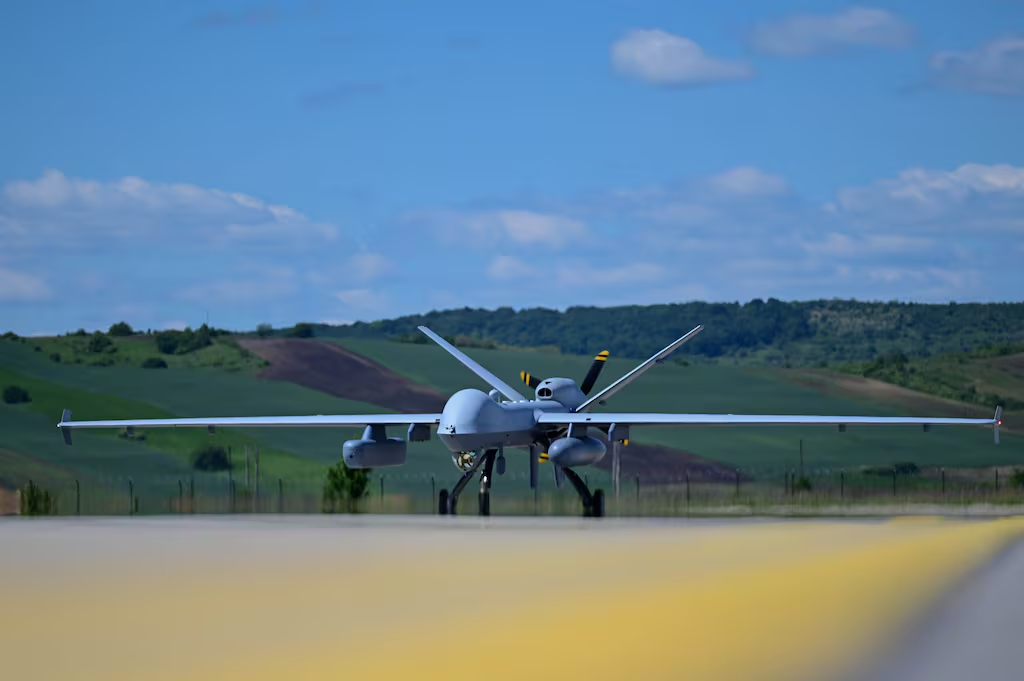
Replacing the missing aircraft will not be simple because General Atomics ended MQ 9A production in 2025. Tabor said the Air Force was pursuing a limited purchase of existing MQ 9A airframes in fiscal 2026 as a temporary answer.
Buying large numbers of the upgraded MQ 9B SkyGuardian is also financially unrealistic, Niemi said.
The notion that Washington can simply write a check and immediately receive 100 aircraft is another procurement fantasy colliding with budgets, production capacity and reality.
A Congressional Research Service report updated May 13 cited an April 9 news account stating that 24 Reapers had been lost since military operations against Iran began in February.
The report said it remained unclear whether the War Department had provided Congress with a complete accounting.
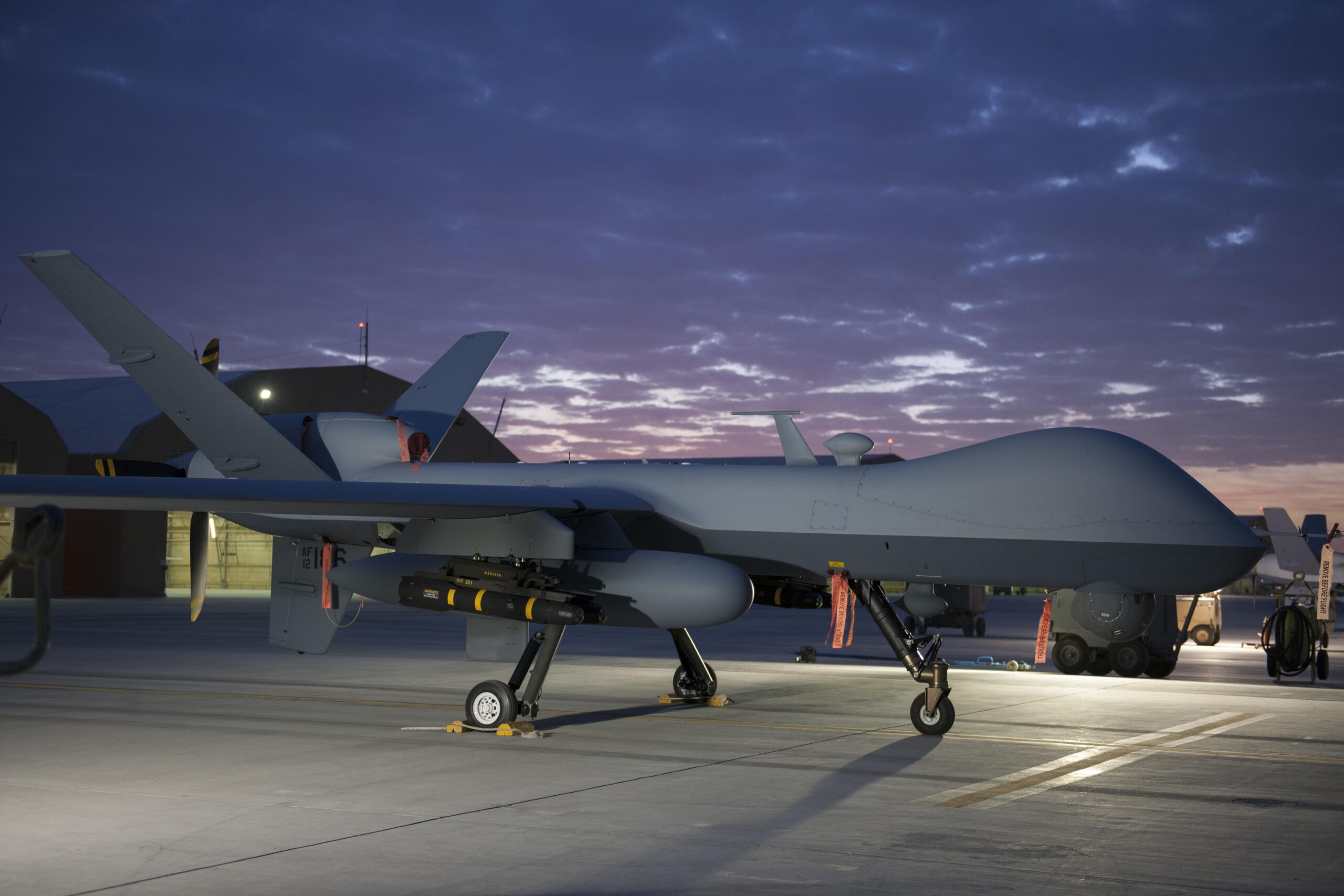
The Washington Post later reported on Aug. 13, citing three United States officials, that at least 45 Reapers had been lost.
That total would represent approximately 25 percent of the fleet, a punishing rate for aircraft that can cost tens of millions of dollars once equipped for combat.
Niemi approved requirements in May for a cheaper, modular and mass producible aircraft.
MORE NEWS: Vice President JD Vance Vows Action for Fallen Airman’s Widow After Benefit Bureaucracy Erupts
The resulting Massed Modular Aircraft program opened as a War Innovation Unit competition on July 7, with the Air Force participating as a partner.
The solicitation sought an aircraft capable of performing Reaper class strike, intelligence, surveillance, reconnaissance, electronic warfare and communications relay missions.

It also demanded at least 2,800 pounds of payload capacity and an 8,000 nautical mile one way ferry range.
Most importantly, MMA must be affordable enough for commanders to absorb combat losses without watching a massive chunk of the fleet disappear from the books.
Niemi estimated that Collaborative Combat Aircraft air vehicles would cost nearly $20 million each, while MMA aircraft could cost about half that amount.
An Air Force spokesperson cautioned that those figures cover only the air vehicle, not a fully equipped operational aircraft.
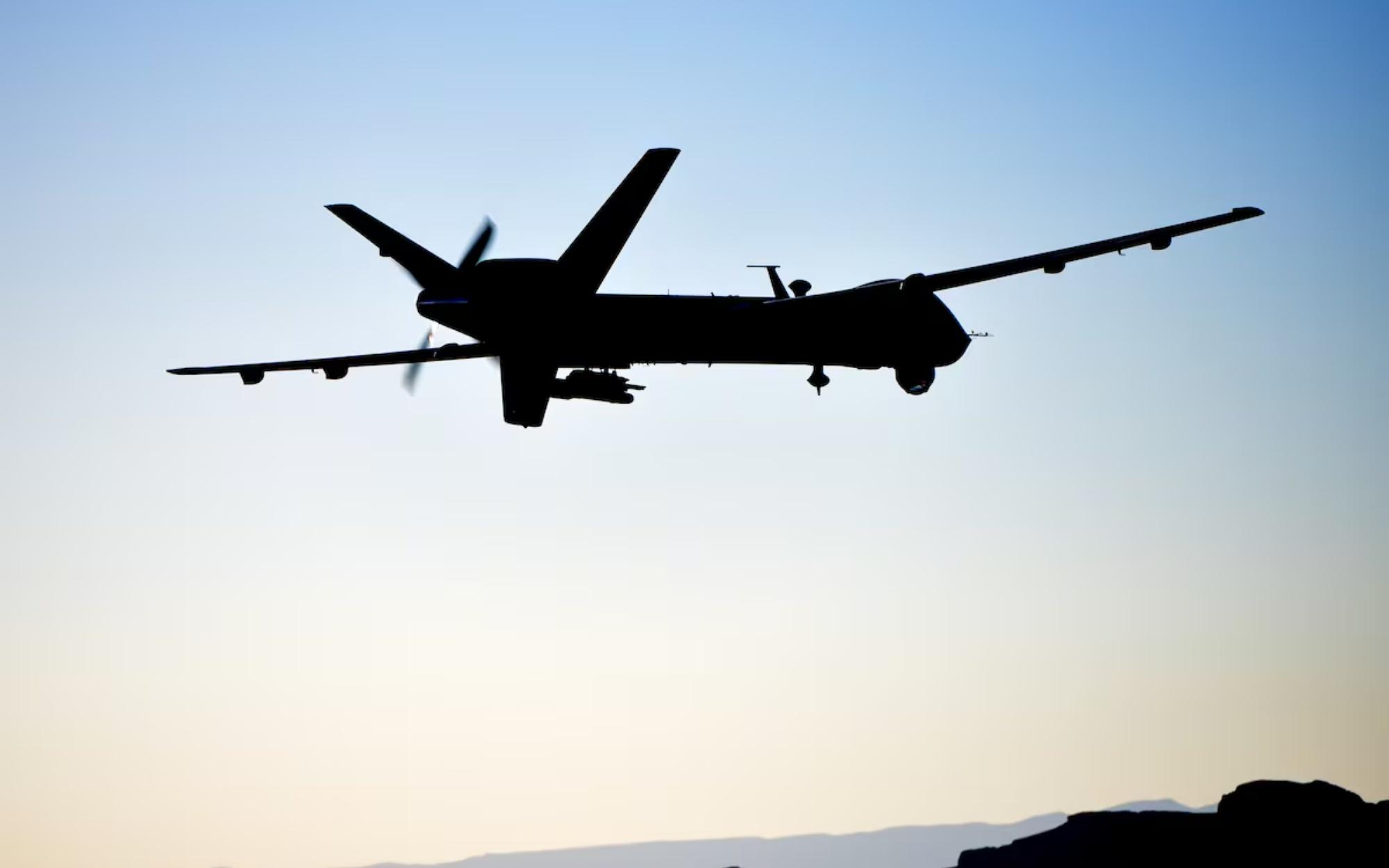
Niemi told senators in May that a Reaper carrying its complete sensor package can cost as much as $50 million.
The Air Force will probably acquire at least 180 MMA drones, according to Niemi. He also argued that the Reaper’s real combat value comes from its payloads, sensors and mission systems rather than revolutionary aviation performance.
“What makes the MQ-9 special has nothing to do with the aircraft itself,” Niemi said, describing its speed, altitude and range as technology that is already decades old.
Initial MMA aircraft will therefore use proven systems instead of expensive experimental technology.
Niemi described the concept as a long aspect wing turboprop in the “4,000 miles-type class,” with greater range and payload than a Collaborative Combat Aircraft but lower speed. Officials did not explain how that description corresponds with the 8,000 nautical mile ferry requirement.
General Atomics is offering a design called Wildfire, which Aviation Week first reported in August.
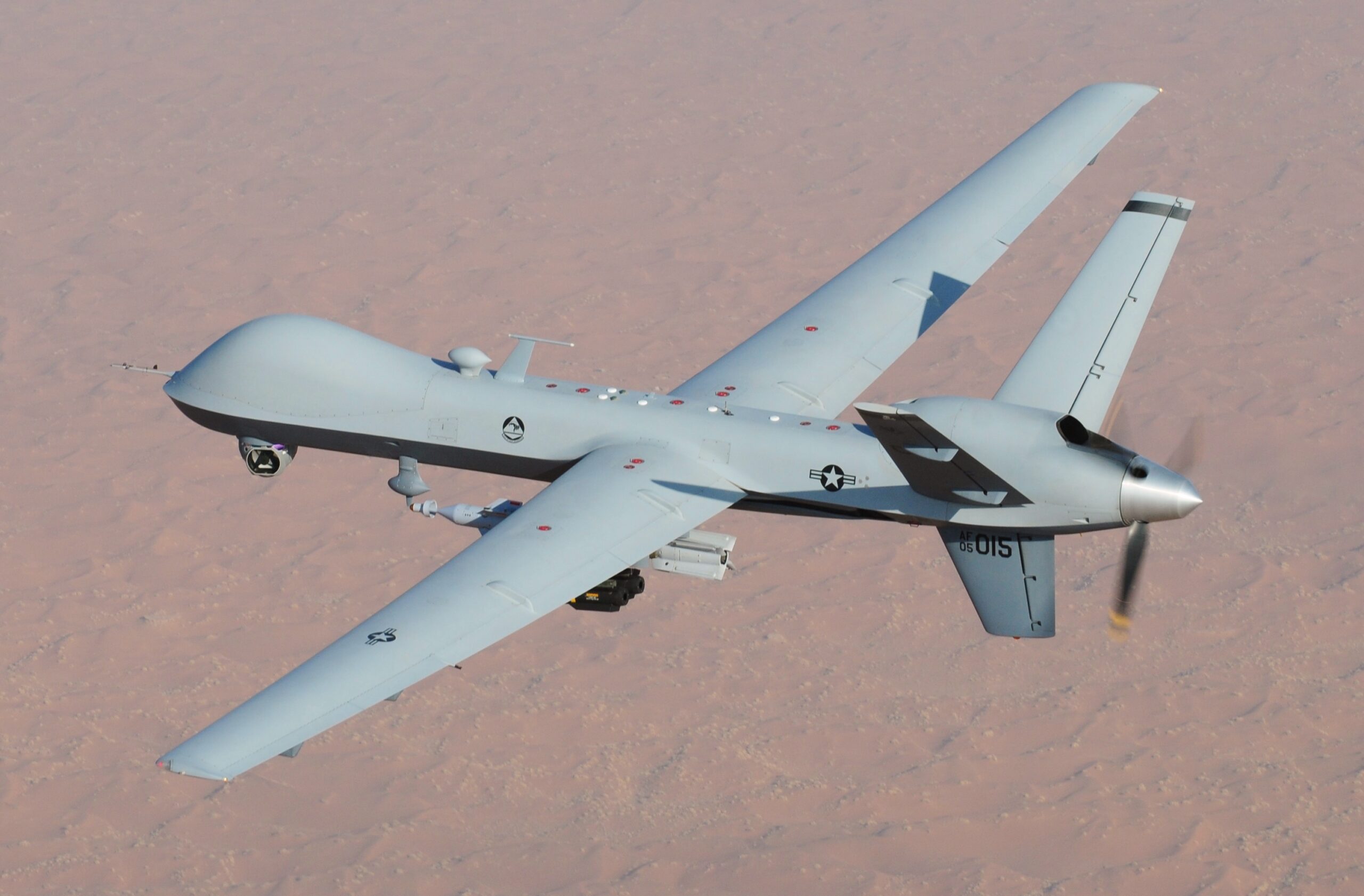
Company spokesman C. Mark Brinkley said it “meets every wish on the [MMA] list and exceeds most of them,” although he declined to disclose its price or specific capabilities.
Brinkley also argued that viewing MMA only as a Reaper replacement ignores the Air Force’s immediate shortage.
He said Wildfire does not depend upon winning the competition and added, “we can deliver Wildfires years earlier than the current schedule.”
Potential Wildfire goals include a 10,000 nautical mile ferry range, carriage of four Long Range Anti Ship Missiles and partly autonomous control of 100 aircraft.
Col. Todd Dye said awards for MMA concept refinement were expected during the first quarter of fiscal 2027, although officials announced no revised date on Sept. 3.
Join the Discussion
COMMENTS POLICY: We have no tolerance for messages of violence, racism, vulgarity, obscenity or other such discourteous behavior. Thank you for contributing to a respectful and useful online dialogue.