WHAT YOU NEED TO KNOW
- U.S. and Indian Army snipers engaged targets at distances reaching 580 meters during Exercise Yudh Abhyas 2026 near Auli, India.
- Paired teams trained with the Indian Army’s Sako TRG rifle chambered in the .338 Lapua Magnum cartridge.
- Army Sgt. 1st Class Dylan Tinkey said shooter and spotter procedures translated easily between the two armies.
- The 22nd annual bilateral exercise is scheduled to conclude Sept. 27 with a formal closing ceremony.
U.S. and Indian Army snipers put long range marksmanship and combined teamwork to the test Sept. 22 near Auli, India, during Exercise Yudh Abhyas 2026.
Using the Indian Army’s Sako TRG rifle, the soldiers engaged targets at distances reaching 580 meters.
The rifle used during the training was chambered in the .338 Lapua Magnum cartridge. Sniper teams paired U.S. and Indian Army soldiers together throughout the event, giving personnel from both armies direct experience working alongside their counterparts on the firing range.
The training began with basic zeroing of the Sako TRG rifle before the teams moved to longer shots. Soldiers then engaged targets from 500 to 580 meters while operating in wooded terrain.
The teams later conducted additional engagements at approximately 520 meters on flatter ground. The progression allowed the paired soldiers to move from preparing the rifle to applying their marksmanship procedures across different terrain and distances.
Army Sgt. 1st Class Dylan Tinkey described the course of training. Tinkey serves as recon platoon sergeant assigned to the 1st Battalion, 5th Infantry Regiment, 1st Mobile Brigade Combat Team, 11th Airborne Division.
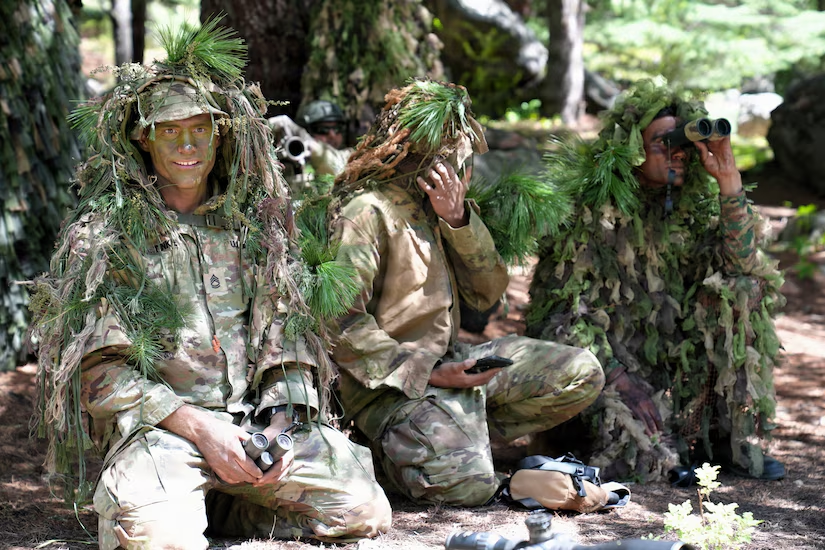
Tinkey brought previous experience with the Indian rifle to the exercise after completing an exchange lasting 25 days earlier this year.
That subject matter expert exchange took place at the Indian Army Sniper School in Mhow, India.
“I really do love the rifle,” Tinkey said. His familiarity with the Sako TRG gave him a direct basis for comparing it with equipment used by his own soldiers.
“If you compare it to the Mark 22, it's very similar. We can change the barrel on our Mark 22, and it's also chambered in .338 Lapua,” Tinkey said.
Beyond handling the rifle himself, Tinkey said he is seeking to place more instructional responsibility in the hands of soldiers within his sniper section.
His goal is to avoid relying only on the experience he gained while attending the sniper school in Mhow.
“What I'm striving to do is have guys in the sniper section do more of the teaching,” Tinkey said.
He also described giving a younger specialist who attended the sniper school with him an opportunity to teach and develop both himself and junior soldiers.
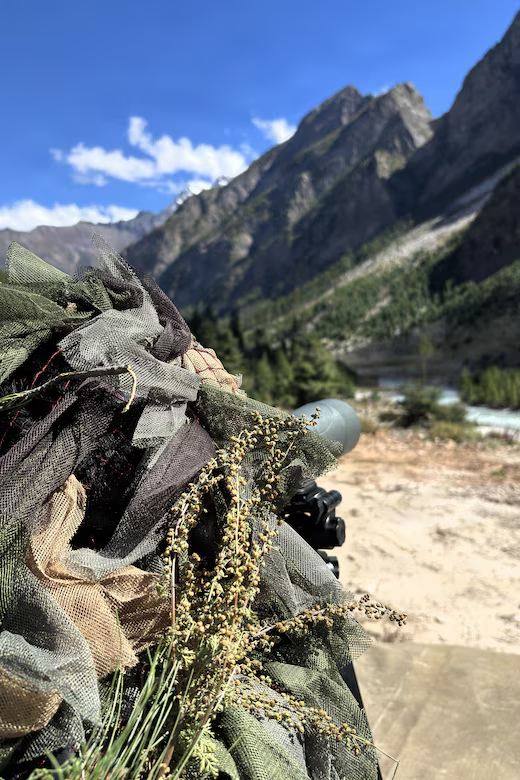
Tinkey said he remains prepared to step in when necessary, but he wants soldiers with familiarity with the rifle to take a larger role. That approach puts their knowledge to work while expanding the section’s ability to conduct instruction.
The basic process between the shooter and spotter also carried over easily between the U.S. and Indian armies, according to Tinkey.
He said the two forces encountered only minor differences in communication while carrying out corrections.
“It's pretty universal as far as corrections,” Tinkey said. “We use mil corrections, and the communication is pretty much the same. Just minor differences.”
Exercise Yudh Abhyas 2026 marks the 22nd iteration of the annual bilateral exercise between the U.S. and Indian armies.
Sponsored by U.S. Army Pacific, the exercise is scheduled to conclude Sept. 27 with a formal closing ceremony.
The bilateral exercise has taken place since 2004. According to the source, Yudh Abhyas has enhanced combined interoperability and strengthened the Major Defense Partnership between the U.S. and India in support of a free and open Indo-Pacific.
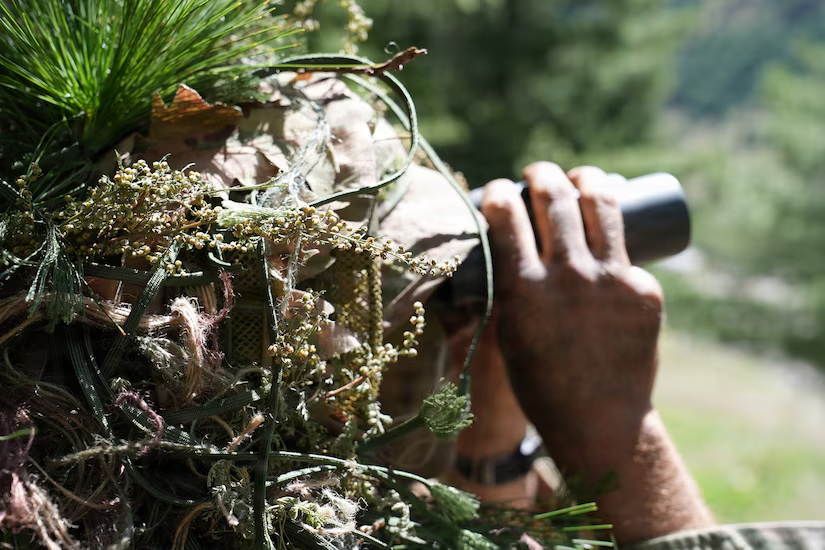
U.S. and Indian Army snipers train together on long-range marksmanship at the sniper firing range near Auli, India, Sept. 22, 2026, during Exercise Yudh Abhyas 2026.
The Sept. 22 sniper training placed that combined interoperability directly on the firing range.
From zeroing the Indian rifle to making corrections and engaging targets at 580 meters, soldiers from both armies worked in paired teams through each stage of the event.
The training also highlighted the shared procedures that allow sniper teams from the two armies to operate together.
Their use of mil corrections and broadly similar communication provided a common framework, even as the teams worked through the minor differences Tinkey identified.
Join the Discussion
COMMENTS POLICY: We have no tolerance for messages of violence, racism, vulgarity, obscenity or other such discourteous behavior. Thank you for contributing to a respectful and useful online dialogue.