The United States Army is moving directed energy warfare from experimentation into production, awarding AeroVironment Inc. a $464.8 million contract for the Enduring High Energy Laser program.
The agreement represents the first production contract for a directed energy weapon system in United States military history.
The breakthrough gives soldiers another option for confronting the growing drone threat without expending costly interceptors against relatively inexpensive unmanned aircraft.
Instead of launching a missile, the Enduring High Energy Laser fires a concentrated beam and replenishes its magazine through the system’s power supply.
That nearly bottomless magazine could provide American formations with a decisive advantage when hostile forces unleash repeated waves of drones.
As long as the weapon maintains sufficient electrical power and cooling, soldiers can continue engaging targets without waiting for trucks loaded with replacement missiles.
“This first of its kind directed energy program will enable our formations to defeat unmanned systems and dominate from the outset,” Army Vice Chief of Staff Gen. Christopher LaNeve said in an Army statement.

“Pairing human ingenuity with advanced technology is what ensures our Army will continue to outpace America’s adversaries.”
Under the Other Transaction Agreement, AeroVironment will deliver dozens of 30 kilowatt LOCUST laser weapons.
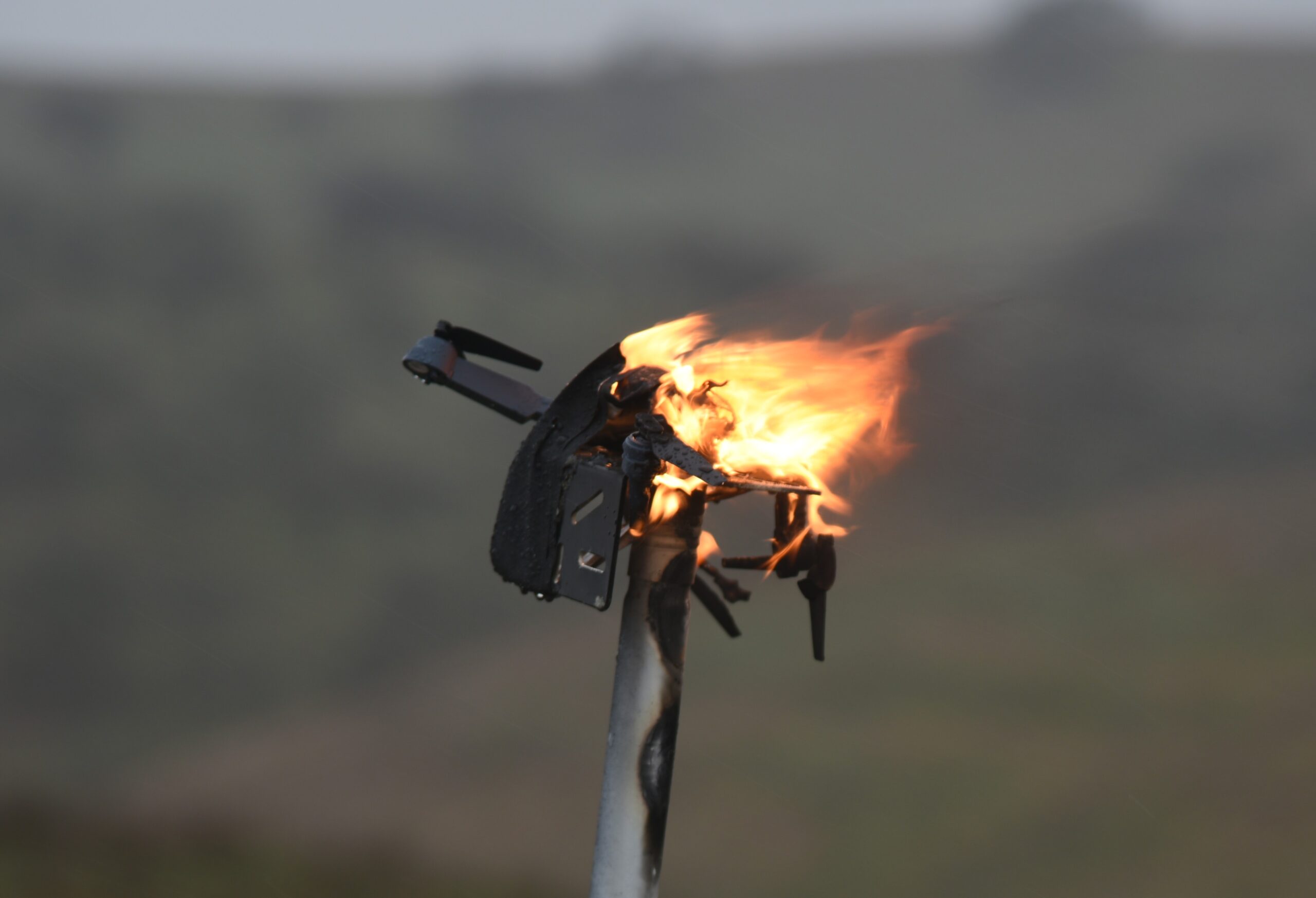
The systems are designed to destroy smaller unmanned aircraft that fall within groups one through three under classifications used by the War Department.
Those categories cover everything from miniature aircraft comparable to the Air Force Wasp III to larger tactical platforms such as the Army RQ 7B Shadow.
These are precisely the kinds of threats appearing over battlefields, military installations and sensitive infrastructure with increasing frequency.
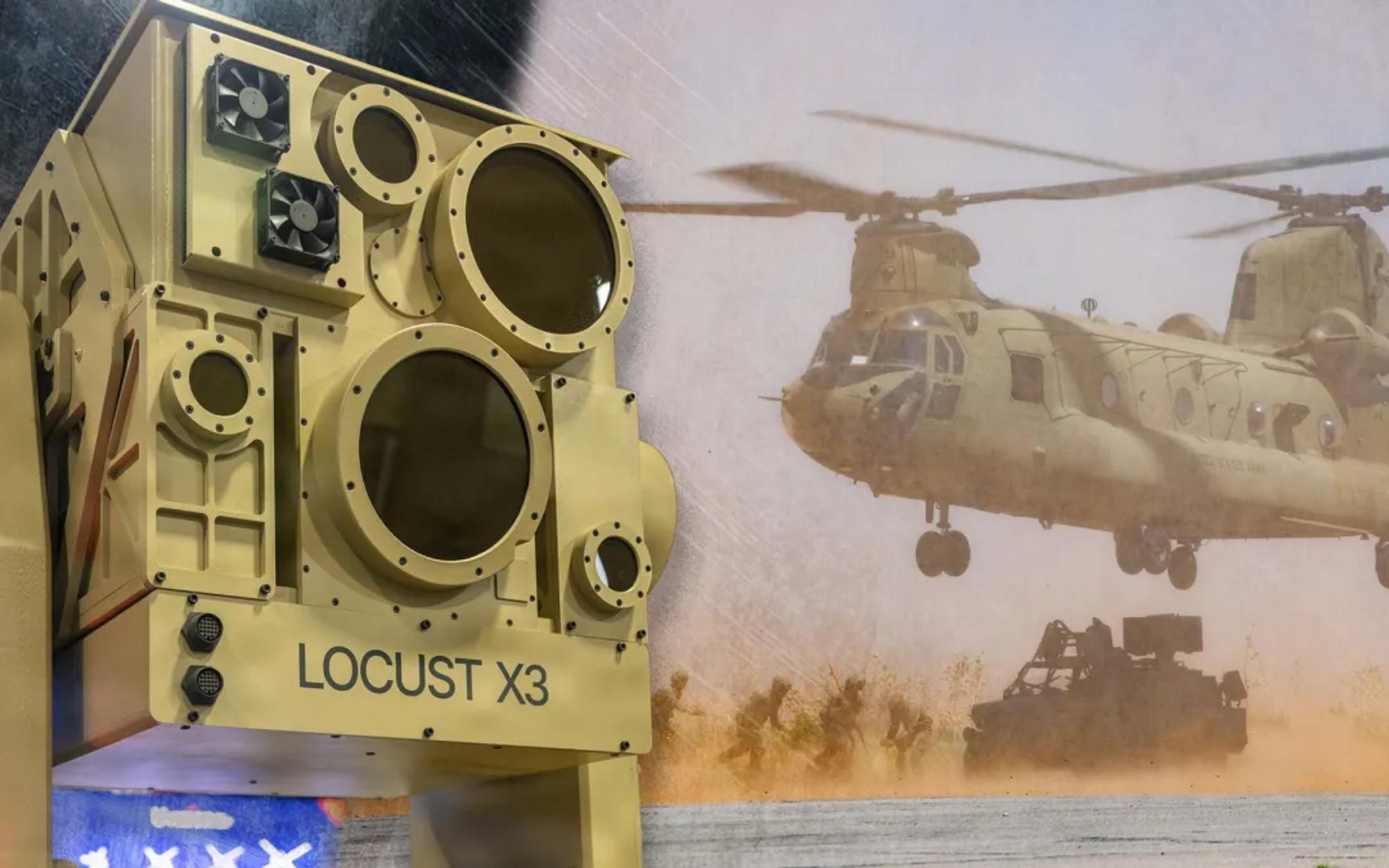
The production decision marks a badly needed victory for the Army’s directed energy portfolio.
Earlier feedback from soldiers regarding the Directed Energy Maneuver Short Range Air Defense prototypes deployed in the Middle East raised questions about reliability and performance under punishing operational conditions.
Those earlier prototypes were designed around the Stryker combat vehicle, limiting how and where they could be deployed.
AeroVironment’s LOCUST X3, by contrast, is platform agnostic and can be integrated onto the Army’s Joint Light Tactical Vehicle, giving commanders greater flexibility in the field.
That mobility matters because drone attacks rarely arrive at convenient locations.
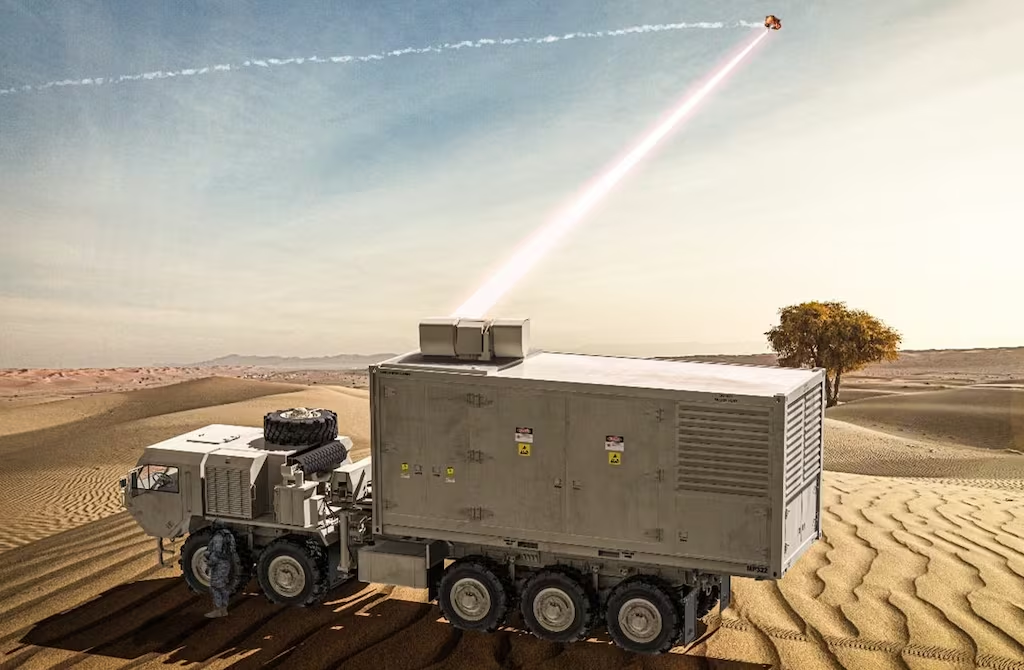
A laser weapon that can accompany maneuver formations, protect temporary command posts or reinforce exposed bases offers more practical value than technology tied to a single heavy vehicle platform.
The Enduring High Energy Laser program also builds upon lessons from Army Multi Purpose High Energy Laser prototypes already being operated by American soldiers.
Those systems provided troops and engineers with valuable experience involving targeting, tracking, power management and engagement procedures against unmanned aircraft.
Before the production award, LOCUST completed successful testing at White Sands Missile Range.
Joint Interagency Task Force 401 and PAE Fires led the trials, which demonstrated that the weapon could conduct safe and effective counter drone missions inside United States airspace.
That testing directly supported a safety agreement between the Department of War and the Federal Aviation Administration.
The agreement validated the system for domestic use, an important step as military leaders consider how directed energy could help defend bases and other critical sites at home.
The contract is more than another Pentagon research check handed to industry with promises of results somewhere over the horizon.
It commits the Army to fielding dozens of actual weapons, putting proven capability into soldiers’ hands while adversaries continue investing heavily in cheap drones and massed aerial attacks.
Missiles will remain essential against sophisticated aircraft and larger threats, but using million dollar interceptors against disposable drones is a losing financial equation.
With LOCUST entering production, the Army is betting that concentrated light, American engineering and common sense can help flip that equation back in favor of the warfighter.
Join the Discussion
COMMENTS POLICY: We have no tolerance for messages of violence, racism, vulgarity, obscenity or other such discourteous behavior. Thank you for contributing to a respectful and useful online dialogue.