WHAT YOU NEED TO KNOW
- The USS Theodore Roosevelt entered the Pacific ahead of an anticipated extended Middle East deployment.
- Sailors and families were told to prepare for about eight months away, with a possible extension.
- Roosevelt would become the fifth of the Navy’s 11 carriers committed to operations connected to the Iran war.
- The Navy stocked additional supplies and changed family communications after concerns surrounding extended carrier deployments.
The USS Theodore Roosevelt left San Diego on Sunday and arrived in the Pacific theater ahead of an anticipated extended deployment to the Middle East.
If the carrier proceeds as expected, it would become the fifth U.S. aircraft carrier committed to operations connected to the Iran war since fighting began seven months ago.
On Monday, U.S. Pacific Fleet said the “Theodore Roosevelt Carrier Strike Group is underway conducting routine operations in the U.S. 3rd Fleet area of operations.”
The Navy generally does not discuss where its units will go next, instead identifying the broad area where they are operating.
The anticipated Middle East deployment and likely involvement in the Iran war were first noted in August by Chief of Naval Operations Adm.
Daryl Caudle and Master Chief Petty Officer of the Navy John Perryman. Earlier this month, the two leaders discussed how the Navy was preparing Roosevelt for the mission.
Before departure, sailors and their families were told to prepare for about eight months away, with a possible extension.
The warning comes as the Navy continues dealing with lengthy carrier deployments driven by operations in the Middle East.
Roosevelt is the flagship of Carrier Strike Group 9 and is expected to enter the area of responsibility overseen by U.S. Central Command. There, the carrier is expected to relieve the USS George Washington.
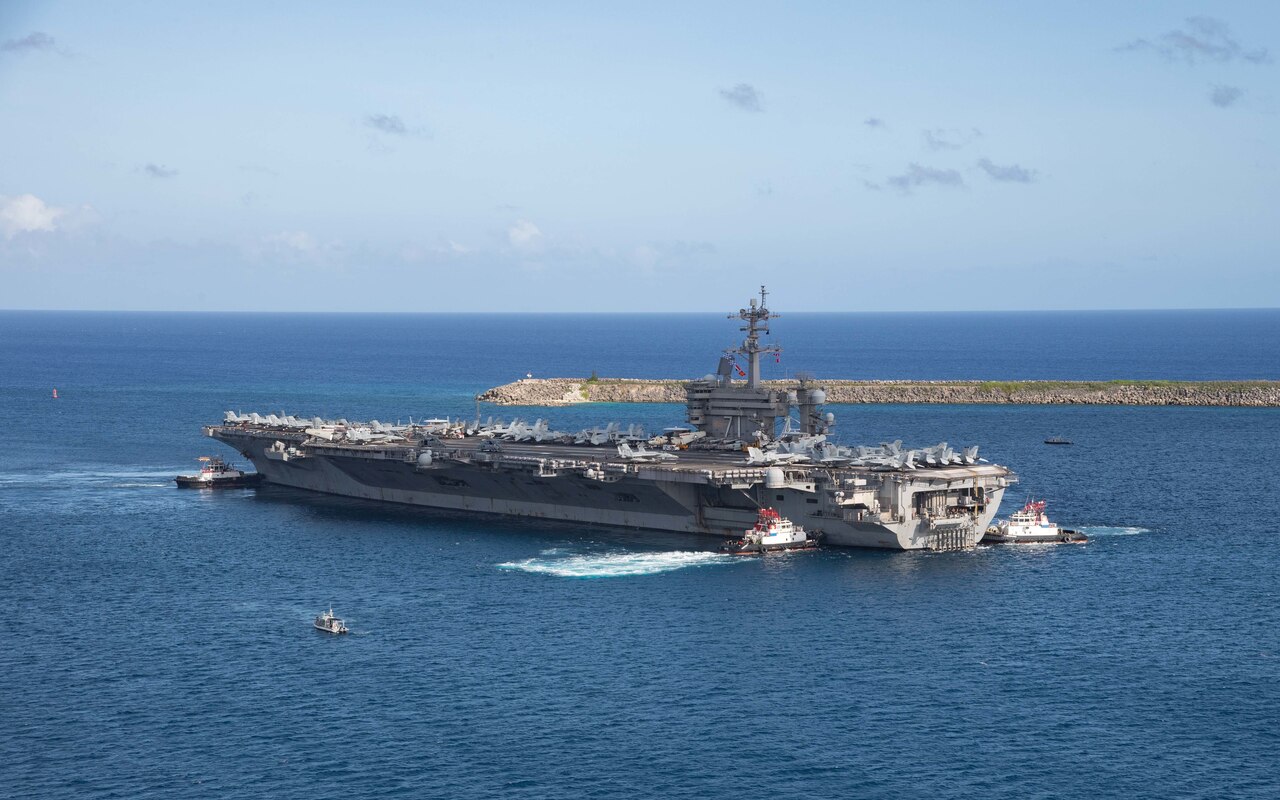
The San Diego Union-Tribune first reported Roosevelt’s departure. WarshipsCam, a ship tracking account, also posted video on social media showing the carrier leaving port.
The Navy has maintained two carrier strike groups in the Middle East since the Iran war began on Feb. 28. The USS George Washington and USS George H.W. Bush are currently operating in the region, according to USNI News.
With Roosevelt included, five of the Navy’s 11 aircraft carriers have been committed to operations connected to the conflict during the past seven months.
The group includes the USS Gerald R. Ford, USS Abraham Lincoln, USS George H.W. Bush, USS George Washington and USS Theodore Roosevelt.
Caudle said, “Right now, the USS Theodore Roosevelt is putting those lessons into action, using what we learned from Abraham Lincoln and Gerald R. Ford.” He added, “That starts with logistics.”
Roosevelt was maximizing its stocks of food, retail products and hygiene items before deployment, according to Caudle. Available spaces aboard the carrier were also being converted into additional storage.
Those changes followed months of concerns from sailors and families about conditions during extended Middle East deployments. Those concerns included food shortages, long periods without port calls and uncertainty about when sailors would return home.
Senior Pentagon and Navy officials also publicly attacked reporting about conditions aboard Lincoln. War Secretary Pete Hegseth called the coverage completely misrepresented, while acting Navy Secretary Hung Cao called it dishonest.
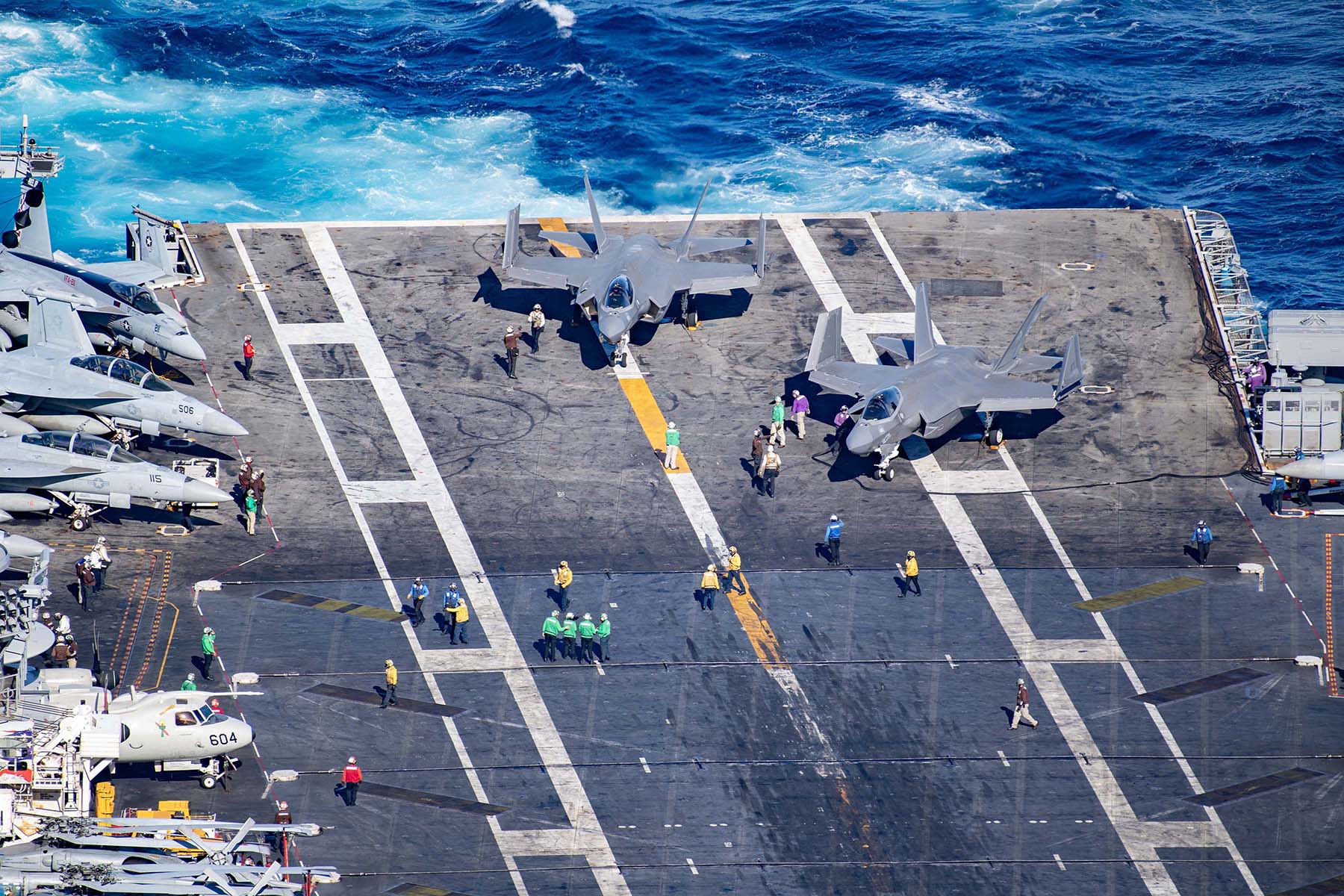
Navy leaders said they were also changing how Roosevelt communicates with families during the deployment.
Caudle said, “We are applying lessons learned to family readiness, working with the ship’s ombudsman and family readiness groups to provide families with reliable, consistent communication throughout their deployment.”
“That’s what a learning Navy looks like,” Caudle said. Lincoln spent more than eight months without a port call during its extended deployment, while sailors and their families raised concerns about food, supplies and communication.
We reported in August that Navy officials said they had “not identified an increase in reported suicidal ideation or suicide attempts” aboard Lincoln after families raised concerns about sailors’ mental health.
CNN reported last week that eight service members across the USS Abraham Lincoln Carrier Strike Group attempted suicide during the deployment.
CNN cited a letter from acting Navy Secretary Hung Cao to Democratic Sen. Kirsten Gillibrand of New York. No service members died by suicide.
Since fighting renewed this month, Iran has targeted aircraft carriers and other warships around the Strait of Hormuz, with the ships evading missile attacks.
The month also brought increased naval casualties, with 29 sailors and nine Marines listed as wounded in action by the Pentagon’s casualty database.
Are you feeling overwhelmed or hopeless right now? Have you been withdrawing from people or activities you usually enjoy? Are you having thoughts about hurting yourself, or feeling like things will never improve?
You do not have to handle those feelings alone. Support is available, and talking to someone can make a difference. You can reach out to the 988 Suicide & Crisis Lifeline by calling or texting 988, or by chatting online at 988lifeline.org. Trained counselors are available 24 hours a day to listen and help.
If you believe someone is in immediate danger, call emergency services right away. Even a small step, like reaching out to a trusted friend, family member, or professional, can help create a path forward.
Join the Discussion
COMMENTS POLICY: We have no tolerance for messages of violence, racism, vulgarity, obscenity or other such discourteous behavior. Thank you for contributing to a respectful and useful online dialogue.