WHAT YOU NEED TO KNOW
- Air Force EOD technicians will become the seventh group of airmen authorized to wear a distinctive beret color.
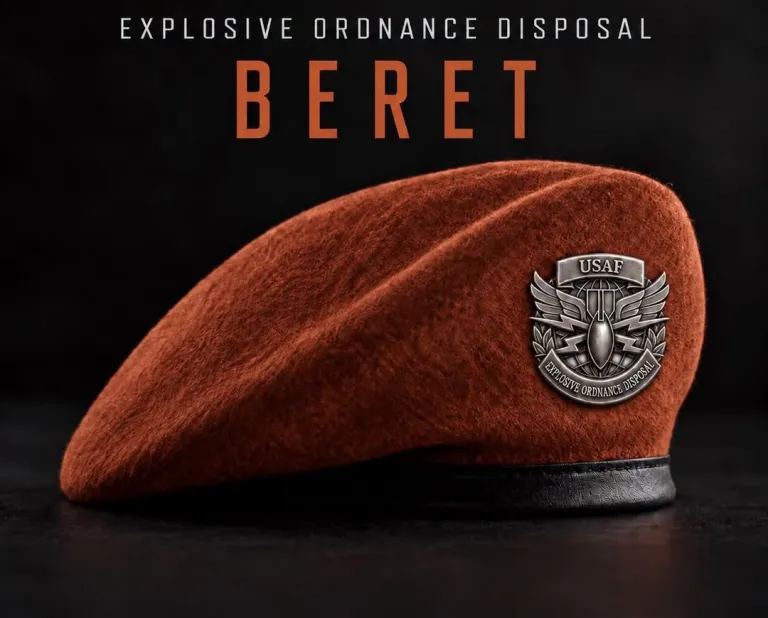
- The rust beret will feature a metallic flash and recognize a color historically associated with explosive hazards.
- David R. Wolfe announced the authorization during the first graduation ceremony for the relaunched MAMBA training course.
- The Air Force did not provide a timeline for issuing the new berets to EOD technicians.
Airmen trained to defuse bombs and other explosives will soon receive distinctive rust colored berets for wear with their uniforms. The new headgear will recognize explosive ordnance disposal technicians, commonly identified as EOD personnel.
Chief Master Sergeant of the Air Force David R. Wolfe announced the authorization Friday. EOD personnel will become the seventh group of airmen permitted to wear a specific beret color as part of the Air Force uniform.
Other airmen authorized to wear distinctive berets include security forces personnel and members of several special warfare career fields. Officers and enlisted personnel serving in associated career fields wear the same berets.
According to the Air Force release, rust is “the color historically associated with explosive hazards.” The beret will also be worn with a metallic flash, and Wolfe posted an image Friday showing the rust colored headgear with the device.
Wolfe unveiled the beret authorization during the first graduation ceremony for a new training course serving junior EOD technicians. The Multi-domain Airmen for Modern Battlefield Application course, known as MAMBA, was relaunched this year.
MAMBA now features a redesigned curriculum providing predeployment training for EOD technicians. The announcement tied the new symbol directly to airmen completing demanding preparation for hazardous missions.
“Today’s graduates represent the capability, professionalism and warrior ethos that define our explosive ordnance disposal force,” Wolfe said. “The EOD beret will stand as a visible recognition of that identity and your service to the joint force.”
Berets have a lengthy history among various Army and Air Force communities. Air Force Pararescuemen and Army Special Forces soldiers received official authorization to wear maroon and green berets early in the Vietnam War.
Those berets recognized the dangerous combat missions performed by the personnel and the grueling training required to qualify for their jobs. Army Rangers, Airborne units, Air Force Combat Control teams and Tactical Air Control Party personnel also frequently adopted berets during that era.
Formal authorization for berets among those jobs arrived in the 1980s. During the early 2000s, the Air Force expanded authorization to additional career fields with specific ground operations duties.
At the same time, the Army made black berets standard headgear across the service. That decision led the 75th Ranger Regiment to switch from black berets to tan berets.
EOD occupies a distinctive place across the military because every service maintains its own corps of technicians. Those personnel train in similar underlying skills, although their specialty skills and deployment roles vary by service.
Navy EOD technicians, for example, served as the designated military team that recovered the Artemis II astronauts from their capsule after its April splashdown. The example reflects the range of specialized duties assigned to EOD communities.
Wolfe said the distinctive beret reflects the career field’s “designation as a specialized conventional combat-arms career field and recognizes the community’s role in delivering combat capability at the tactical edge.”
Airmen authorized to wear berets generally use the headgear with every uniform worn while stationed in garrison. That includes formal dress blues, daily Operational Camouflage Pattern utility uniforms and flight suits for personnel serving in flying roles.
“EOD Airmen bring disciplined expertise, courage and resolve to the joint force’s most complex and hazardous missions,” said Chief Master Sgt. Steven Harris, the Air Force’s EOD career field manager. “The rust beret recognizes their combat-arms identity, honors the community they represent and reflects the capability they will continue to deliver wherever the mission demands.”
The Air Force dress and appearance regulation identifies the career fields authorized to wear particular beret colors as a permanent uniform item. Maroon belongs to Pararescue personnel and Combat Rescue Officers, while scarlet identifies Combat Control personnel and Special Tactics Officers.
Pewter green, which is also sometimes called sage, is assigned to Survival, Evasion, Resistance, and Escape specialists. Weather Parachutists and Special Reconnaissance personnel wear pewter gray.
Some Air Force Academy cadets wear blue berets while working as instructors for the academy’s initial summer training program for incoming freshmen. They may also wear them on other specific occasions, but the blue berets are not their everyday headgear.
MORE NEWS: Florida Jury Acquits Former Deputy in Fatal Shooting of Air Force Special Operations Airman
The Air Force release did not provide a timeline for when EOD technicians will begin receiving the new berets. For now, the authorization establishes the rust beret as a visible marker of the EOD community’s specialized combat role and hazardous mission set.
Join the Discussion
COMMENTS POLICY: We have no tolerance for messages of violence, racism, vulgarity, obscenity or other such discourteous behavior. Thank you for contributing to a respectful and useful online dialogue.