WHAT YOU NEED TO KNOW
- Bell says the MV-75 Cheyenne II combines greater speed and range with a digital architecture designed for easier upgrades and maintenance.
- The aircraft can exceed 300 miles per hour, carry 14 soldiers and support an external load of up to 10,000 pounds.
- The 101st Combat Aviation Brigade is expected to receive the first aircraft in 2027.
- The Army requested $2.1 billion for the Cheyenne program in fiscal 2027, up from $350 million in fiscal 2026.
The U.S. Army’s MV-75 Cheyenne II is expected to deliver major gains in speed, range and battlefield capability. Bell argues that the aircraft’s most transformative feature may be the digital architecture built to support upgrades throughout its service life.
Frank Lazzara, Bell’s director of MV-75 Sales & Strategy, told Military Times that the Cheyenne will offer more than twice the speed and range of current weapons systems. Even so, he described the aircraft’s software as the truly “revolutionary” element.
The Cheyenne is the Army’s first weapons system developed with a digital approach from the beginning. Its modular open systems approach, known as MOSA, allows the Army to refine the architecture virtually while securing intellectual property and data rights needed for future upgrades.
Those rights are intended to give the service greater control over maintenance and modernization while reducing dependence on a single vendor. Bell’s approach is directed by the Army, which Lazzara said changes how business is conducted across the aircraft’s life cycle.
“The Army is trying to set the standard for the government to have control over their maintenance, their upgradeability, like they’ve never had before,” Lazzara said at the 2026 Association of the United States Army conference in Washington, D.C.
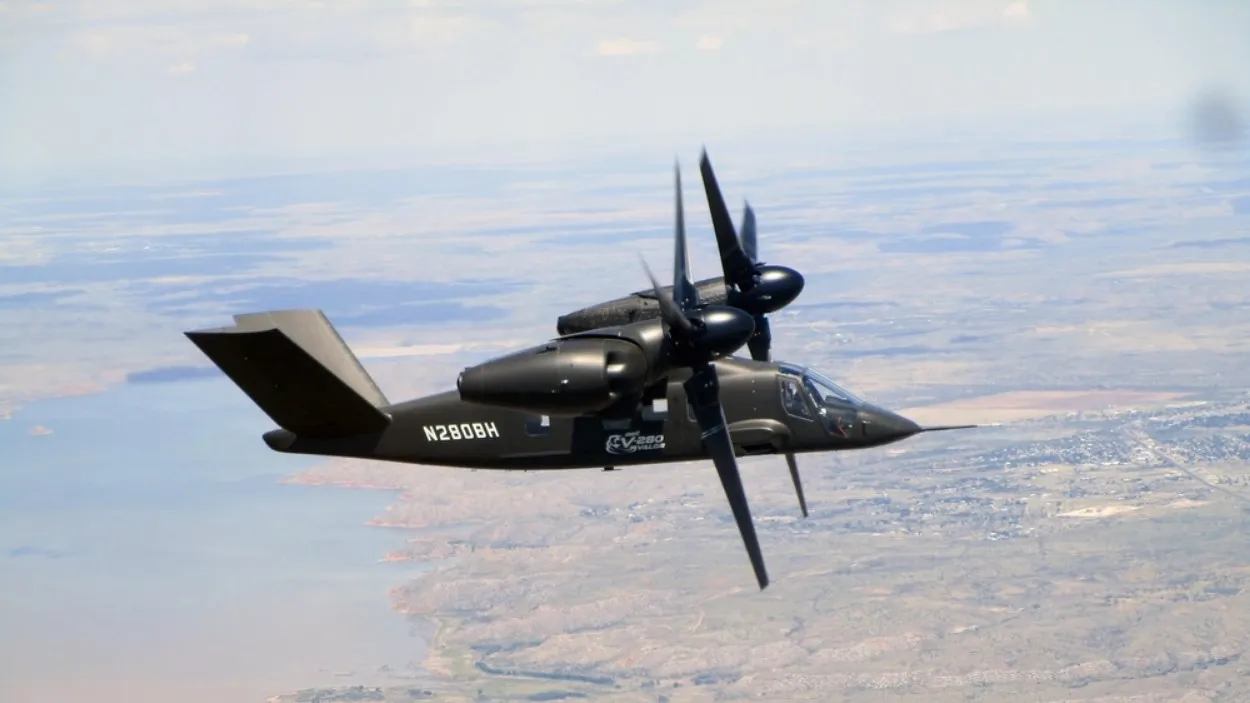
Lazzara said the acquisition structure should serve as a model for weapons systems of similar importance. He argued that simply attaching another system to an older aircraft cannot match the Cheyenne’s combination of capability, easier upgrades and more manageable maintenance throughout its operational life.
The Cheyenne is designed as a multi mission aircraft and will replace part of the Army’s UH-60 Black Hawk fleet. Its planned missions include long range assault, utility operations, medical evacuations and humanitarian assistance.
The tiltrotor aircraft is designed to fly faster than 300 miles per hour. It can carry as many as 14 soldiers and support an external load weighing up to 10,000 pounds.
Bell crafted the aircraft for operations in the Indo-Pacific, where covering vast distances quickly is a central requirement. Lazzara said it could also support a close fight, special operations missions or deterrence efforts in other theaters.
While examining a Cheyenne model displayed at the AUSA conference, Lazzara said the design is intended to make the pilot’s job easier. He also said pilots could someday control Collaborative Combat Aircraft through systems connected to MOSA.
Cost control has remained a major focus because Bell must balance increased capability with the contracted price. Components were kept below specified weight limits, allowing existing equipment to be used during construction and helping contain costs.
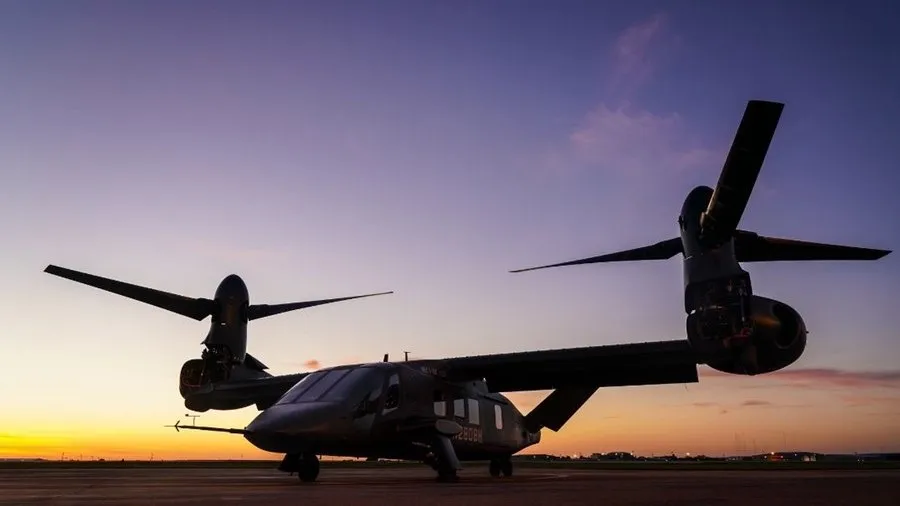
The project office for the Future Long Range Assault Aircraft conducted a design evaluation with operators, trainers and engineers from the 101st Combat Aviation Brigade. Soldier feedback influenced decisions including the seating configuration and the absence of cockpit doors.
The 101st Combat Aviation Brigade, based at Fort Campbell, Kentucky, was selected as the first unit scheduled to receive the aircraft. Arrival is expected in 2027, following the Army’s January announcement that production would accelerate from the previous 2031 or 2032 delivery schedule.
Bell has reached the stage where major design decisions must be finalized, Lazzara said. The company is under contract to provide six training test aircraft and two aircraft designated for limited use testing, although he described the development timing as “tough.”
Bell’s program team and government officials are preparing for meetings about the way forward. Discussions are expected to address a feasible baseline schedule, preserving capability and ensuring that both sides remain aligned on funding.
The Army’s fiscal 2027 funding request included $2.1 billion for the Cheyenne under Research, Development, Test and Evaluation. That represents a substantial increase from the $350 million provided in fiscal 2026, while a 2025 Congressional Research Service report said the Army anticipated as many as 334 aircraft by the end of fiscal 2040.
Lazzara said Bell remains concerned that an extended continuing resolution could complicate the program because fiscal 2027 funding is significantly higher than fiscal 2026 funding. He nevertheless called the Cheyenne “a very well-supported program” and said congressional funding closely matched Bell’s request.
The government is operating under a continuing resolution that provides temporary funding through Dec. 11. Congress must pass another continuing resolution or approve the fiscal 2027 appropriations bill before that deadline to prevent a government shutdown.
Join the Discussion
COMMENTS POLICY: We have no tolerance for messages of violence, racism, vulgarity, obscenity or other such discourteous behavior. Thank you for contributing to a respectful and useful online dialogue.