WHAT YOU NEED TO KNOW
- Hohenfels increased drone activity from roughly 400 unmanned systems to almost 2,000 during its latest rotation.
- Units headed to Fort Polk or Fort Irwin must have operated their drones for at least 180 days.
- Ukrainian troops with combat experience now participate on both sides of crucible exercises at Hohenfels.
- The Pacific training center is expanding operations across Hawaii, Alaska, Guam, and the Philippines.
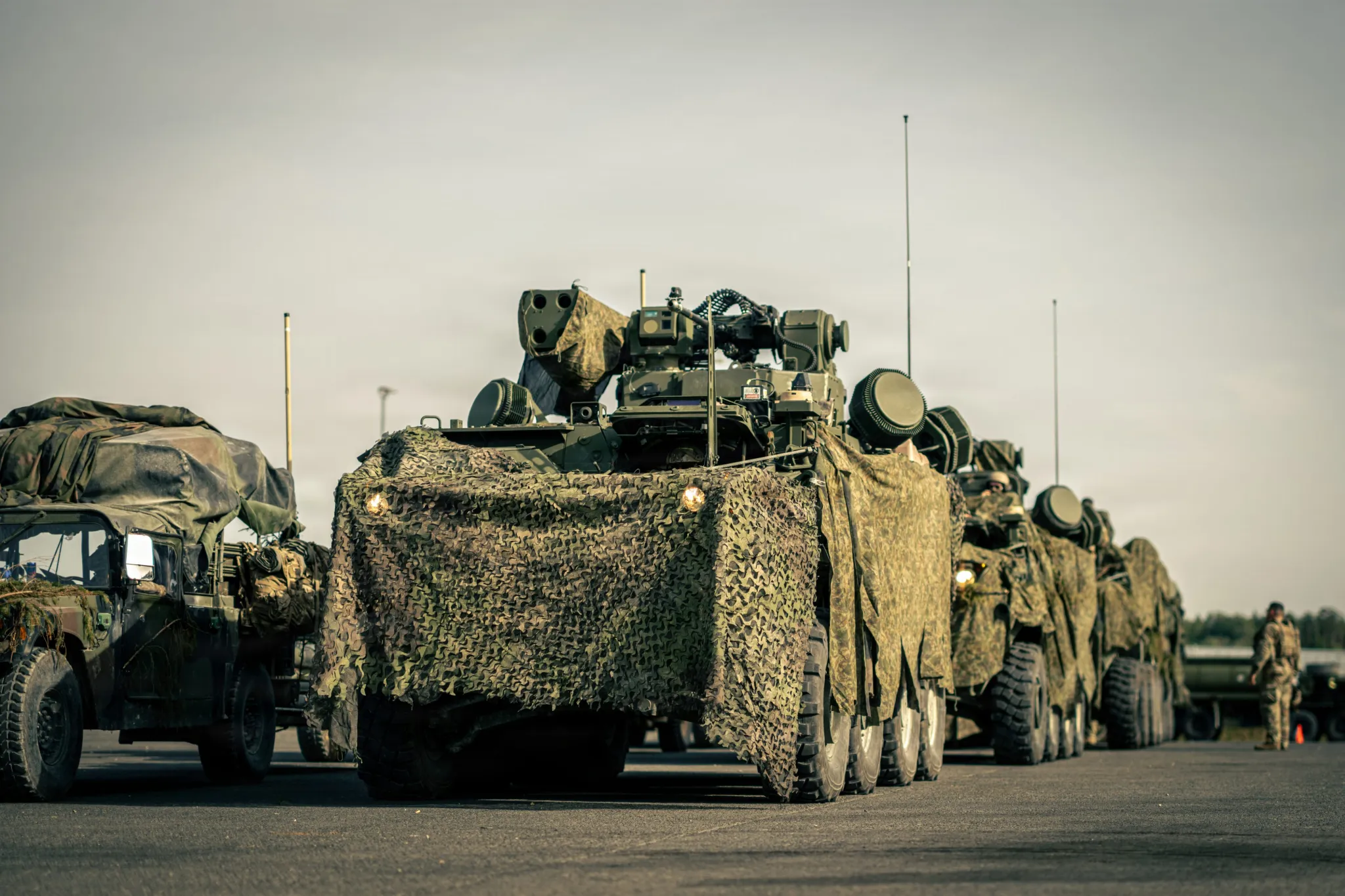
A year ago, an Army brigade rotating through the service’s major training center in Hohenfels, Germany, might launch only a few hundred drones during a 14 day exercise. Soldiers received even less experience with the systems intended to counter those drones.
German airspace restrictions over the training area created one obstacle. Some U.S. units also arrived without drones they knew how to operate, limiting how much training could be conducted during the rotation.
That picture has changed dramatically, according to Brig. Gen. Terry Tillis, commander of the 7th Army Training Command in Germany. Tillis said a recent rotation featured almost 2,000 unmanned aerial systems, including more than 1,000 consumable systems, compared with roughly 400 unmanned systems and 35 or 40 counter UAS systems previously.
The changes reflect what trainers have observed at U.S. Central Command, the U.S. border with Mexico, and in Ukraine, Tillis said. Consumable systems have become a major part of the training at Hohenfels.
Tillis discussed the upgrades during the annual Association of the United States Army conference in Washington, D.C. He appeared with commanders from the Army’s three other Combat Training Centers.
Those centers are the Joint Readiness Training Center at Fort Polk, Louisiana, the National Training Center at Fort Irwin, California, and the Joint Pacific Multinational Readiness Center. The Pacific center is headquartered in Hawaii and operates another major training location in Alaska.
Each Combat Training Center is structured as a major deployment for a brigade sized force from a visiting unit. Resident opposition forces put those units through a 14 day combat simulation known as the crucible.
The exercises test light infantry, heavy mechanized forces, and special operations units. Visiting troops must move through large training areas, seize and defend objectives, and respond to problems created by Combat Training Center planners.
At Fort Irwin, the range is larger than Rhode Island. Opposition forces at every center are well trained for each exercise and deeply familiar with their home terrain, giving visiting units a difficult opening stretch.
Tillis said the first several days often do not go well for visiting troops. At Hohenfels, trainers have learned that successful drone operations require much more than simply handing quadcopters to soldiers as they enter the simulated battlefield known as the box.
“I thought it was all about getting kit in the hands of soldiers,” Tillis said. He later added, “But it’s not enough to give the technology because they don’t have a chance to train.”
Hohenfels now brings Ukrainian units with extensive combat experience into each crucible. “We’ve been given a lot of help, a lot of help from our Ukrainian teammates,” Tillis said. “They actually compete on both sides, the red and the blue.”
Tillis and other U.S. officials at Hohenfels worked with German authorities to resolve airspace permission issues and allow greater flight activity. Trainers also began requiring soldiers to arrive with enough experience to operate their systems.
Units heading to Fort Polk or Fort Irwin must now have owned and worked with any drones they plan to use for at least 180 days. The requirement is intended to ensure troops reach the training centers prepared to employ the equipment they bring.
Working with Ukrainians also convinced Tillis that U.S. training centers had not made sufficient use of consumable systems. These small and inexpensive one way strike drones are intended to be destroyed during use.
“They came back with 40 or 50 of their actual operators and brought right around 600 systems,” Tillis said. “About 550 were consumable.”
The Army’s newest center, the Joint Pacific Multinational Readiness Center, focuses on threats “West of the International Date Line,” according to commander Col. Alphonse J. LeMaire. The center operates in two sharply different environments across Hawaii and Alaska.
Its tropical training takes place on Oahu and at the Pohakuloa Training Area, Hawaii, which opened in 2021. Its Arctic center at Joint Base Elmendorf-Richardson, Alaska, conducted its first formal rotation in 2022.
The center has also established a mobile training unit in Guam that conducts events across Asia. Upcoming rotations will include elements of the Hawaii based 25th Infantry Division in the Philippines, while the Alaska and Hawaii centers expect to add company sized reconnaissance units to their opposition forces.
Join the Discussion
COMMENTS POLICY: We have no tolerance for messages of violence, racism, vulgarity, obscenity or other such discourteous behavior. Thank you for contributing to a respectful and useful online dialogue.