WHAT YOU NEED TO KNOW
- Hegseth authorized up to 60 marked patrol cars, military tactical vehicles, boats, light towers and generators for the Washington Guard mission.
- Guard members may temporarily detain individuals but remain prohibited from making arrests, conducting intelligence operations or using air assets.
- Boat crews will support perimeter security near Anacostia Park, but cannot fire military issued weapons and must operate with a federal officer present.
- As of Thursday, 3,084 National Guardsmen were assigned to the ongoing Washington mission.
The Pentagon is expanding National Guard support for law enforcement operations in Washington, D.C., authorizing troops to use dozens of marked patrol cars, military tactical vehicles and boats. Officials with the task force overseeing the mission confirmed the new authorities to Task & Purpose.
The expanded equipment list was detailed in an Oct. 29 memo signed by Secretary of War Pete Hegseth. Politico first reported the memo, which Task & Purpose subsequently confirmed.
Under the October guidance, the National Guard may use up to 60 marked patrol cars. The authorization also covers Humvees and light medium tactical vehicles, which the military uses to transport personnel and haul cargo.
The Guard may additionally deploy up to 20 light towers and generators, along with maritime boat assets belonging to the D.C. National Guard. Task force officials said the equipment will be used “in support of federal and local law enforcement operations.”
“The Secretary of War has authorized the continued use of National Guard personnel and capabilities in support of the Make D.C. Safe and Beautiful mission,” officials with the task force said. The task force oversees the deployment of troops from multiple states in the nation’s capital.
The memo spells out the authorities available to Guard members while also setting firm limits on their activities. Troops must wear their military uniforms and remain “clearly” distinguishable from civilian law enforcement officers.

Service members remain prohibited from making arrests under the new guidance. They may, however, temporarily detain someone while local law enforcement officers are notified and brought to the scene.
The expanded mission includes new duties on patrol boats. According to the guidance, troops operating aboard those boats will provide “perimeter security” and protect law enforcement personnel conducting “operations against gang leaders or drug traffickers in the vicinity of Anacostia Park,” in southeast Washington.
Even with the added maritime role, the memo places clear restrictions on Guard personnel. Troops may not fire their military issued weapons while aboard the boats, and a federal officer must be present to assist with any arrest.
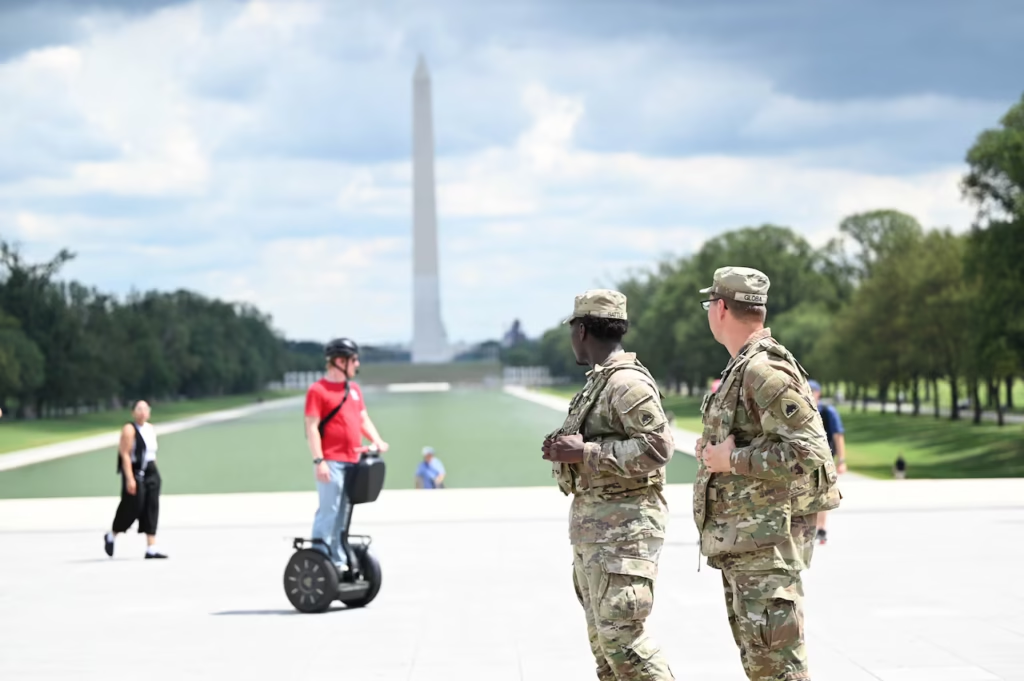
The guidance also prohibits Guard members from receiving bayonets or sharing equipment with law enforcement agencies. They may not conduct intelligence operations, employ helicopters or use other air assets as part of the mission.
The newly authorized assets further increase the Guard’s capacity to support law enforcement in Washington. Early in the mission, Pentagon officials stressed that Guard personnel would assist local authorities while remaining subject to legal restrictions governing exactly what they could do.

President Donald Trump mobilized hundreds of National Guard members from across the United States in August 2025 to help fight crime in Washington. Since then, the number of troops assigned to the capital mission has risen and fallen.
Guard members who provided additional security for the America 250 celebrations departed over the summer. Their departure reduced the total number of troops participating in the Washington mission by more than 600.

As of Thursday, 3,084 National Guardsmen remained assigned to the continuing operation. The latest authorization gives those forces access to a wider collection of vehicles, support equipment and maritime assets while retaining restrictions on arrests, weapons use and intelligence activities.
The expanded equipment package places more visible military resources alongside federal and local law enforcement without turning Guard members into civilian police officers. Hegseth’s memo maintains that distinction while allowing troops to provide transportation, security, lighting, power generation and maritime support during the ongoing capital mission.
Join the Discussion
COMMENTS POLICY: We have no tolerance for messages of violence, racism, vulgarity, obscenity or other such discourteous behavior. Thank you for contributing to a respectful and useful online dialogue.