WHAT YOU NEED TO KNOW
- Troops in barracks with emergency health or safety conditions may receive temporary lodging on or off base.
- Emergency repair responses must begin within 24 hours, while all maintenance categories should be addressed within 15 business days.
- Commanders may approve lodging reimbursements for hotels or apartments when other temporary housing is unavailable.
- Rob Evans warned that relocations can reduce living space and create financial or practical burdens for service members.
Troops living in barracks with emergency conditions that threaten health or safety may receive temporary lodging on or off base under new rules established by the Pentagon. The policy gives commanders authority to arrange hotels, apartments, or other quarters when rooms are not safe enough for continued occupancy.
In a Nov. 10 memo, Secretary of War Pete Hegseth directed the military services to follow barracks standards issued in October by Mark Dale, the Assistant Secretary of War for Energy, Installations, and Environment. Those guidelines divide maintenance work orders into emergency, urgent, and routine categories.
The memo does not list specific examples for each classification. Barracks problems described in the source range from mold and pest infestations to serious safety concerns, broken air conditioners in hot climates, and delayed maintenance in aging buildings.
Military services were directed to inspect barracks by Monday and address emergency conditions within 24 hours. That response includes finding temporary quarters when a service member’s assigned room is not safe enough to occupy.
Rob Evans, founder of the Hots&Cots barracks review app and an advocate for junior enlisted housing, supported the urgency but voiced skepticism based on previous efforts. He said “service members have been through this before.”
The Department of War launched the Barracks Task Force in October 2025 to address subpar housing for junior enlisted service members. By December 2025, the Pentagon said it had completed “wall-to-wall” barracks assessments across most of the force and pledged $400 million for “immediate work” involving aging, faulty, and dilapidated housing.
Evans also noted that the Department of War and military services already operate several digital work order systems through which service members can document barracks problems. “The Department has more barracks data than it has ever had,” Evans told Task & Purpose. “We’re still relying on someone walking into a room to see the problem.”
Last month, Hegseth selected Medal of Honor recipient and Marine Corps Reservist Dakota Meyer to serve as a senior advisor to the Barracks Task Force. Meyer had served as a special assistant to Hegseth since July.
Evans said seeing conditions firsthand matters, but questioned how many additional inspections are necessary before action follows. “At some point you have to ask how much data is enough to start acting on it.”
Dale’s October memo says all three categories of maintenance work should be addressed within 15 business days. Emergency orders involve conditions requiring “immediate attention to eliminate life, health, and safety hazards,” or action to prevent property loss or damage.
Emergency conditions can justify relocating affected troops, while the response to repair the barracks must begin within 24 hours. Local commanders may take immediate action to coordinate and pay for temporary living arrangements, whether those accommodations are located on the installation or elsewhere.
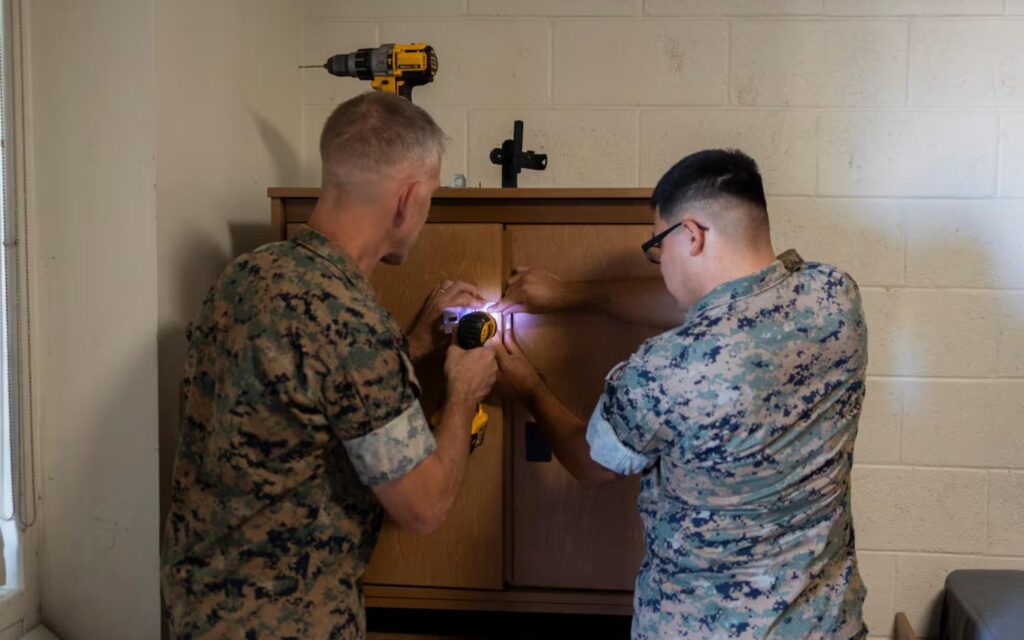
If other options are unavailable, commanders may approve commercial lodging reimbursement forms for hotels or apartments. Those forms are typically used by service members on temporary duty assignment orders lasting up to a few months for conferences, training schools, or leadership programs.
“Installation and unit commanders are empowered and directed to prioritize the quality of unaccompanied service member housing, respond rapidly to conditions that threaten life, health, and safety, and communicate clearly with affected service members until deficiencies are resolved,” Dale said. Dale also leads the Barracks Task Force.
Evans warned that relocation can produce “second- or third-order effects” when spare rooms are unavailable. “Relocating people when there’s no spare space means doubling them up, as the Army is already doing in Hawaii, and that cuts into the minimum living space the DoW Housing Manual has set,” he said.
Evans also raised concerns about temporary lodging reimbursements and the practical burden of moving into an apartment. “Then there are [lodging reimbursements] which may be temporary. A service member may have to furnish an off-post apartment, and the certificate can be withdrawn.”
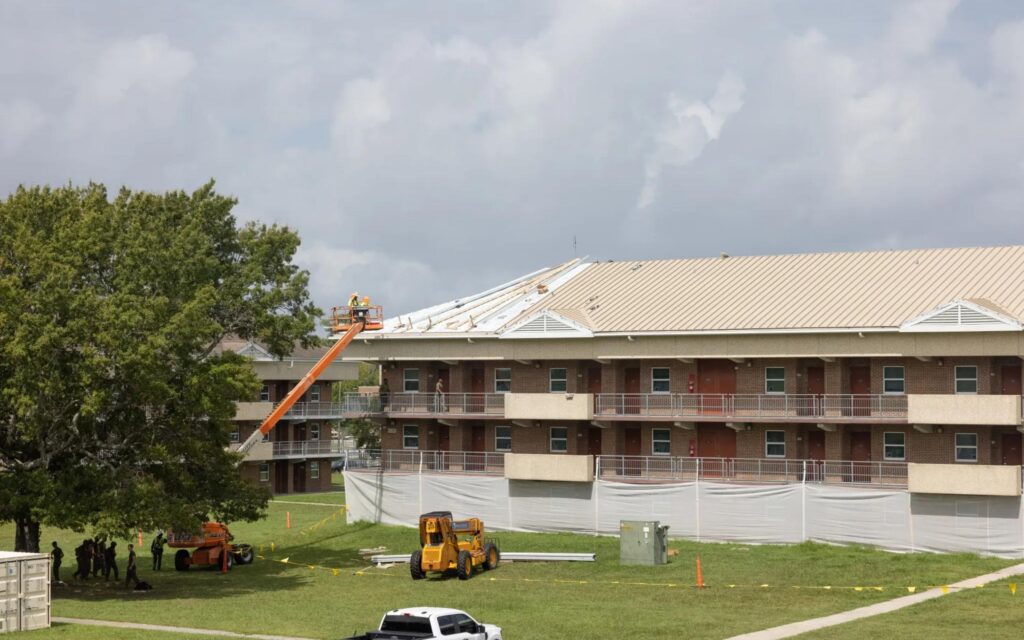
Urgent work orders are less severe than emergencies but can create security or health risks if repairs are delayed. Routine orders cover nonemergency problems that should still be resolved to keep barracks “safe, clean, or comfortable.”
Hegseth made clear that bureaucratic obstacles do not excuse leaving troops in unacceptable rooms. “Unit integrity, room availability, manpower shortages, maintenance delays, lack of funding or conflicting Military Department policies do not justify continued occupancy of unacceptable housing,” he wrote.
The memo also requires any barrier preventing prompt relocation to be elevated immediately through the Military Department’s chain of command to the Barracks Task Force. The directive puts commanders on notice that unsafe housing cannot simply remain somebody else’s work order.
Join the Discussion
COMMENTS POLICY: We have no tolerance for messages of violence, racism, vulgarity, obscenity or other such discourteous behavior. Thank you for contributing to a respectful and useful online dialogue.