WHAT YOU NEED TO KNOW
- The USS Spruance and USS Michael Murphy returned Friday after combat deployments lasting 12 months and 11 months.
- Both destroyers supported Operation Epic Fury, Iran war operations, and enforcement of the maritime blockade in the Strait of Hormuz.
- The Spruance eliminated 12 unmanned aerial vehicles, four anti ship cruise missiles, and launched Tomahawk missiles at Iranian targets.
- Crews aboard both ships received the Presidential Unit Citation and Combat Action Ribbon for their efforts.
Two Arleigh Burke class guided missile destroyers returned to their homeports Friday after playing integral roles in Middle East military operations during the Iran war. The USS Michael Murphy and USS Spruance completed extended combat deployments that lasted nearly a year.
The Michael Murphy docked at Joint Base Pearl Harbor-Hickam, Hawaii, while the Spruance arrived at Naval Base San Diego, California. The Michael Murphy deployed for 11 months, and the Spruance remained deployed for 12 months.
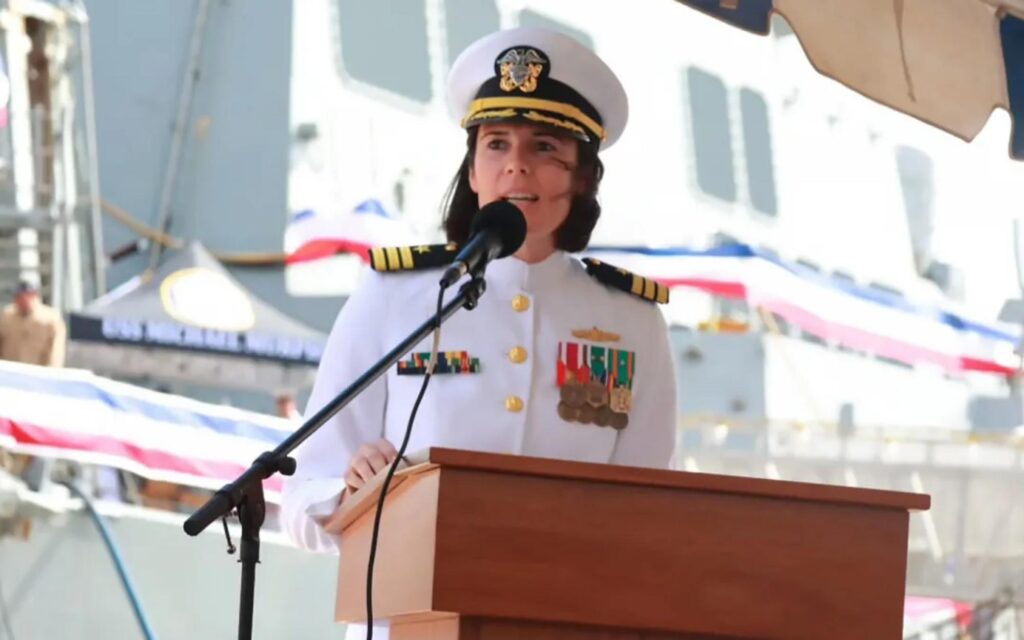
“Leading the ship and crew has been the honor of a lifetime,” said Cmdr. Leigh R. Tate, commanding officer of Spruance. “Spruance sailors made a difference.”
Cmdr. David Nicolas, commanding officer of Michael Murphy, also praised his sailors for “defeating incoming air and surface threats” during the deployment. He credited the crew with “leading operations through contested choke points.”
The Spruance deployed as part of the USS Abraham Lincoln Carrier Strike Group. The Michael Murphy operated as part of Carrier Strike Group 3 under Destroyer Squadron 21, sailing alongside the Spruance and Lincoln.
Both destroyers supported combat military operations during Operation Epic Fury and the Iran war. The ships also helped enforce the maritime blockade in the Strait of Hormuz, where crews operated amid significant surface, air, and mine threats.
During its deployment, the Spruance eliminated 12 unmanned aerial vehicles and four anti ship cruise missiles. It also launched Tomahawk Land Attack Cruise Missiles against Iranian targets.
The destroyer recorded 43 underway replenishments that successfully delivered 8.6 million gallons of fuel. It also helped facilitate 190 sorties and 1,150 flight hours for its embarked Helicopter Maritime Strike Squadron Seven One.
Iranian government officials have claimed that munitions launched from the Spruance on Feb. 28 were responsible for a missile attack in Minab, Iran. According to those officials, the attack killed 156 civilians, including 120 children.
Reuters reported on March 5 that an initial internal U.S. military investigation showed American forces were likely responsible for the fatal Minab strike. The attack occurred on the opening day of the war with Iran.
Bloomberg reported on Oct. 15 that the Pentagon planned to withhold its internal investigation until after the midterms. That report came despite various independent investigations already pointing to U.S. involvement in the strike.
On Friday, the Iranian government appeared to threaten the Spruance commander and executive officer through a social media post. The post followed the destroyer’s return after its 12 month deployment and extensive combat activity.
The Michael Murphy defended 14 U.S. and allied nation vessels during its deployment. It passed through the Strait of Hormuz 12 times while confronting surface, air, and mine threats.
Over the course of its mission, the Michael Murphy traveled 97,000 nautical miles. The ship completed 43 replenishments at sea and eight combat refuelings in port, helping deliver more than 10 million gallons of fuel to vessels.
The ship’s detached Helicopter Maritime Strike Squadron Seven One component also maintained a substantial operational schedule. The Navy said the unit flew “330 sorties and over 900 mishap-free flight hours, including 273.4 combat flight hours.”
The deployment also included a command change under difficult circumstances. On Sept. 27, the Navy fired the Michael Murphy’s commanding officer, Cmdr. Caitlin Cunningham, citing a loss of confidence in her ability to command.
Service members aboard both destroyers received the Presidential Unit Citation and the Combat Action Ribbon for their heroic efforts. Their return brought home crews that had spent 11 and 12 months supporting combat operations, protecting vessels, sustaining fuel deliveries, and navigating some of the deployment’s most contested waters.
Join the Discussion
COMMENTS POLICY: We have no tolerance for messages of violence, racism, vulgarity, obscenity or other such discourteous behavior. Thank you for contributing to a respectful and useful online dialogue.