Operation Epic Fury is delivering a harsh lesson about what air superiority really means in modern war.
Iranian drones and missiles have struck missile defense radars, logistics hubs, runways, early warning aircraft, aerial refueling tankers, and critical command and communications infrastructure.
Iran has also reportedly destroyed 45 MQ 9 drones, an F 15E fighter, and an A 10 attack jet while threatening commercial shipping in the Strait of Hormuz.
That tally is striking because the United States and Israel had already devastated much of Iran’s conventional air force and advanced missile defenses.
Here's What They're Not Telling You About Your Retirement
The apparent contradiction raises an urgent question for American military planners.
If Iran can inflict this much damage after losing major conventional capabilities, what could China’s far larger and better equipped People’s Liberation Army accomplish in a Pacific conflict?
Many Americans associate air superiority with the uncontested skies the United States enjoyed during much of the fighting in Iraq and Afghanistan.
That experience created the impression that control of the air is a giant protective blanket under which enemy forces can barely move, much less strike back.
This Could Be the Most Important Video Gun Owners Watch All Year
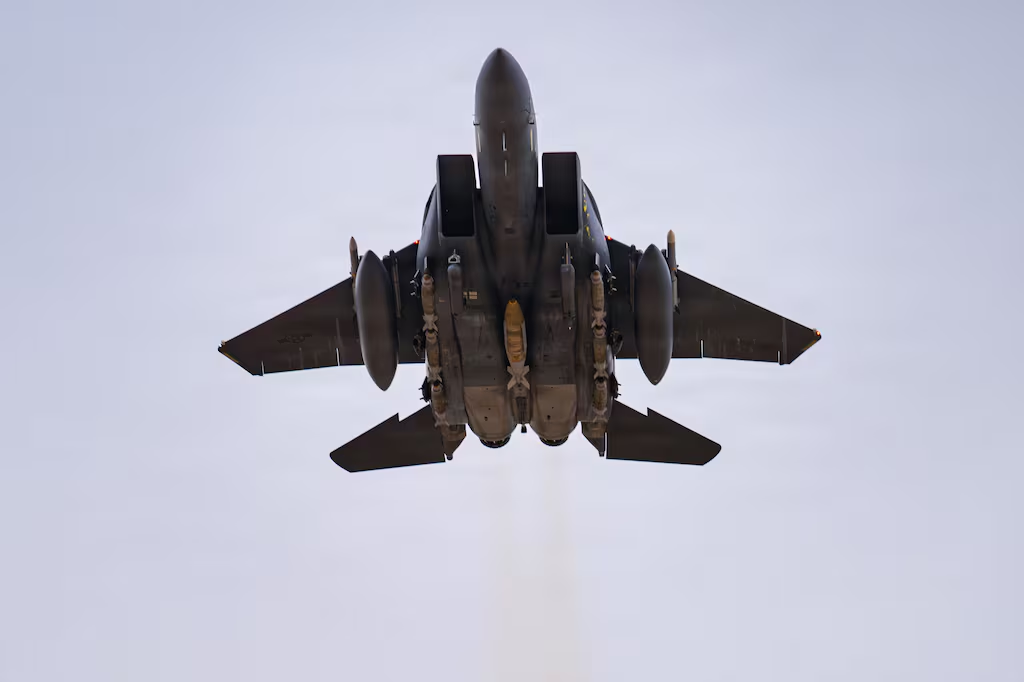
The Air Force uses a narrower definition, describing air superiority as “that degree of control of the air by one force that permits the conduct of its operations at a given time and place without prohibitive interference from air and missile threats.”
The key word is prohibitive, because an enemy can still launch aircraft, missiles, and drones without necessarily preventing the United States from completing its mission.
Even during Desert Storm, widely viewed as the high point of American airpower, US aircraft faced serious danger below 12,000 feet.
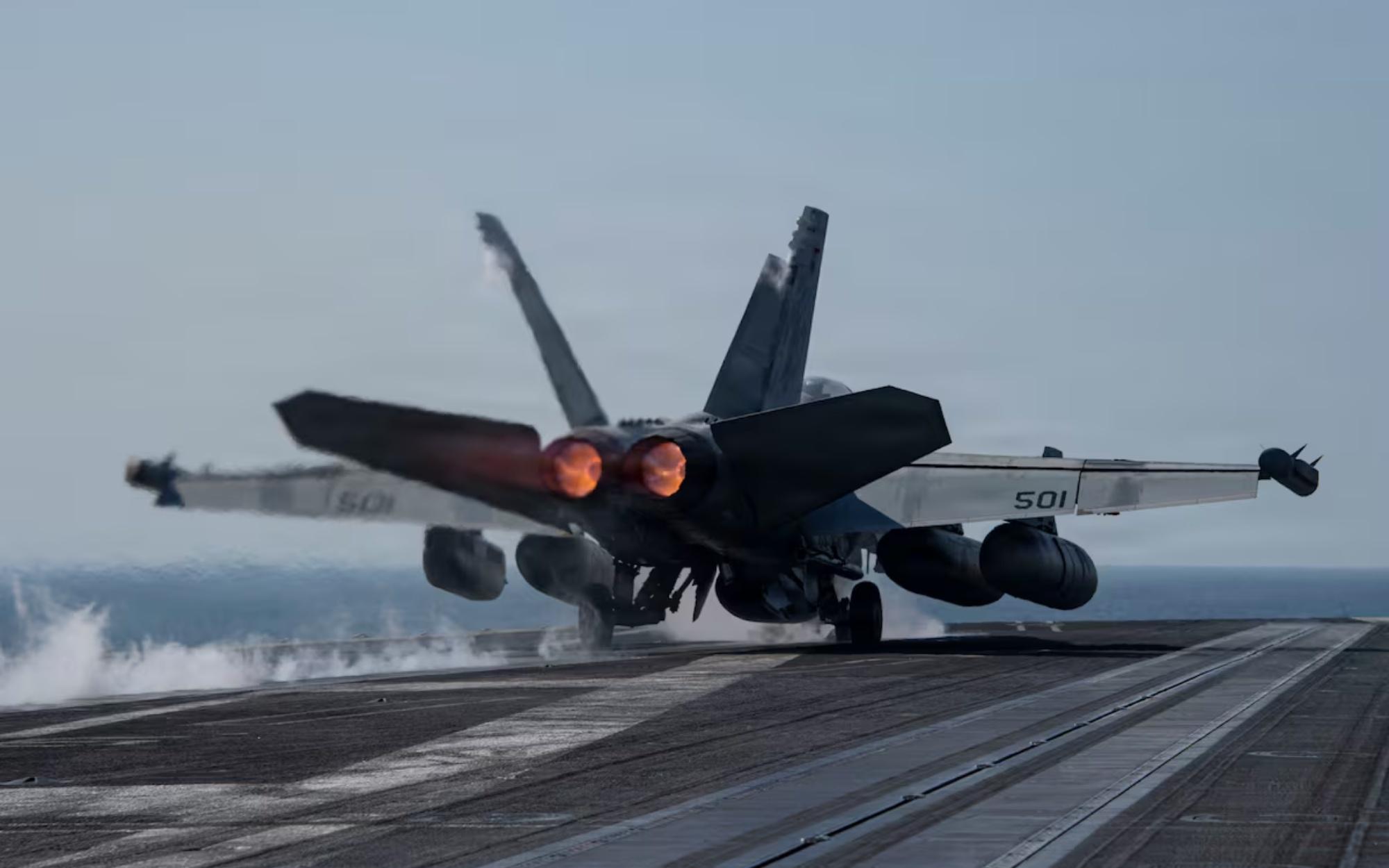
The Government Accountability Office found that two thirds of Air Force aircraft lost during the war were shot down below that altitude.
Iraqi antiaircraft guns could reach aircraft operating at those levels, while infrared guided surface to air missiles did not rely on radar emissions that could reveal their position.
American forces controlled the broader fight, but that did not make every portion of the sky safe.
Interestingly, the term “air superiority” does not appear in Air Force Doctrine Publication 1, the document defining the service’s fundamental roles and responsibilities.
Instead, it emphasizes airpower, defined as “the ability to project military power through control and exploitation in, from and through the air.”
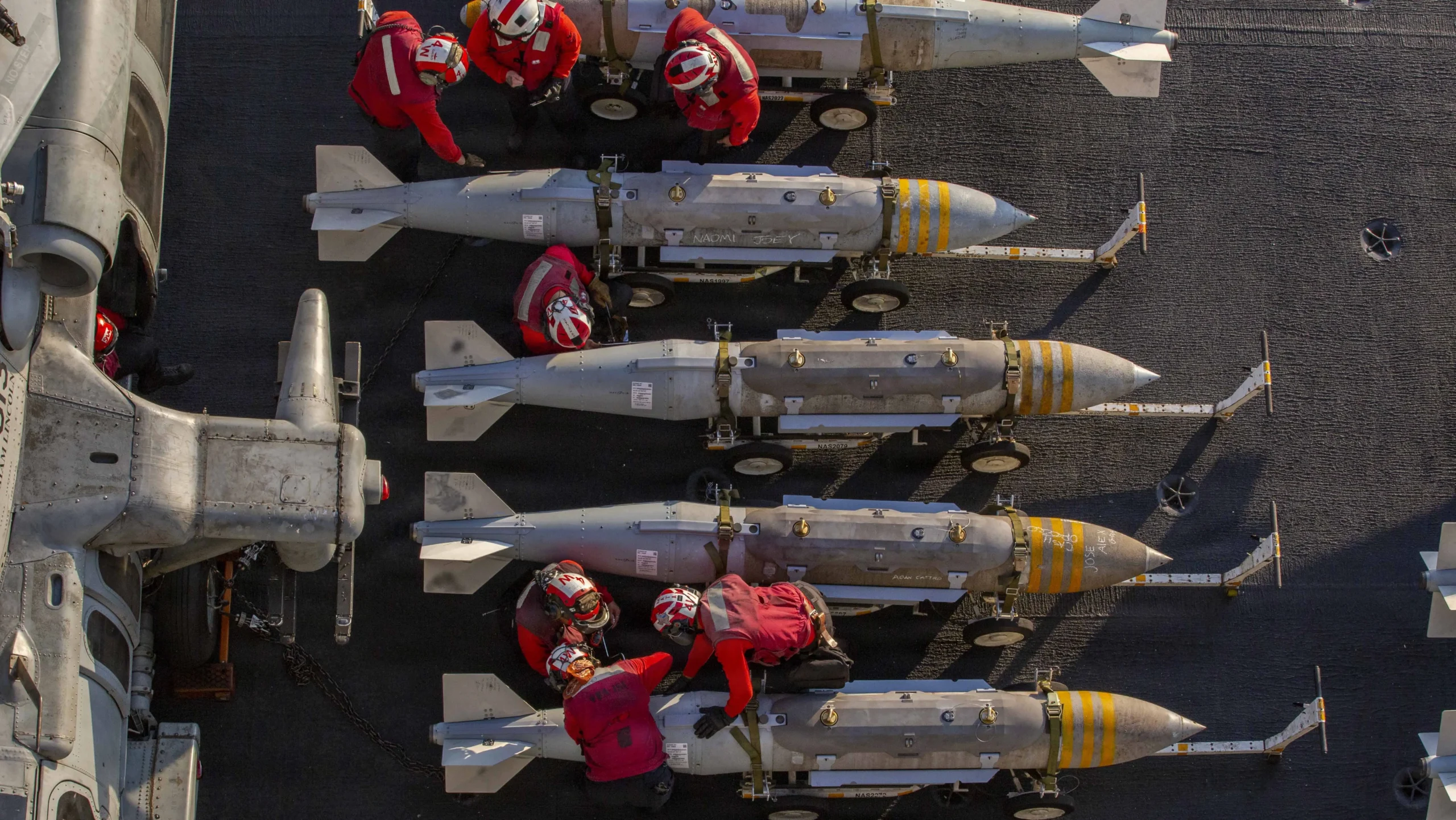
Air superiority remains desirable, but it is not the only way a military can generate power through the skies.
MORE NEWS: ICE Raids One Week, DACA Cops the Next: Danbury Dems Double Down on Open-Border Agenda [WATCH]
Modern technology has also made achieving it far more difficult, especially near the ground and around the bases that support aircraft operations.
Cheap missiles, one way attack drones, commercial satellite imagery, and open source intelligence have made it easier to locate and attack the “nests” that sustain American airpower.

Those nests include exposed aircraft, fuel facilities, ammunition storage sites, maintenance areas, communications nodes, and vulnerable runways.
By striking those support systems, Iran has complicated American efforts to protect vessels moving through the Strait of Hormuz, arguably the conflict’s most important terrain.
Airpower expert Kelly Grieco, a senior fellow at the Stimson Center, describes Tehran’s approach as “air denial.”
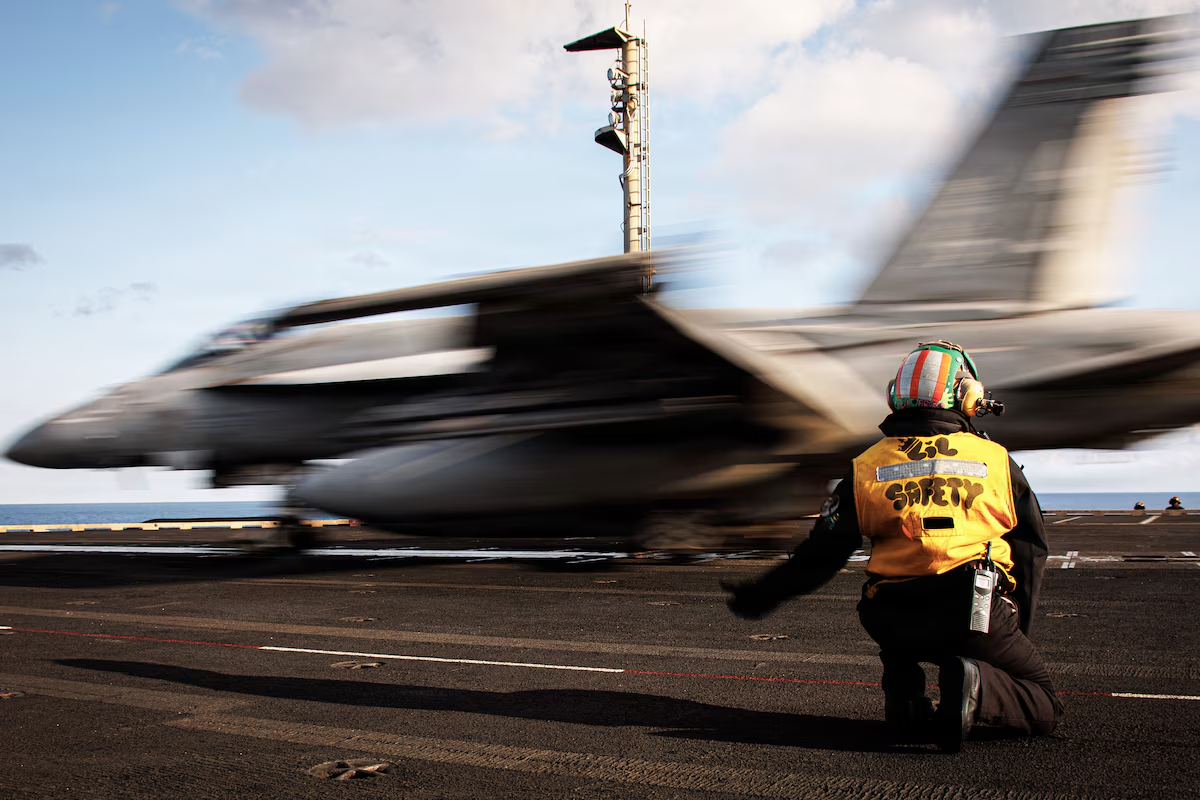
The goal of “air denial” is not necessarily to seize control of the skies. Instead, Iran is attempting to make American air operations costly and unreliable enough that Washington cannot secure its objective in the Strait of Hormuz.
The US military has not helped itself by parking valuable aircraft in predictable locations, out in the open and packed wingtip to wingtip.
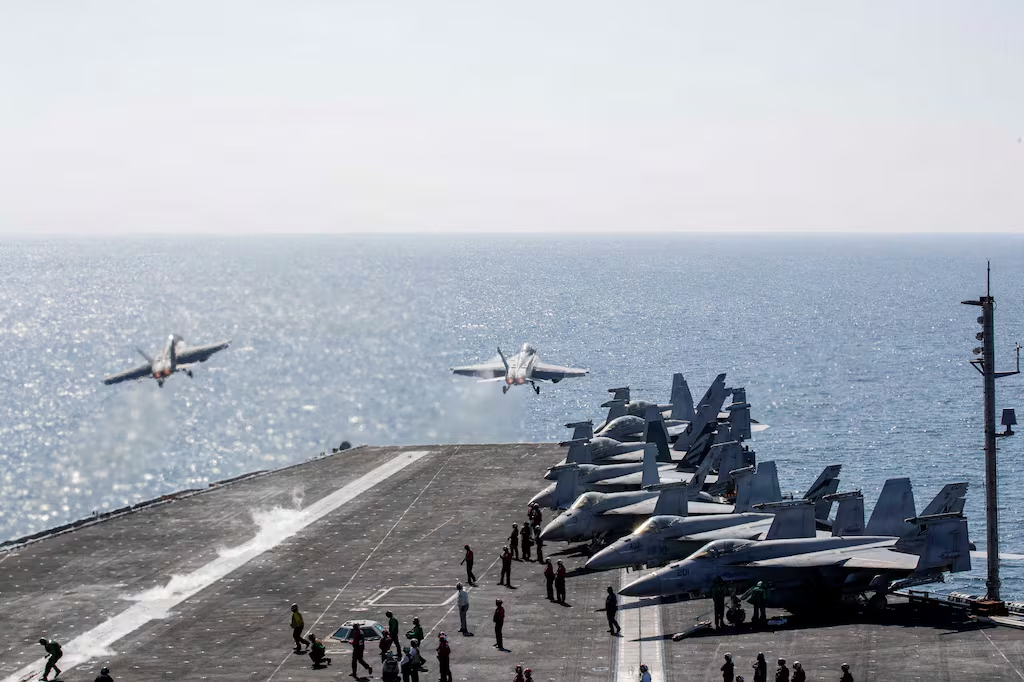
Mark Cancian of the Center for Strategic and International Studies noted that some aircraft struck on the ground occupied the same parking areas used throughout decades of Middle East operations, which is hardly a master class in adapting to a thinking enemy.
The consequences could be much worse against China. In war games examining a Taiwan conflict, Cancian found that 90 percent of American aircraft losses occurred on the ground, reinforcing the need for hardened aircraft shelters, dispersed operations, and rapid runway repair capabilities across the Pacific.
The United States is pursuing laser guided rockets, signal jammers, high powered microwaves, proximity fused cannon rounds, and drone interceptors to defeat inexpensive swarms.
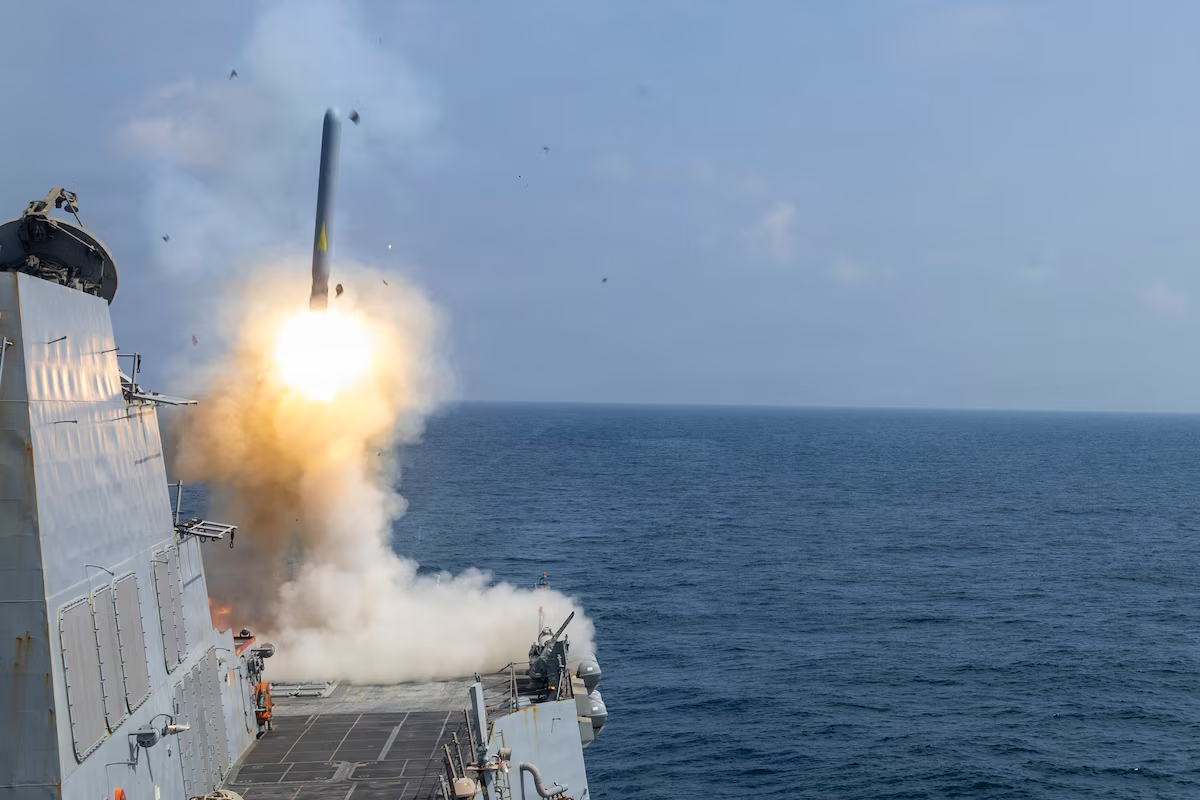
Such weapons can be produced and distributed more affordably than costly Patriot and THAAD interceptors, which cannot remain the answer to every bargain basement drone an adversary launches.
Grieco argues that America ultimately needs forces capable of fighting without depending entirely on runways or expensive platforms that cannot be quickly replaced.
Her Stimson Center team has proposed an “inside air force” able to operate within enemy missile range and impose the same kind of air denial Iran has demonstrated.

An “inside air force” would complement rather than replace the advanced, runway dependent aircraft that dominate the current fleet.
Building it would require clear security priorities, serious investment, hardened bases, distributed forces, and a willingness to stop presenting billion dollar assets as neatly parked targets for cheap enemy drones.
Join the Discussion
COMMENTS POLICY: We have no tolerance for messages of violence, racism, vulgarity, obscenity or other such discourteous behavior. Thank you for contributing to a respectful and useful online dialogue.