The United States Air Force wants to transform cargo aircraft into airborne launch platforms capable of rapidly deploying autonomous drone swarms.
Once released, those drones could protect forward bases, parked aircraft, and mobility forces operating in increasingly dangerous airspace.
The concept would send transport aircraft and their accompanying drones to threatened Air Force installations around the world.
Artificial intelligence would then coordinate the swarm as it patrols designated areas and responds autonomously to potential attacks.
Here's What They're Not Telling You About Your Retirement
An Air Force Small Business Innovation Research solicitation calls for “adaptive, force-multiplying launch platforms” able to provide “a rapidly deployable swarm for base security.”
Companies interested in the ambitious program face an Oct. 21 deadline.
The service is pursuing what amounts to three capabilities from one flexible system.
Cargo aircraft could become drone motherships, defend themselves in contested airspace, and deliver an autonomous security network wherever American forces establish operations.
This Could Be the Most Important Video Gun Owners Watch All Year
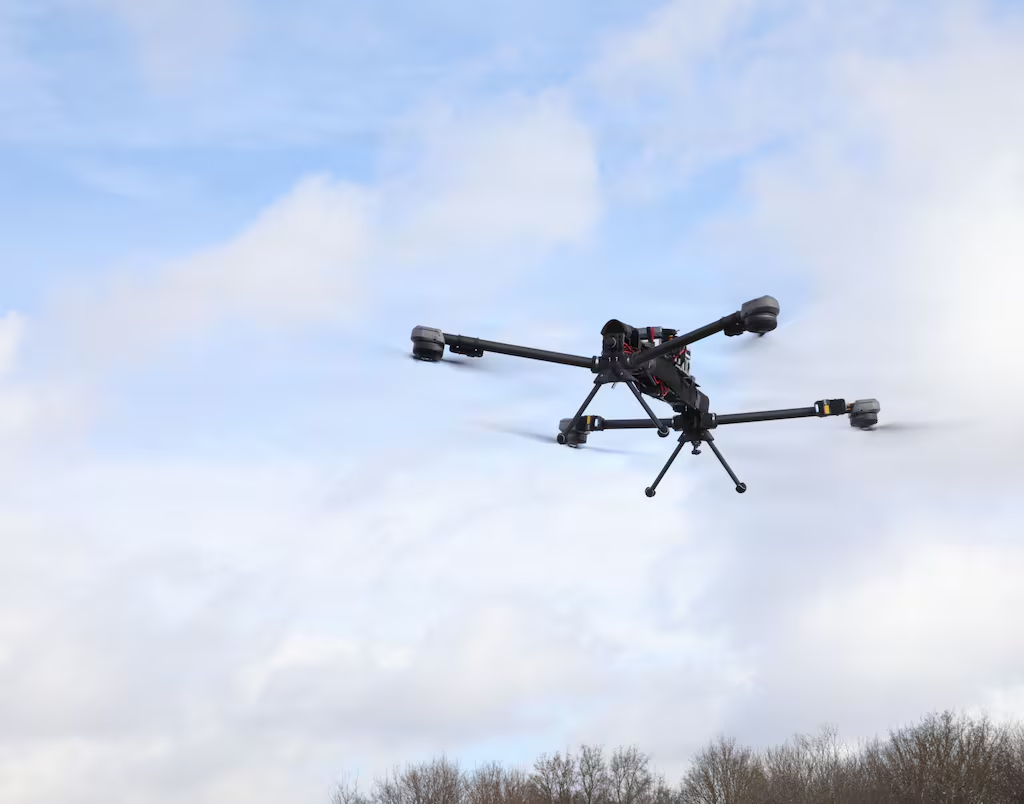
The intelligence and surveillance mission would allow transport aircraft to launch drones while flying at high altitude.
The Defense Advanced Research Projects Agency demonstrated a related concept in 2021, when a C 130 recovered an X 61 Gremlin drone while both aircraft were in flight.
The solicitation also points to Air Mobility Command discussions about using KC-135 aerial refueling tankers as launch platforms.
That could turn aircraft normally associated with logistics and refueling into far more adaptable players across a modern battlefield.
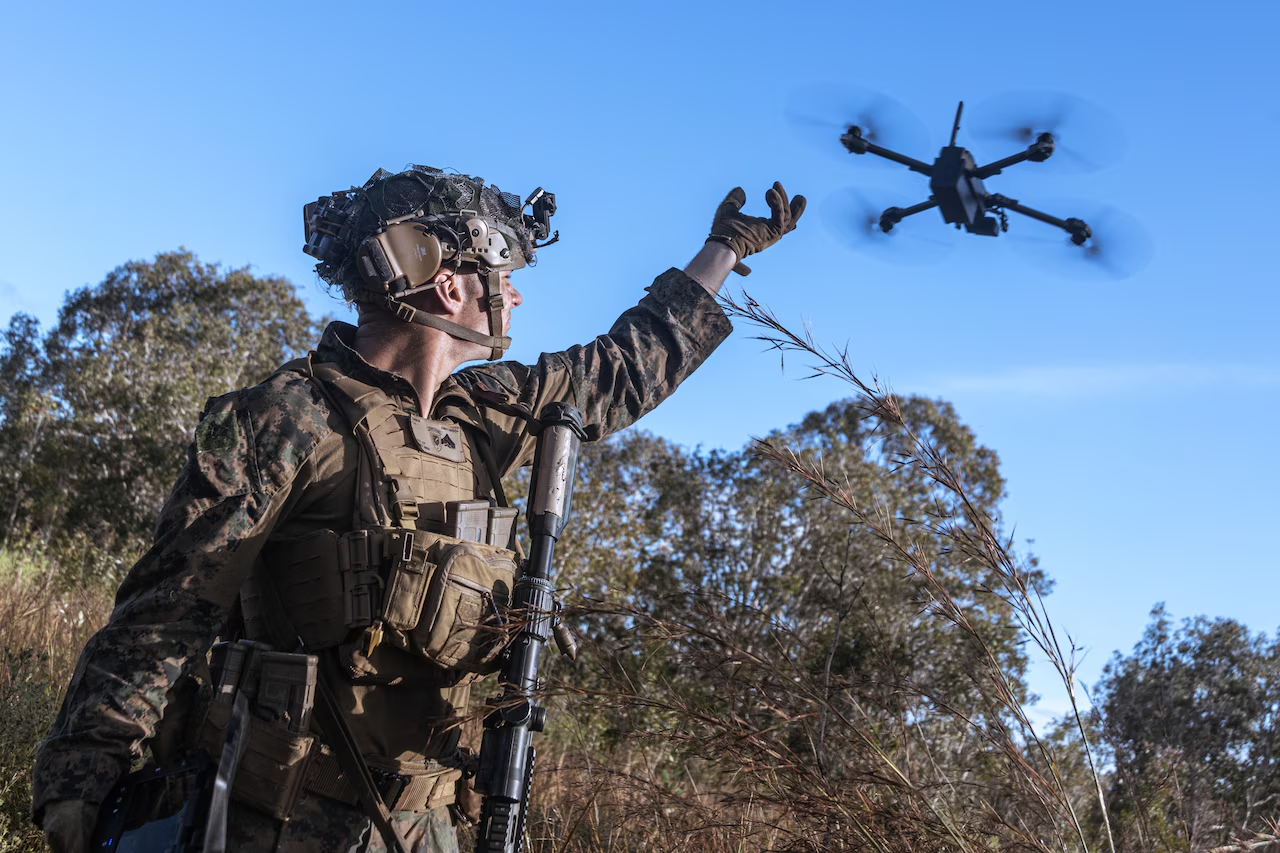
A second mission would provide “self-protection for Mobility Air Forces operating in contested airspace.”
The need became painfully clear during the Iran war, when Iranian attacks destroyed or damaged American tankers and airborne warning and control aircraft sitting at Persian Gulf bases.
Forward installations would receive another layer of protection from drone swarms deployed by arriving cargo aircraft.
Rather than waiting for bulky security systems to be transported and assembled, commanders could establish an airborne perimeter watch shortly after landing.
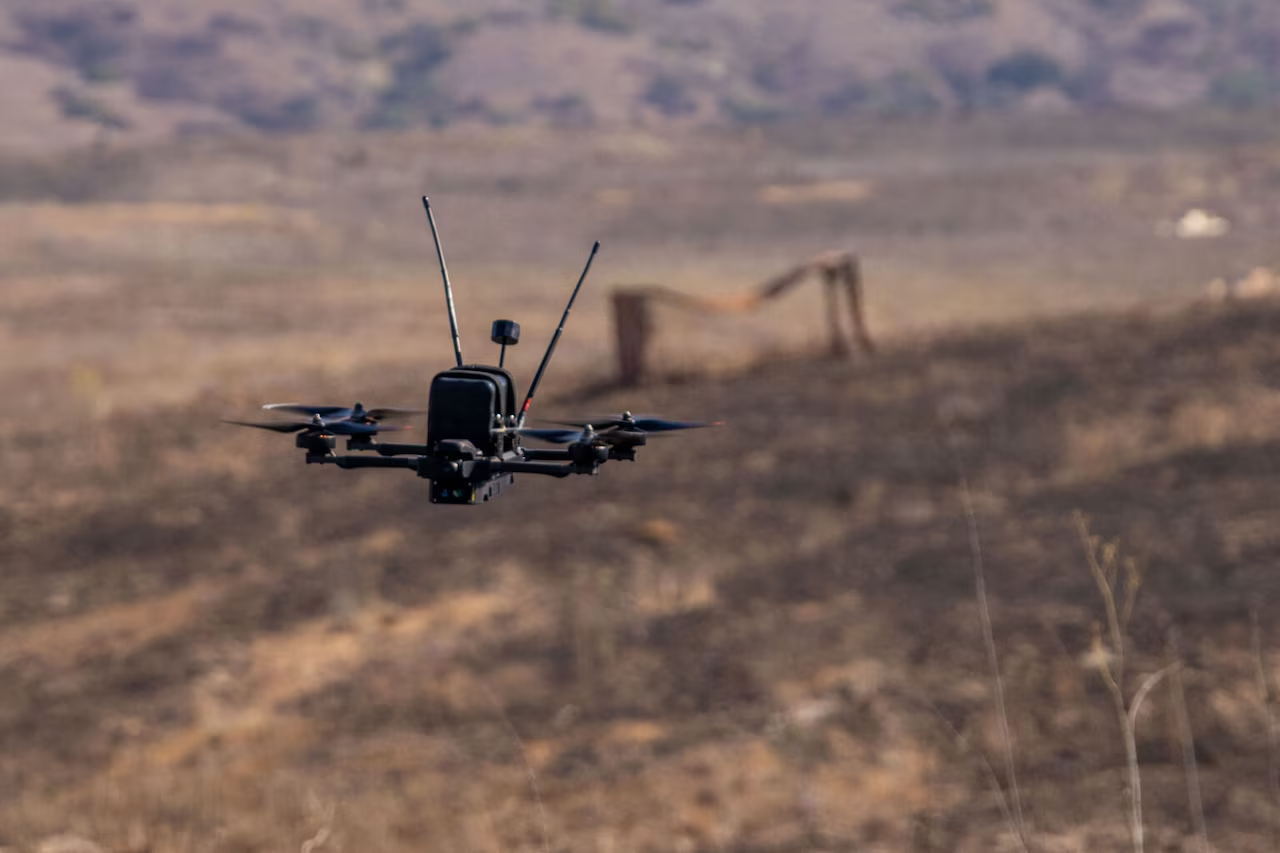
Transport aircraft can be “significantly augmented with enhanced organic self-protection and intelligence, surveillance, and reconnaissance capabilities to maintain operational overmatch,” the solicitation stated.
It added, “Similarly, forward operating bases can bolster their security posture by leveraging rapidly deployable, autonomous perimeter defense networks.”
The Air Force believes the underlying technology is mature enough to skip the customary first phase of the small business research process.
The effort will instead move directly into Phase II, reflecting how quickly private industry has advanced autonomous flight and swarm coordination.
“The fundamental scientific and technical merit of coordinating multiple uncrewed aerial systems via artificial intelligence has already been established by the private sector,” the Air Force noted.
In other words, the service is not asking contractors to prove swarms can work, but to show they can work under operational conditions.
During Phase II, contractors must demonstrate how cargo aircraft can deploy swarms “at operational altitudes to simulate operational Mobility Air Forces scenarios.”
The test is intended to move beyond laboratory promises and into the kind of demanding environment American aircrews could actually face.
Companies must also demonstrate “the swarm’s ability to autonomously monitor and defend a designated perimeter using onboard visual and thermal sensors.” Those sensors would allow the drones to maintain coverage during daylight, darkness, and potentially poor visibility.
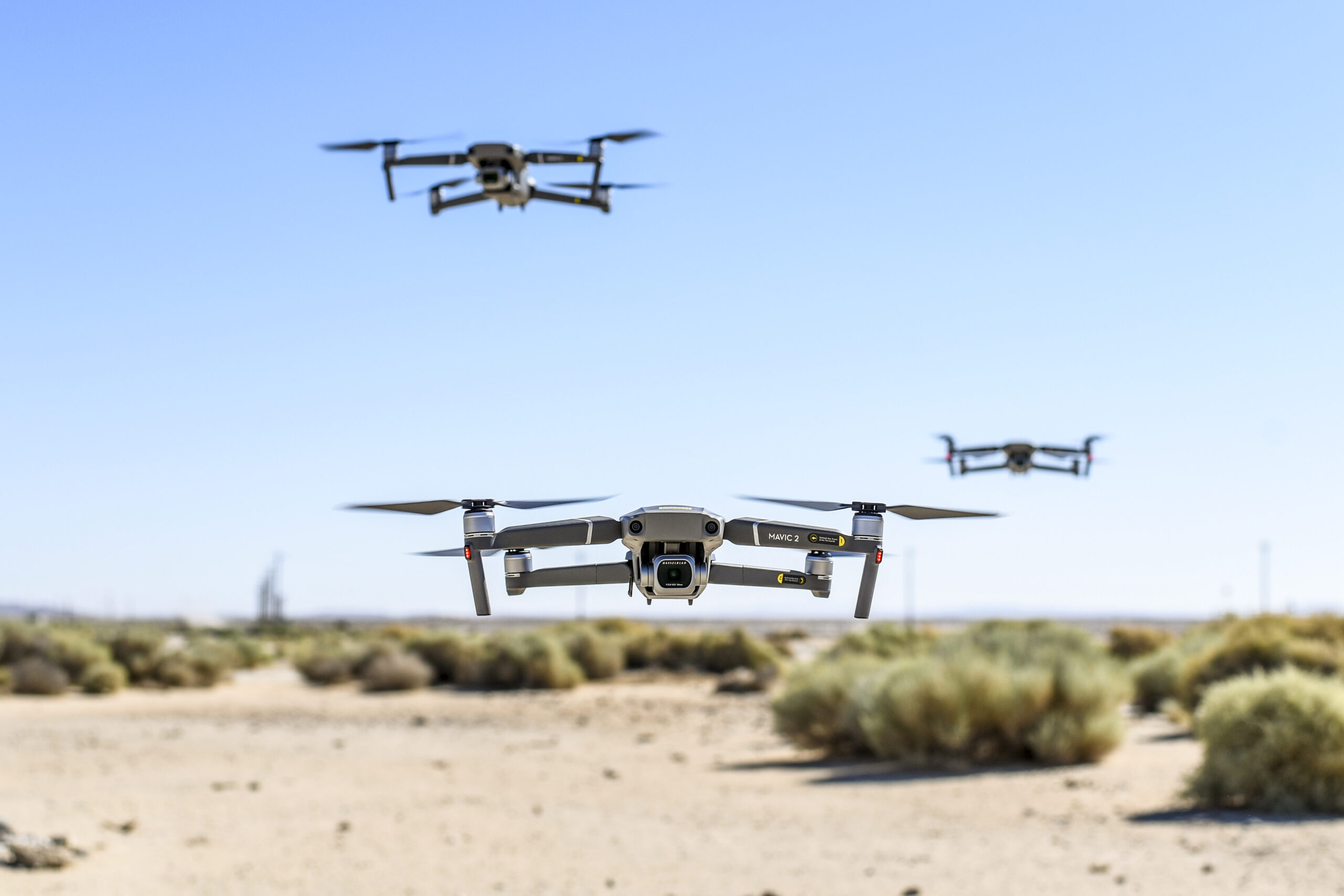
The Air Force wants one artificial intelligence system capable of managing both airborne and base security missions.
According to the solicitation, “the artificial intelligence software should be adapted to seamlessly transition from aerial deployment into a coordinated flight pattern and autonomously execute a perimeter defense monitoring route.”
Cybersecurity will be critical because an autonomous swarm is only useful if an enemy cannot hijack or disrupt it.
The service wants “secure, encrypted military communications, replacing readily available data links to ensure secure command and control that aligns with Department of the Air Force standards.”
Potential Phase III applications could extend well beyond combat operations. National Guard rescue teams could launch swarms after natural disasters, while ground forces could use them to maintain persistent surveillance along America’s border.
“By rapidly deploying a high-altitude drone swarm from mobility launch platforms, rescue units gain an instant, wide-area sensor net to expedite the location of survivors during natural disasters, while ground units can deploy the swarm for persistent, autonomous border surveillance,” the Air Force explained.
The National Oceanic and Atmospheric Administration could also use rugged swarms to fly into hurricanes and collect dangerous weather data.
Commercial versions might support disaster response, large scale search and rescue operations, and aviation monitoring, proving that battlefield innovation can deliver serious benefits at home as well.
Join the Discussion
COMMENTS POLICY: We have no tolerance for messages of violence, racism, vulgarity, obscenity or other such discourteous behavior. Thank you for contributing to a respectful and useful online dialogue.