WHAT YOU NEED TO KNOW
- Alaska Air National Guard PJs parachuted near hunters trapped by a rising river above the Arctic Circle.
- An HC-130 crew located the hunters using satellite coordinates, their tent and a visible flashlight.
- Rescuers rigged a rope line and used rafts to ferry the hunters across the Kukpowruk River.
- The PJs built a fire for warmth before a civilian helicopter arrived for extraction.
A group of civilian hunters trapped by a rising river above the Arctic Circle required an Alaska Air National Guard rescue team to employ nearly every backcountry skill available.
The operation unfolded across a full day and continued into the night.
The Anchorage based 176th Wing dispatched an HC-130 into one of Alaska’s most remote corners.
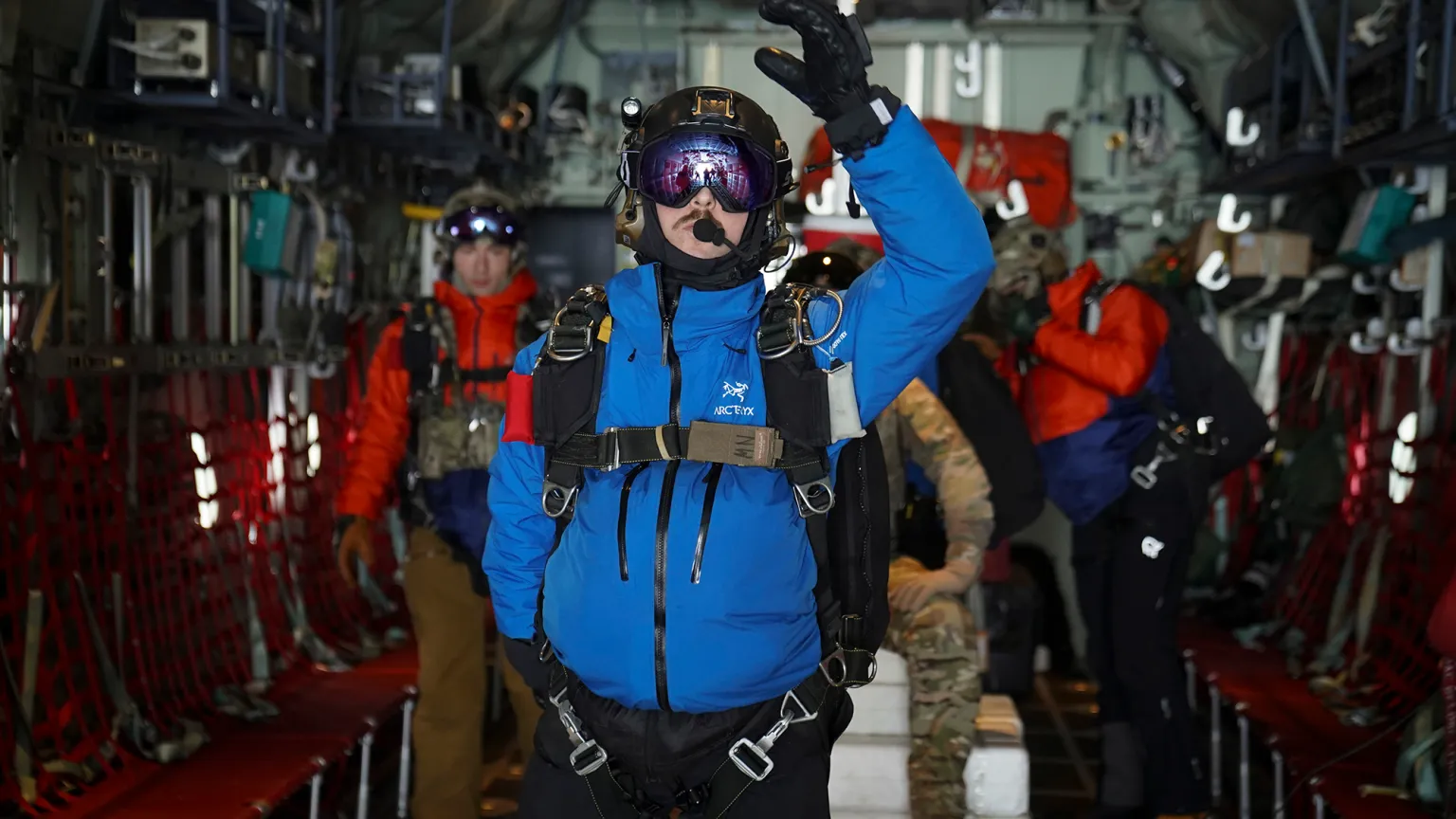
Pararescuemen, commonly known as PJs, then parachuted near the missing hunters and began the difficult work of getting the group across the river.
The rescue started with a request for help sent to the Alaska Rescue Coordination Center at Joint Base Elmendorf-Richardson.
The hunters were stranded along the Kukpowruk River, an exceptionally remote and inaccessible area of the state.
The Kukpowruk is one of the rare rivers on Earth that flows entirely above the Arctic Circle.
It runs north of Alaska’s farthest north mountains before reaching the Arctic Ocean roughly 120 miles from the nearest town.
The distance involved made this far more than a routine response. Using a Lower 48 comparison, the rescue was roughly equivalent to first responders in New York City answering an emergency call in Atlanta, Georgia.
Coordinates sent through the hunters’ satellite communication device gave the HC-130 crew a location to search.
Once over the area, the crew visually identified the hunters’ tent and saw their flashlight below.
“Using coordinates provided through the hunters’ two-way satellite communication device, the HC-130 crew reached the search area, visually identified the hunters’ tent and spotted their flashlight,” the Guard’s release said.
Clouds created another hurdle for the rescue force. The low ceiling restricted operations, forcing members of the 212th RQS to make a low altitude parachute jump while carrying a pack raft.
“With a low cloud ceiling limiting operations in the area, 212th RQS PJs conducted a low-altitude jump with a pack raft to reach the stranded hunters,” the release said.
Packrafts are inflatable kayaks designed for one person and are commonly used in Alaska’s backcountry. When deflated, the compact boats can be carried inside a small backpack, making them useful for a parachute insertion into inaccessible terrain.
The HC-130 crew also dropped another raft and survival equipment close to the rescue site.
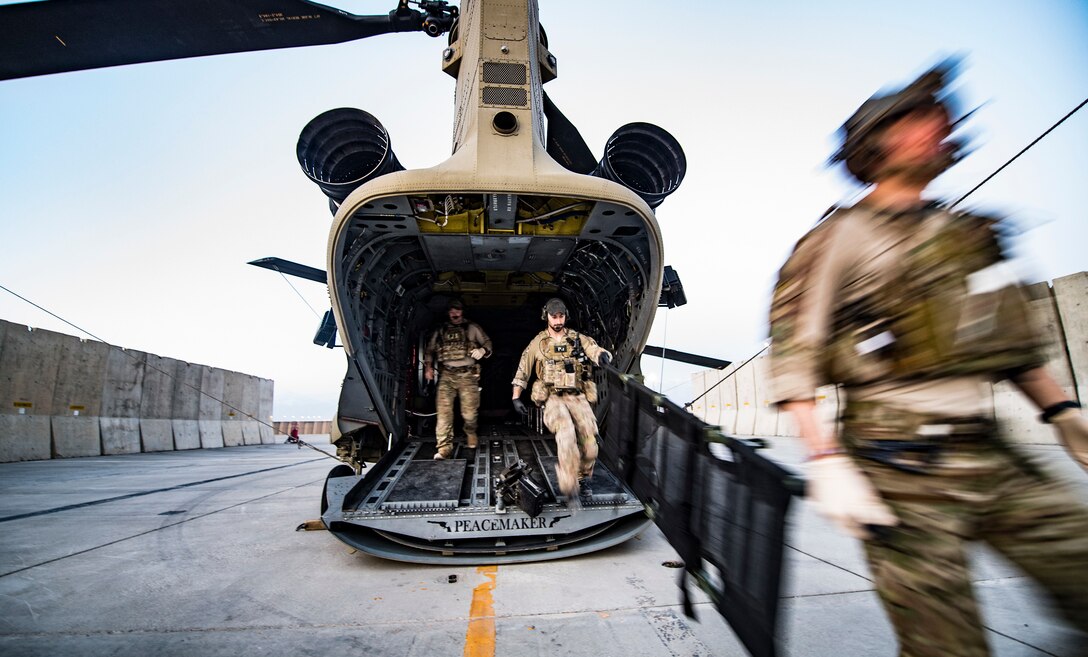
That additional gear gave the PJs what they needed to confront the rising river and move the stranded group toward safety.
On the ground, the pararescuemen rigged a rope line across the water.
MORE NEWS: U.S. Keeps Close Watch on Chinese Marine Presence off Alaska, Arctic Coast Guard Chief Says
The team then used the system and raft to ferry the hunters across the river rather than leaving them exposed on the wrong bank.
The operation drew directly on skills the PJs frequently practice.
Their training includes both swiftwater operations and high angle rope rescues, two capabilities that proved central as they worked through the remote Arctic terrain.
Reaching dry ground did not end the mission. The PJs built a campfire to warm the hunters while everyone waited for an aircraft capable of extracting the group.
“The PJs then started a fire to help warm the hunters while they waited for extraction,” the release said. The simple measure provided warmth after the hunters had been moved across the rising water.
Air Force PJs used similar overhead line rigging during the 2018 rescue of 13 boys trapped hundreds of feet inside a flooded cave in Thailand.
In that operation, the line was used to move rescuers and supplies before the boys were eventually transported.
A civilian helicopter from Utqiagvik ultimately arrived for the PJs and hunters. Utqiagvik, formerly known as Barrow, is Alaska’s farthest north town, and the HC-130 was able to land there.
The successful rescue combined satellite coordinates, an HC-130 flight, a low altitude parachute jump, airdropped survival equipment, packrafts, rope work and civilian aviation.
It was a demanding response to a dangerous problem in one of Alaska’s most isolated regions.
Join the Discussion
COMMENTS POLICY: We have no tolerance for messages of violence, racism, vulgarity, obscenity or other such discourteous behavior. Thank you for contributing to a respectful and useful online dialogue.