WHAT YOU NEED TO KNOW
- BMT 3.0 introduces tougher combat focused training while pushing new airmen to think like strategists earlier in their careers.
- Trainees can touch, load and rearm an F-16 Fighting Falcon before reaching follow on technical training.
- Leaders report no higher attrition than under the legacy program, while prospective military training instructors are showing greater interest.
- Courtland wants technical training and operational units to preserve the skills and enthusiasm developed during basic training.
Roughly six months after the Air Force introduced a tougher, more combat centered entry level training program, leaders say the overhaul is producing enthusiastic airmen.
Their concern is whether later training and operational units will preserve those new skills.
Col. Kellie Courtland, commander of the 37th Training Wing at Joint Base San Antonio-Lackland, said Basic Military Training Next is now in its BMT 3.0 version.
The program brings airmen closer to the fight earlier and pushes them to think like strategists.
“Everybody’s into BMT Next. We can create you the best air-minded badass warrior you’ve ever seen, but that is of no value if when they get to tech training, it’s lost there, and those things are not continued … or you get out to your first operationalized unit, and that fire you’ve got burning, all those skills you learned, everything that you saw is lost at that doorstep because nobody keeps it going,” Courtland said.
Courtland said the Air Force must carry that training through technical instruction and into operational units.
Otherwise, the service risks watching the skills and enthusiasm developed during basic training disappear when newly trained airmen reach their next assignment.
The questions coming from trainees have also changed. Courtland said they once asked simple questions about when they could fly home and see their parents, but they are now asking about being targeted while deployed and what tools will help them respond.
BMT 3.0 received a partial launch in April and is intended to expose trainees more directly to combat conditions.
One opportunity lets them touch, load and rearm an F-16 Fighting Falcon, an experience previously reserved for follow on technical training.
A new air training range at San Antonio-Lackland will include two C-130 Hercules aircraft.

It will also provide space for exercises focused on “defend, operate, generate, sustain,” with the complete range expected to be nearly finished by the end of 2027.
Courtland and her senior enlisted adviser, Chief Master Sgt. Caleb Vaden, said the program is about more than putting trainees near combat aircraft and operations. It also exposes them to greater stress in situations designed to resemble the tempo of combat operations.
“We’ve got some sleep deprivation involved, so they’re built to endure at the foundational level, and then integrated to win,” Vaden said.
That intensity is intended to build endurance while teaching trainees to function as part of a team.
“They know how it is to integrate as a team, read a mission order, execute that order, debrief that order, troops leading procedures — all those foundational things that should happen in Basic are now happening,” Vaden said.
Despite the increased intensity, Courtland said the course has not experienced higher trainee attrition rates than the legacy program.
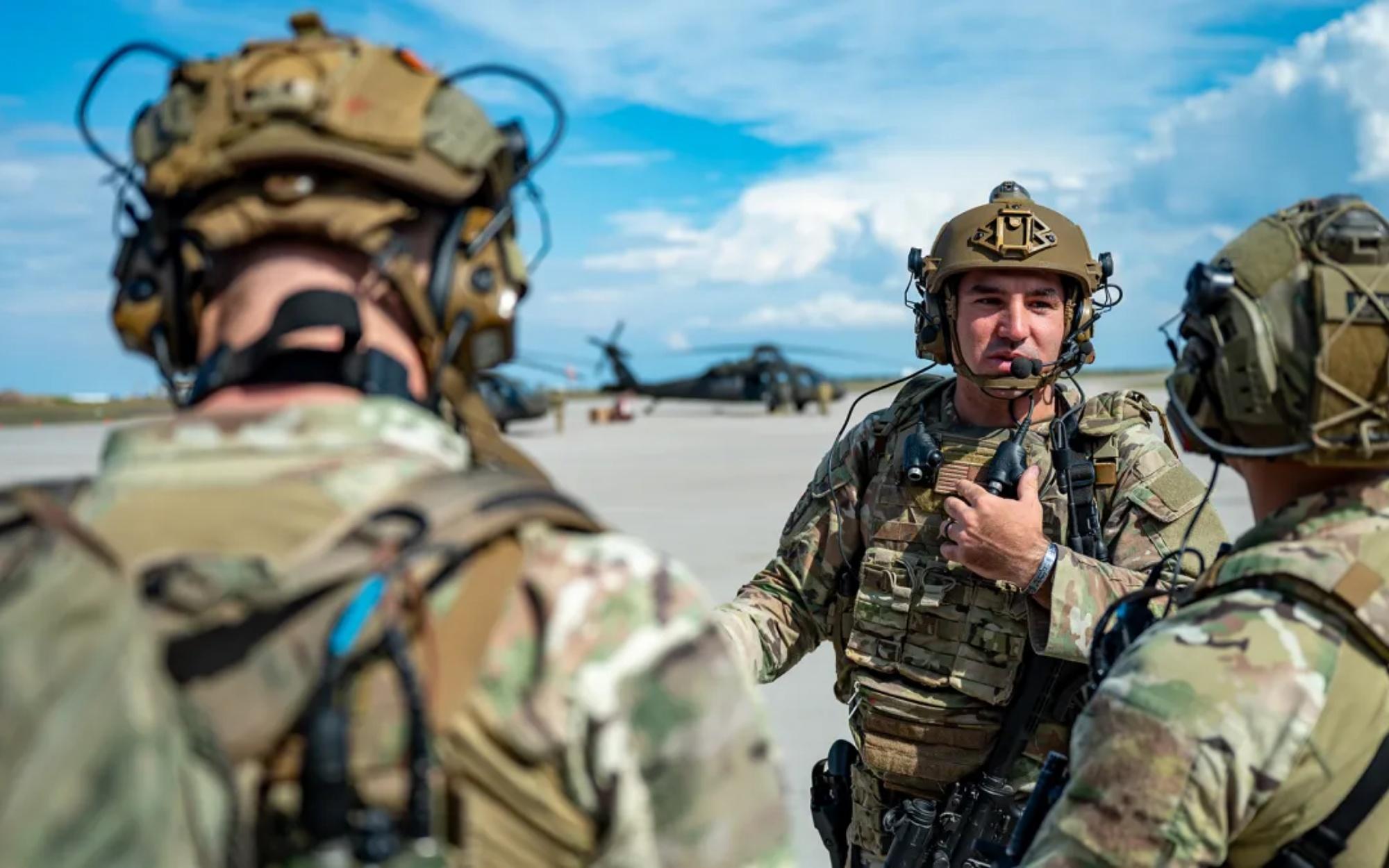
The tougher standard, it turns out, has not scared away airmen eager to connect their training with the mission.
“People want this,” Courtland said. She said trainees value the connection to their future mission, draw motivation from the success of teammates and appreciate the opportunity to touch and experience that mission instead of spending their time folding clothes in a dormitory.
Leaders are still developing the proper preparation for military training instructors who must deliver the new program’s rigor and combat focus.
At the same time, more prospective instructors are expressing interest in taking on that role.
Courtland said maintainers and support personnel who previously showed little interest in becoming military training instructors are now applying.
She attributed that new interest to the program’s greater emphasis on operational requirements.
The next challenge rests with the home station units receiving these newly trained airmen.
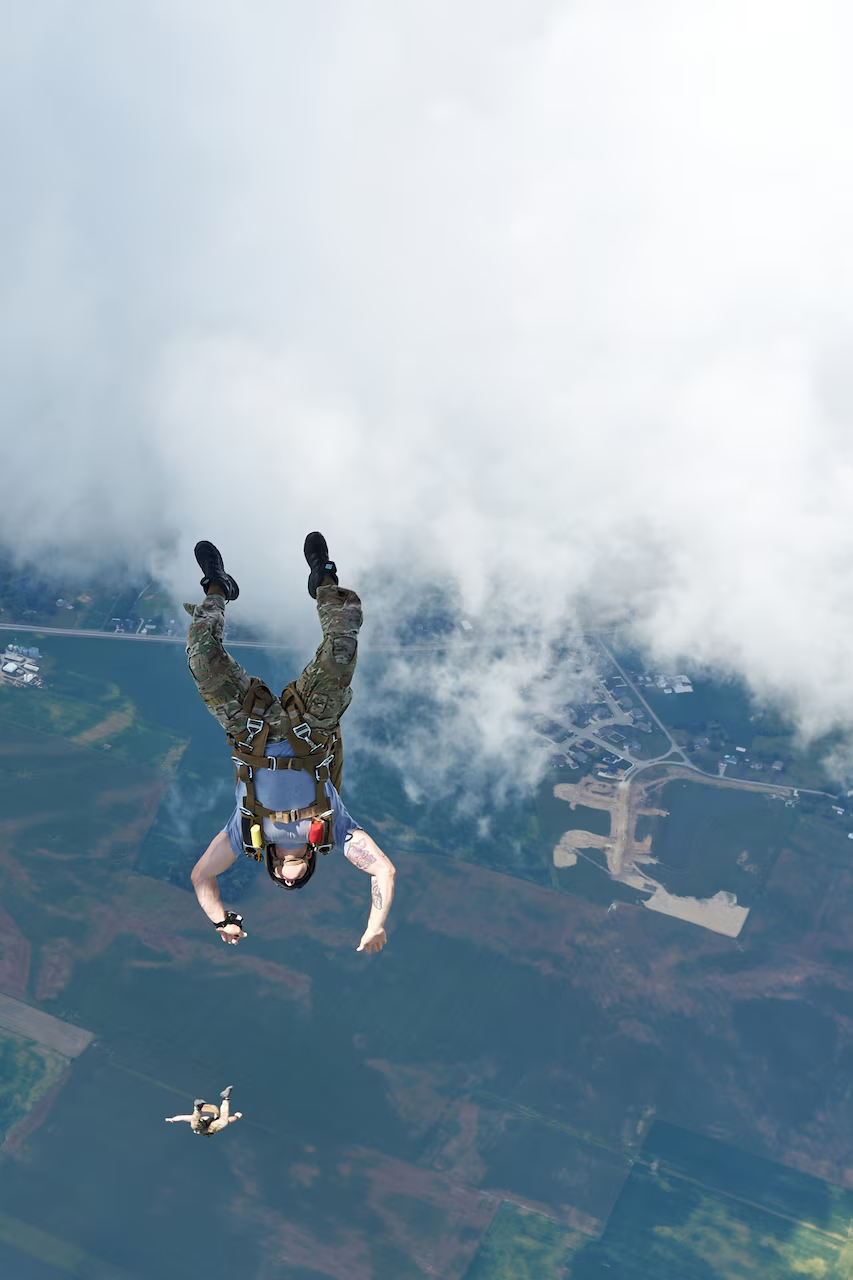
Courtland wants those units to continue challenging them and encouraging the combat focused mindset rather than allowing the benefits of basic training to wither at the doorstep.
Changes to Basic Military Training might not be entirely complete until the early 2030s.
Officers are already asking whether similar combat focused changes could be brought to Officer Training School, although Courtland said that decision belongs to “the powers that be.”
Courtland said the interest shows people believe the timing is right and understand that training must change with the environment.
For BMT 3.0, the appetite is clearly there, but keeping that fire alive will require the wider Air Force to carry the mission forward.
Join the Discussion
COMMENTS POLICY: We have no tolerance for messages of violence, racism, vulgarity, obscenity or other such discourteous behavior. Thank you for contributing to a respectful and useful online dialogue.