WHAT YOU NEED TO KNOW
- BeeX, BlackSea Technologies and Vatn Systems won the Navy’s Mine Countermeasure Modernization Prize Challenge.
- The competition drew 80 applicants, with 11 selected to compete for participation funding and a prize worth up to $3 million.
- Winning technologies demonstrated the ability to locate, identify and destroy underwater mine threats from a safe distance.
- The Navy has four remaining Avenger class minesweepers, while testing officials found problems with mine countermeasure technology aboard littoral combat ships.
The Navy has selected three defense companies as winners of a competition aimed at advancing mine countermeasure technology. The winning systems demonstrated the ability to locate, identify and destroy underwater mine threats while operating from a safe distance.
The service’s Direct Reporting Portfolio Manager for Robotic and Autonomous Systems and the Defense Innovation Unit selected BeeX, BlackSea Technologies and Vatn Systems. Each company successfully completed the Mine Countermeasure Modernization Prize Challenge.
The rapid competition moved from an open call to testing on the water, contracting options and early operational planning in less than four months. Navy officials credited the partnership with the Defense Innovation Unit for helping speed that process.
“Through the partnership with DIU, in less than four months we were able to quickly move from open call to on-water testing, to contracting options and initial operational planning,” George Saroch, DRPM RAS program manager for mine warfare, said in the announcement.
The Defense Innovation Unit launched the competition on May 29. It offered $200,000 to companies selected to participate and up to $3 million to the winning company.
The field began with 80 applicants, but only 11 companies were selected to compete. BeeX, BlackSea Technologies and Vatn Systems ultimately emerged as the three prize winners after completing the challenge.
Competitors were asked to address three specific mine warfare problems. Those tasks included neutralizing mines near the surface, detecting mines on the bottom and neutralizing bottom mines.
The Navy said the winning companies proved their technology could locate, identify and destroy underwater mine threats. The emphasis was on countering those threats from a safe distance rather than placing personnel directly near them.
The selection comes as the Navy has faced mine warfare during the Iran war. Iran has placed sea mines along the Strait of Hormuz, presenting the service with a direct mine threat in a strategically important waterway.
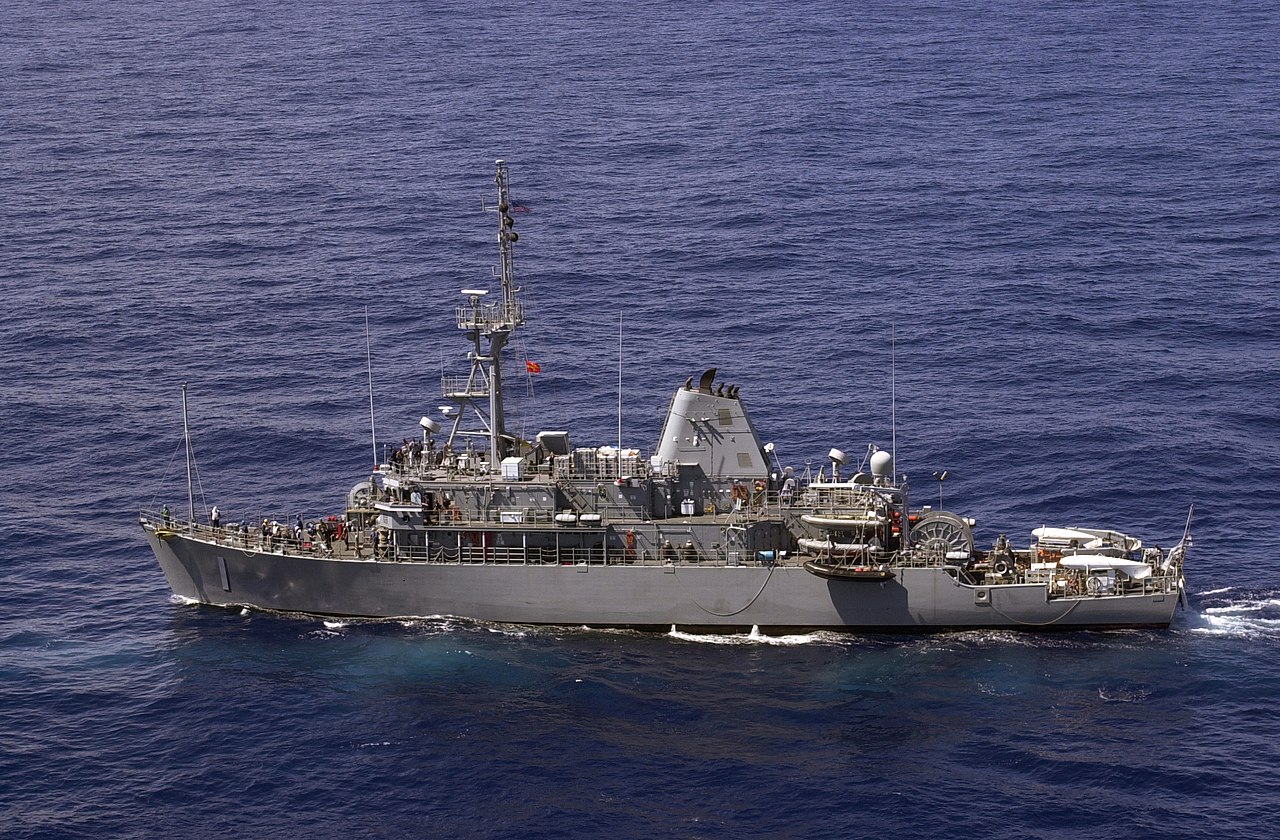
At the same time, the Navy’s available options for handling that threat remain limited. The service entered the conflict after a reduction in its dedicated minesweeper fleet.
Four Avenger class minesweepers were decommissioned in 2025 before the war. That left only four such ships in the fleet, with all four stationed in Sasebo, Japan.
The Navy also has three Independence class littoral combat ships that were previously stationed in Bahrain. Each ship carries a mine countermeasures mission package designed to conduct mine sweeping and mine hunting operations through several different systems.
Those mission packages employ a combination of helicopters, sonar, acoustic generators, electromagnetic generators and autonomous vessels. Together, those components are intended to give the littoral combat ships tools for finding and addressing mines.
However, several retired U.S. Navy captains who deployed aboard minesweepers told Military Times in March that the littoral combat ships were not as effective as dedicated minesweepers. The retired captains attributed that performance gap to technological issues.
The Pentagon’s weapons testing office, DOT&E, also identified problems with parts of the mine countermeasures technology aboard littoral combat ships equipped with the package. The office found that pieces of the technology were “not operationally suitable” and could “not support sustained mine sweeping operations.”
Against that limited fleet and the reported technology problems, the Navy’s competition produced three companies whose systems completed the modernization challenge. Their demonstrated capabilities covered the central tasks of locating, identifying and destroying underwater mines from a safe distance.
Join the Discussion
COMMENTS POLICY: We have no tolerance for messages of violence, racism, vulgarity, obscenity or other such discourteous behavior. Thank you for contributing to a respectful and useful online dialogue.