WHAT YOU NEED TO KNOW
- Col. John Boyd and his Fighter Mafia challenged the Air Force’s dependence on complex, expensive weapons after Vietnam.
- Boyd and Thomas Christie developed energy maneuverability theory, which reshaped how fighter aircraft performance was evaluated.
- The Fighter Mafia pushed for a pure air to air fighter and worked secretly with General Dynamics and Northrop.
- General Dynamics secured funding for the YF-16, which first flew on Feb. 2, 1974, and entered service four years later.
World War I helped forge the romantic image of fighter pilots as noble, masculine guardians battling above the troops. That mythology endured for generations, leaving new fighter pilots with a powerful sense of pride and heritage.
“Military culture is different from civilian culture, military aviation culture is distinct from both, but fighter pilot culture is a world unto itself,” Michael W. Hankins writes in Flying Camelot: The F-15, the F-16, and the Weaponization of Fighter Pilot Nostalgia.
The Vietnam War presented a far different reality. Century Series fighters struggled in aerial combat, while the Air Force relied on the two seat F-4 Phantom as its leading fighter, challenging the old celebration of individual pilots and turning dogfights.
Col. John Richard Boyd and the circle known as his “Fighter Mafia” set out to reverse that trend. Their campaign would place the pilot and aircraft maneuverability back at the center of fighter design.
Born in Erie, Pennsylvania, in 1927, Boyd entered the U.S. Army Air Forces near the end of World War II. He spent 12 uneventful months in Japan before leaving military service in 1947.
Boyd reenlisted when the Korean War began and was assigned to Nellis Air Force Base in Nevada. After training in a North American F-86 Sabre, he logged numerous combat hours in Korea and was credited with damaging a MiG-15 during the war’s final weeks.
Upon returning to Nellis, Boyd trained to become a flight instructor and quickly gained a reputation for challenging superior officers. Critics later described him as profane, crude and perhaps even treasonous, while supporters compared his intellect to Sun Tzu.
Love him or despise him, Boyd became central to discussions about the development of the F-15 and F-16. He and civilian mathematician Thomas Christie also developed energy maneuverability theory, a formula used to determine an aircraft’s specific energy rate.
Boyd’s followers included pilots and engineers such as Everest Riccioni, Christie and aeronautical engineer Harry Hillaker. Together, they argued that the defense industry of the 1960 and 70s relied too heavily on complex and expensive weapons while giving machines too much priority over pilots.
According to Hankins, the group was advancing the idea that military technology could be both cheaper and more effective. That argument found an audience after the difficult Vietnam War experience, when interest grew in more efficient and less complicated technology.
Riccioni laid out the human element bluntly in his thesis on air superiority. “No amount of electronic or optical equipment can substitute for a pilot’s ability to turn his head and see his antagonist,” he wrote.
The Fighter Mafia also viewed the Pentagon as a bureaucracy focused on persuading Congress to finance costly weapons systems. Gerald A. Schiller wrote that Boyd’s acolytes believed those systems frequently performed poorly during testing while their prices continued rising.
Hankins described their broader argument as rooted in particular cultures, beliefs, assumptions, behaviors and values. He identified the F-15 Eagle and F-16 Fighting Falcon, originally designed around air to air combat, as powerful examples of culture influencing Air Force technology.
Boyd and Christie used energy maneuverability theory to show that the Soviet MiG-21 was superior to the General Dynamics F-111 in combat. The growing Fighter Mafia then pushed for a pure air to air fighter capable of confronting the Russian threat.
“Department of War 1960’s era aircraft, such as the F-105, F-4, and F-111, while adequate in air-to-ground roles, were significantly disadvantaged in air-to-air maneuvering,” the Air Force wrote in 2025. Author Robert Corum said Boyd and Christie’s theory permanently changed fighter design.
The group pursued its fighter project quietly for years, operating through what Boyd’s close friend, Col. James Burton, called the “hallways, back doors and alleys of the Pentagon and the aircraft industry.” Members even referred to their effort as “the Lord’s work,” according to Hankins.
Hankins wrote that the Fighter Mafia held “secret, illegal meetings with two contractors (General Dynamics and Northrop) to design an aircraft.” The group then helped write the request for proposals and participated in a source selection committee containing many people who shared its outlook.
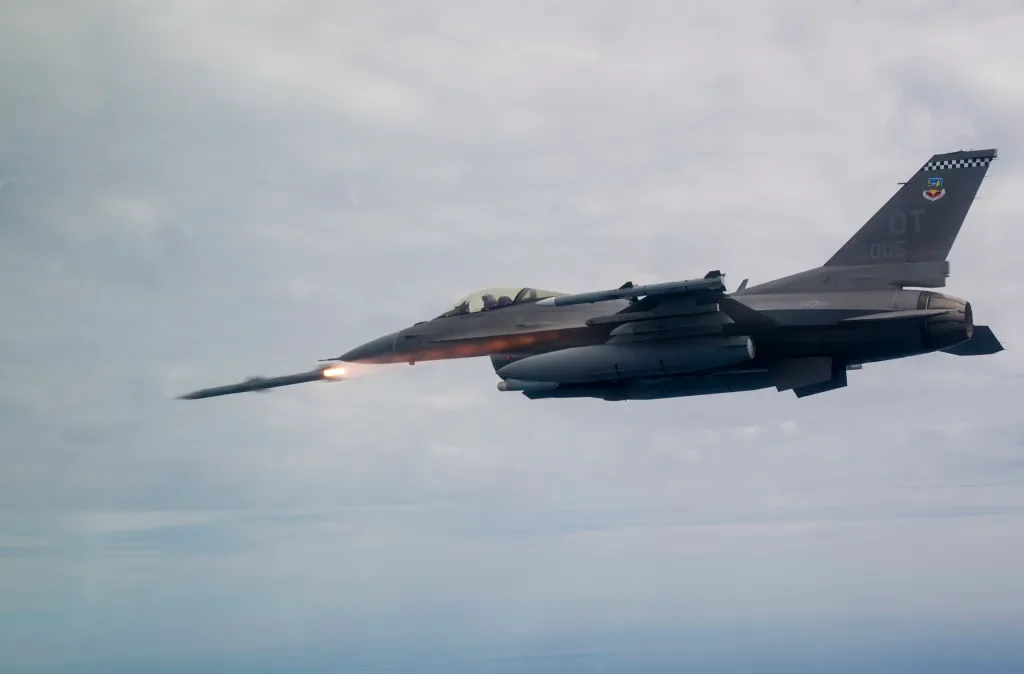
General Dynamics, led by engineer Robert H. Widmer, ultimately secured Department of War funding to develop the YF-16. Its first test flight occurred on Feb. 2, 1974, and the aircraft entered service four years later.
The Air Force later transformed the F-16 into an effective and affordable multirole aircraft. It nevertheless remains one of the clearest examples of fighter culture shaping Air Force technology, with Boyd firmly at the center.
Corum captured Boyd’s legacy in the title of his book and a description that outlasted the bureaucratic battles. Boyd was “The fighter pilot who changed the art of war.”
Join the Discussion
COMMENTS POLICY: We have no tolerance for messages of violence, racism, vulgarity, obscenity or other such discourteous behavior. Thank you for contributing to a respectful and useful online dialogue.