WHAT YOU NEED TO KNOW
- Acting Navy Secretary Hung Cao blamed extended deployments on a battle force of 286 ships, compared with a stated need for 355.
- Navy deployments have averaged closer to one year at sea instead of the service’s seven month goal.
- Extended operations can force ships to skip scheduled maintenance, potentially creating longer and more expensive repair periods.
- The Navy plans to buy 30 medium unmanned surface vessels, though questions remain about missions, hacking, and seizure risks.
Acting Navy Secretary Hung Cao says sailors are enduring longer deployments at sea because the Navy does not have enough ships to meet current demands. His assessment puts a stark number on the problem: The battle force has 286 ships, while the service needs 355.
Cao made the comments Tuesday morning during his confirmation hearing before the Senate Armed Services Committee. He was nominated to the position in September but still requires Senate confirmation.
The hearing unfolded amid growing concerns from military families and media reports about quality of life problems and mental health concerns among sailors aboard Navy ships deployed to support the Iran war. Those concerns have sharpened as deployments stretch well beyond the Navy’s stated goal.
Senators questioned Cao about issues raised during the previous several months, including ship deployments that have averaged closer to one year at sea. The Navy’s goal is seven month deployments.
“The reason why we had to have these extended deployments is really because we only have 286 ships today,” Cao said.
Cao told senators that only 286 ships are currently in the battle force, compared with a need for 355. He said the Navy is trying to field ships as quickly as possible so sailors are not kept away from their families for prolonged periods.
Extended deployments also create maintenance problems for the ships, Cao said. Those strains can deepen when vessels remain at sea instead of entering scheduled maintenance periods.
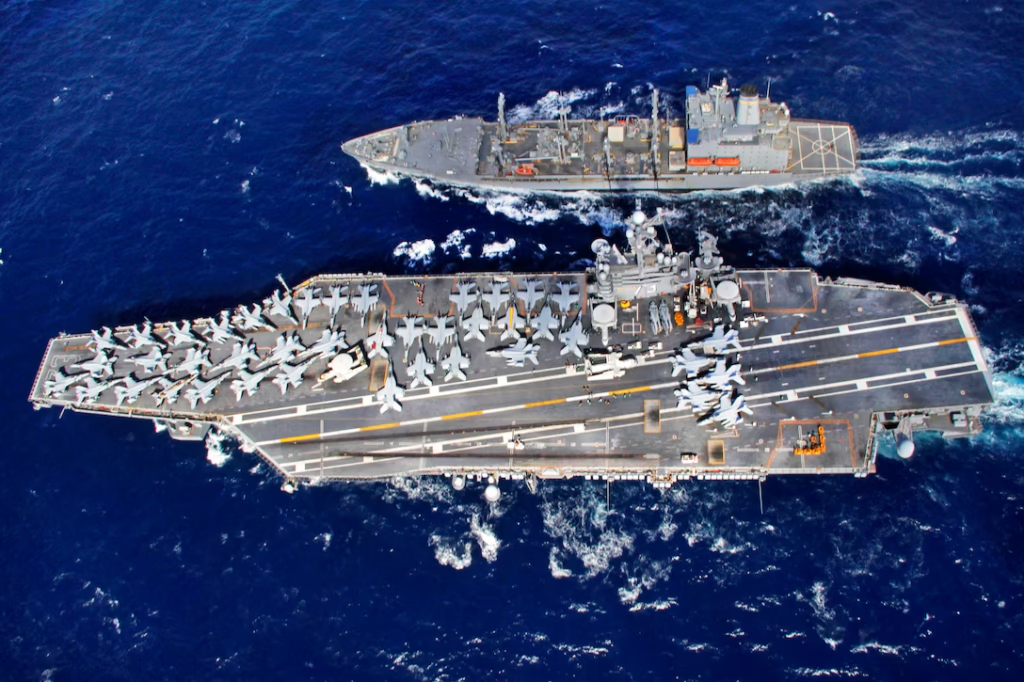
The hearing came one week after Cao reportedly told family members of the USS George H.W. Bush carrier strike group that their sailors would not return before the holidays. He also reportedly said the deployment could stretch to one year.
A senior Navy official could not confirm the reported extension to Task & Purpose, citing operational security. The uncertainty leaves families confronting the prospect of another holiday separation while the Navy manages its limited fleet.
Steven Wills, a former Navy officer and expert for the Center for Maritime Strategy, said the shortage has been developing for decades. He pointed to a 1993 report stating that the Navy would need 15 aircraft carriers to maintain a constant carrier presence in Europe, the Middle East, and the western Pacific.
The fleet has hovered around 11 carriers since the 1990s, according to Wills. Several of those carriers are currently undergoing long term overhauls, further tightening the number available for operations.
Wills said the problems build on each other when extended deployments force ships to skip scheduled maintenance. Delayed work can result in longer and more expensive maintenance sessions once the vessels finally return.
“In your car there’s a little sticker in the upper left-hand driver’s side window that says ‘bring me back to your dealer at X number of miles,’” Wills said.
“You might be able to drive a lot longer [than that]. But when you come back to your car dealer, then they’re probably going to find more things wrong with your car than what the maintenance plan said.”
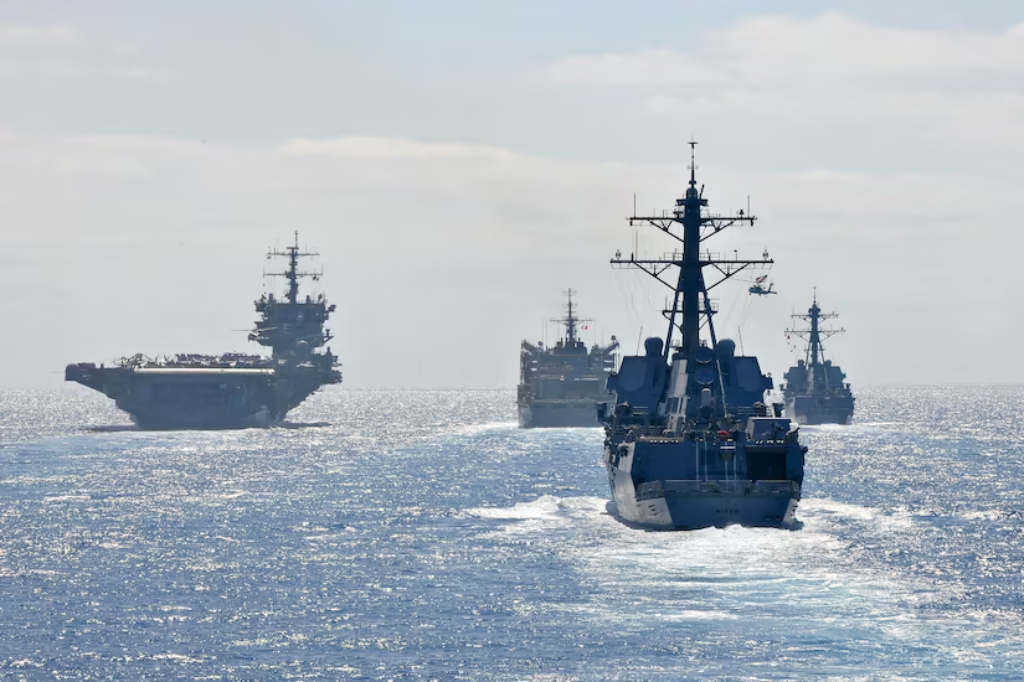
Cao also told Congress that the Navy is working to “accelerate” the deployment of unmanned surface vessels. The effort is intended to “relieve” the 17 destroyers supporting the naval blockade in the Strait of Hormuz and “reduce the strain on the fleet.”
In October, Cao said the Teddy Roosevelt Carrier Strike Group became the first carrier strike group to deploy with an unmanned surface vessel. The Navy had announced a plan in September to purchase 30 medium unmanned surface vessels.
Those vessels could carry sensors or missiles, or serve as electronic warfare or logistics platforms. Wills said the Navy is still developing the concept for how the unmanned ships would be used.
Some proposals call for drone ships to escort larger crewed vessels. Others envision “ghost fleets” operating autonomously deep in hostile waters, while unresolved questions remain about preventing the vessels from being hacked or seized.
“I think we’re making progress, and the unmanned revolution is definitely underway, but we’re not there yet,” Wills said.
Join the Discussion
COMMENTS POLICY: We have no tolerance for messages of violence, racism, vulgarity, obscenity or other such discourteous behavior. Thank you for contributing to a respectful and useful online dialogue.